


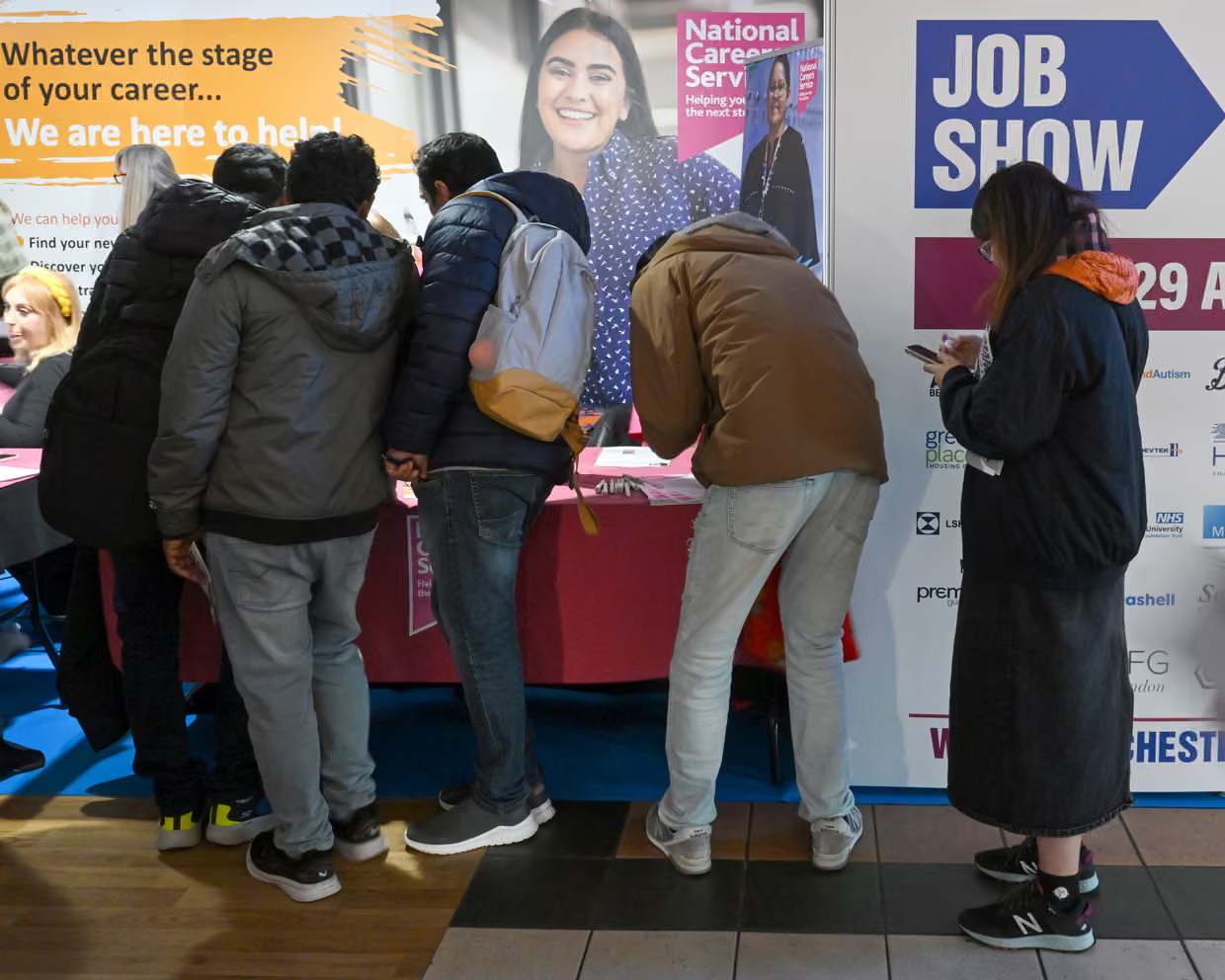
Britain’s jobs market is showing growing signs of strain, with the number of vacancies falling to its lowest level in five years even as workers continue to enjoy stronger than expected wage growth.
Fresh figures from the Office for National Statistics reveal that employers advertised 707,000 vacancies between March and May, a drop of 19,000 from the previous quarter and the weakest level recorded since early 2021. The decline suggests many businesses are becoming increasingly cautious about expanding their workforce amid economic uncertainty.
While unemployment edged down to 4.9 per cent in the three months to April from 5 per cent previously, the picture beneath the headline figures was less encouraging. Employment levels also fell, particularly across retail and hospitality, indicating that firms are holding back on recruitment and reducing staff numbers in sectors most exposed to changing consumer demand.
Despite the slowdown in hiring, pay packets continue to grow at a healthy pace. Average earnings excluding bonuses rose by 3.4 per cent, while total earnings including bonuses increased by 4.4 per cent. Both figures exceeded economists’ expectations, reinforcing concerns among policymakers that wage pressures remain embedded in the economy.
Public sector workers saw annual regular pay growth of 5.1 per cent, significantly higher than the 2.9 per cent recorded in the private sector. The gap has attracted attention from the Bank of England, where Governor Andrew Bailey has repeatedly warned that persistent wage growth could complicate efforts to keep inflation under control.
The latest labour market data arrives against the backdrop of heightened global tensions linked to the conflict involving Iran. Economists had feared that rising energy costs and business uncertainty could trigger sharper job losses across the UK economy. However, recent declines in oil prices, driven by hopes of a diplomatic breakthrough between Washington and Tehran, have eased some of those concerns.
Separate surveys from the Recruitment and Employment Confederation and KPMG have also pointed to weakening demand for staff in recent months, with employers increasingly reluctant to commit to permanent hiring as economic conditions remain uncertain.
Pat McFadden, the Work and Pensions Secretary, sought to strike a positive note, highlighting that there are around 400,000 more people in work compared with a year ago. However, he acknowledged that instability in the Middle East continues to cast a shadow over business confidence and labour market prospects.
The figures leave policymakers facing a delicate balancing act. A cooling jobs market could support arguments for lower interest rates in the months ahead, but stubbornly strong wage growth may make the Bank of England reluctant to move too quickly


