


Protein often gets most of the attention in healthy eating discussions, but nutrition experts say fiber is just as important.
While many people consume enough protein, most still fall short of recommended daily fiber intake. Since few foods naturally contain high amounts of both nutrients, foods that do offer a valuable combination for overall health. They can help keep you full for longer, support muscle maintenance, improve digestion, and reduce the risk of chronic diseases.
1. Beans, Lentils and Other PulsesPulses such as lentils, chickpeas, black beans, kidney beans, and dry peas are among the best sources of both protein and fiber.
Half-cup cooked lentils: about 9g protein, 8g fiberHalf-cup cooked black beans: about 7.5g protein, 7.5g fiberStudies suggest that people who regularly consume legumes tend to have healthier body weights, lower cholesterol levels, better blood pressure control, and reduced risk of Type 2 diabetes.
2. Soy FoodsSoy-based foods such as edamame, tofu, soy milk, and tempeh provide an excellent balance of protein and fiber, along with healthy fats. Half-cup shelled edamame: about 9g protein, 4g fiberHalf-cup tofu: about 22g protein, 3g fiberOne cup soy milk: about 8g protein, 1.5g fiberNutrition experts describe soy foods as highly nutritious because they also contain essential fatty acids that support heart health.
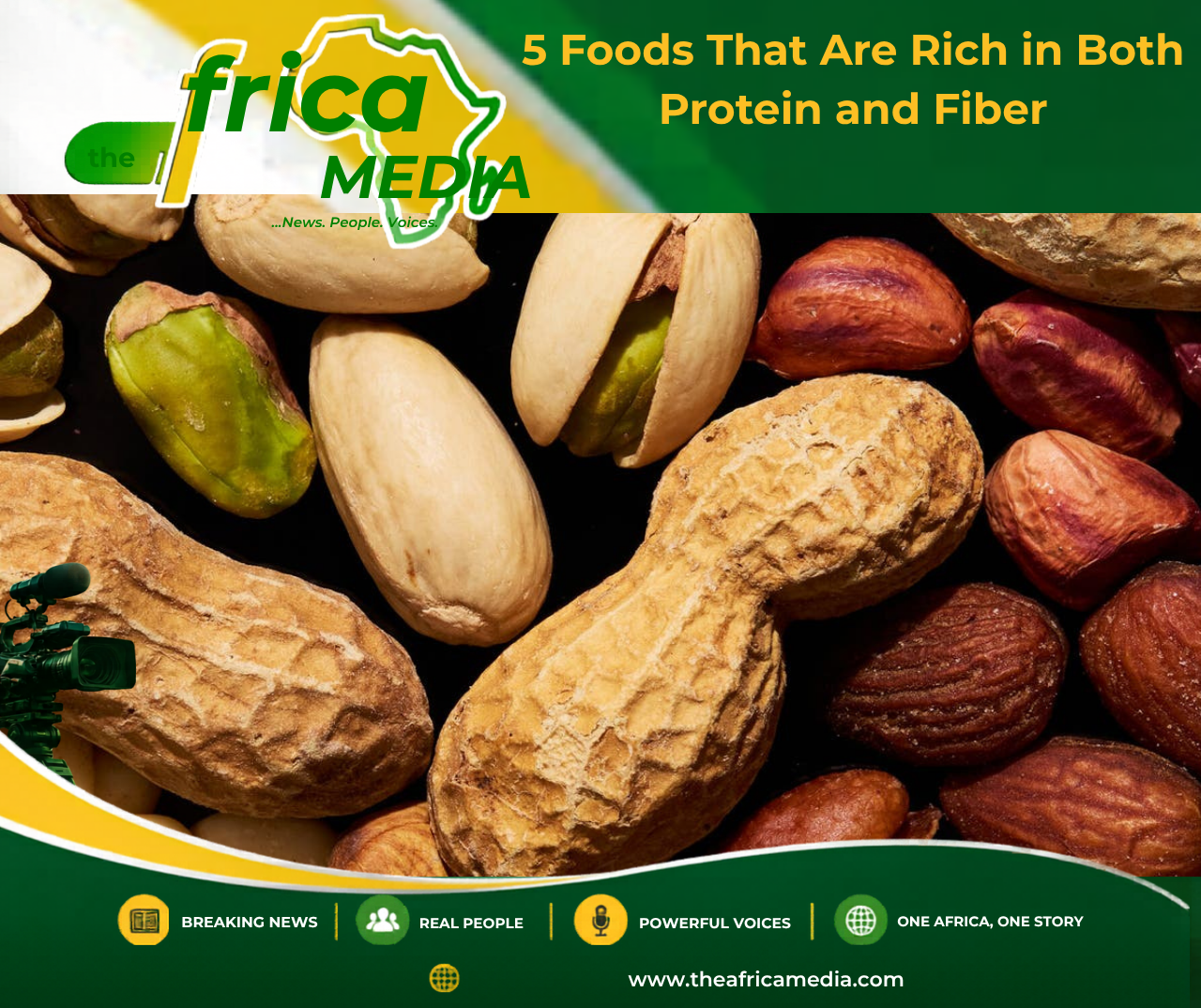
3. NutsNuts are packed with protein, fiber, healthy fats, vitamins, minerals, and antioxidants.One ounce peanuts: about 7.5g protein, 2.5g fiberOne ounce almonds: about 6g protein, 3.5g fiberRegular nut consumption has been linked to healthier body weight and lower risks of heart disease and certain cancers.
4. SeedsSeeds offer many of the same benefits as nuts, with some varieties providing even more fiber.One ounce pumpkin seeds: about 8.5g protein, 2g fiberOne ounce chia seeds: nearly 5g protein, 10g fiberResearch indicates that seeds may help support heart health, immune function, healthy weight management, and reduced inflammation.
5. Whole GrainsWhole grains retain all parts of the grain kernel, making them more nutritious than refined grains. Examples include oatmeal, quinoa, brown rice, farro, and whole-wheat products.Half-cup rolled oats (prepared as oatmeal): about 6g protein, 5g fiberOne cup cooked quinoa: about 8g protein, 5g fiberWhole grains have been associated with better gut health and a lower risk of heart disease, colorectal cancer, and Type 2 diabetes.
Why This Combination MattersFoods that provide both protein and fiber help: Keep you fuller for longerSupport muscle growth and maintenanceImprove digestive healthHelp manage blood sugar levelsPromote heart healthMake it easier to meet nutrient needs without consuming excess caloriesIncluding a mix of legumes, soy foods, nuts, seeds, and whole grains in your diet can help you increase both protein and fiber intake naturally.


