


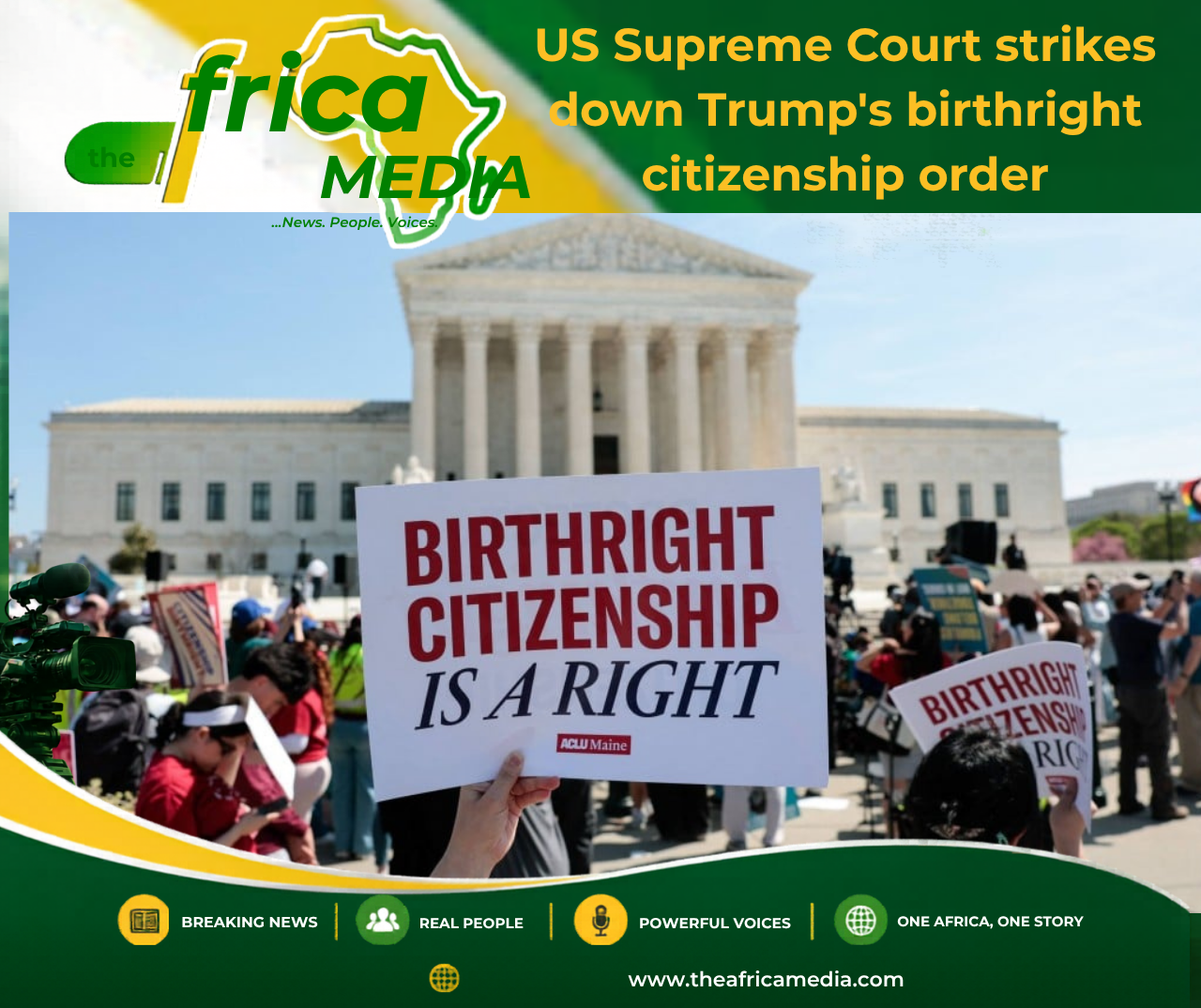
The U.S. Supreme Court has struck down President Donald Trump’s executive order that sought to end automatic birthright citizenship for children born in the United States to parents who are in the country unlawfully or temporarily.
In a divided ruling, Chief Justice John Roberts wrote the majority opinion, joined by Justices Sonia Sotomayor, Elena Kagan, Amy Coney Barrett, and Ketanji Brown Jackson.
The court held that the executive order violated the U.S. Constitution’s Fourteenth Amendment. Roberts wrote that birthright citizenship is a fundamental constitutional guarantee, stating that the Fourteenth Amendment extends citizenship to “every free-born person in this land.
” The court concluded that children born in the United States to parents who are unlawfully or temporarily present are still “subject to the jurisdiction” of the United States and are therefore citizens at birth. Justice Brett Kavanaugh agreed that Trump’s executive order was unlawful but based his reasoning on federal law rather than the Constitution.
He suggested that Congress, not the president, could potentially pass legislation creating limited exceptions to birthright citizenship. Justices Clarence Thomas, Samuel Alito, and Neil Gorsuch dissented from the ruling.
President Trump signed the executive order at the start of his second term in an effort to end automatic citizenship for certain children born on U.S. soil. The order was immediately blocked by several federal courts, with one judge describing it as “blatantly unconstitutional.
“The case centered on the Citizenship Clause of the Fourteenth Amendment, which states that all persons born or naturalized in the United States, and subject to its jurisdiction, are U.S. citizens. The administration argued that the clause was intended to apply primarily to formerly enslaved people and not to children of undocumented or temporary foreign nationals.
However, the Supreme Court rejected that interpretation, reaffirming the long-standing precedent established in the 1898 United States v.
Wong Kim Ark decision, which recognized birthright citizenship for nearly all children born on U.S. soil regardless of their parents’ immigration status. The ruling preserves the constitutional guarantee of birthright citizenship unless it is changed through a constitutional amendment or future legislation consistent with the Constitution.


