


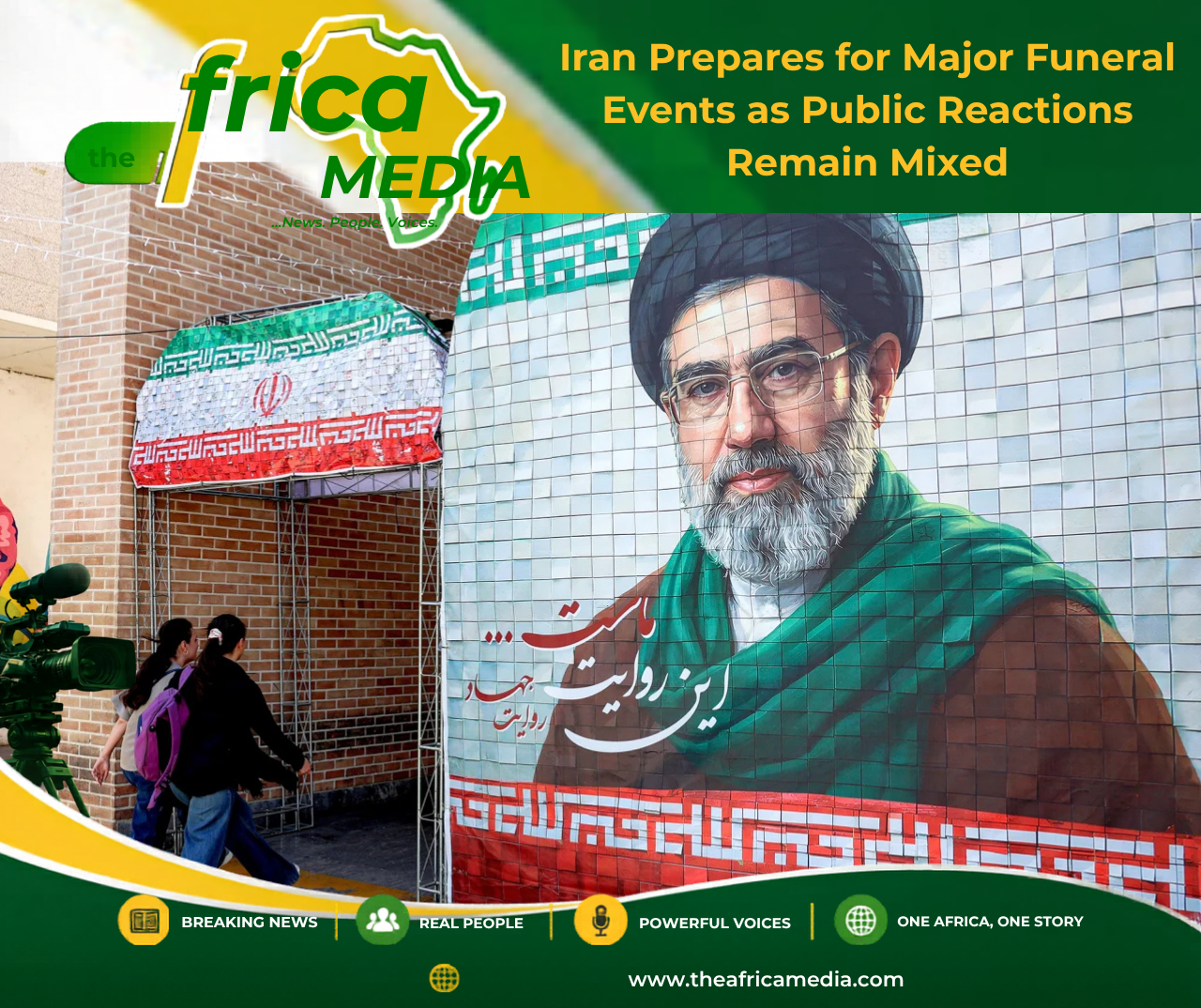
Large crowds have gathered across Tehran ahead of what authorities expect to be the largest day of funeral ceremonies for Supreme Leader Ayatollah Ali Khamenei on Monday.
The public mourning events, which have continued for several days, are drawing supporters from across the country as Iran marks a significant moment in its political and religious history. Officials anticipate that Monday’s main procession will attract the largest turnout yet.
Attention has also focused on Mojtaba Khamenei, the late leader’s son and designated successor, who has not yet made a public appearance during the mourning period. His absence has prompted widespread speculation as the country prepares for a new chapter in its leadership.
Calls for Unity and Defiance
The ceremonies have featured strong expressions of national unity and defiance. Speakers and participants have called for resilience in the face of external pressure, while some public figures have used the events to criticise foreign governments and reaffirm support for Iran’s leadership.
One poet addressing mourners delivered a speech containing sharp criticism of U.S. President Donald Trump, reflecting the continued tensions between Tehran and Washington.
Mixed Reactions Among Citizens
While many Iranians have participated in the mourning events, reactions among the wider population appear varied.
Some residents interviewed in Tehran expressed grief and respect for the late leader, while others described feelings of frustration or indifference amid ongoing economic and political challenges facing the country.
The differing reactions highlight the complex public mood as Iran navigates a period of transition.
Strategic Concerns Remain in Focus
Beyond the funeral ceremonies, attention remains on regional security issues, particularly the Strait of Hormuz, one of the world’s most important maritime trade routes.
Maritime authorities reported that shipping traffic through the waterway remains steady, though officials continue to monitor developments closely. Security concerns surrounding the strait are expected to feature in discussions at an upcoming NATO summit.
Meanwhile, Israeli Prime Minister Benjamin Netanyahu is expected to meet with U.S. President Donald Trump in Washington in the coming days. Speaking on Sunday, Netanyahu downplayed suggestions of significant disagreements between the two leaders regarding Iran policy.
As Iran continues its mourning period, both domestic and international observers are watching closely to see how the country’s leadership transition and regional relationships evolve in the weeks ahead.


