


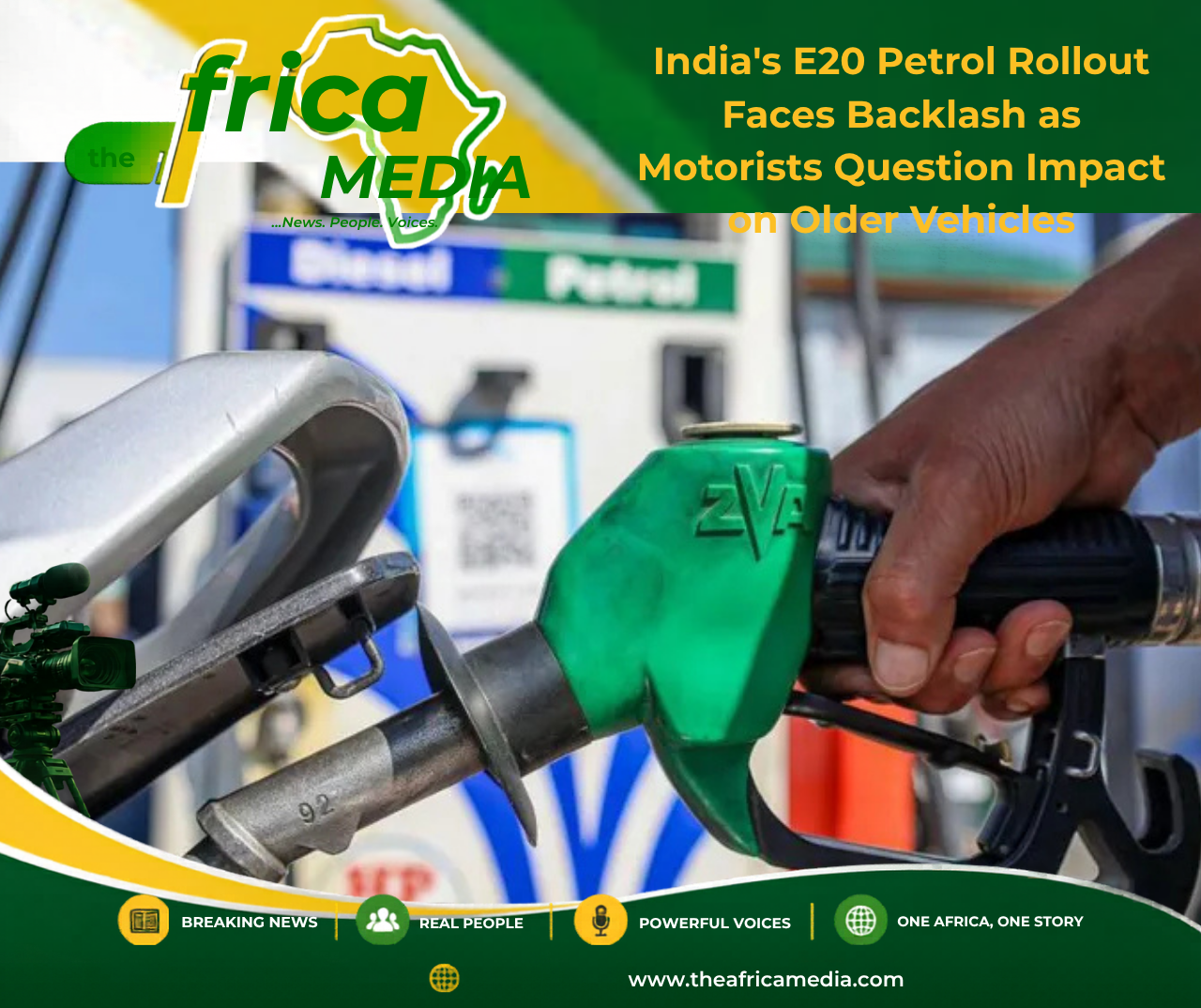
India’s nationwide rollout of petrol blended with 20% ethanol (E20) has sparked growing criticism from motorists, many of whom say the fuel is affecting vehicle performance and increasing maintenance costs.
The government made E20 the standard petrol available at fuel stations in April as part of its strategy to reduce dependence on imported crude oil, lower carbon emissions and support domestic farmers through increased ethanol production from crops such as sugarcane and maize.
Although unblended petrol remains available, it is significantly more expensive—often costing 40 to 50 per cent more depending on the state—and many consumers are unaware that they can request it.
Since the transition, social media has seen a surge in complaints from motorists reporting reduced fuel efficiency, lower engine performance and concerns about long-term engine wear.
Last week, motorists joined a protest in New Delhi, accusing the government of imposing E20 without giving consumers adequate choice or ensuring that existing vehicles were compatible with the fuel.
The Indian government has rejected the claims, describing them as “misleading” and driven by social media misinformation.
Officials say E20 was introduced only after extensive testing and insist there is no evidence that the fuel damages vehicle engines. The government has also launched public information campaigns explaining the benefits of ethanol-blended petrol and addressing what it describes as common myths.
In a rare joint appearance, six major automobile manufacturers also defended the policy during a government press conference.
Rahul Bharti, Senior Executive Officer for Corporate Affairs at Maruti Suzuki, said the company had serviced more than 15 million older vehicles that were not specifically designed for E20 and had found no widespread fuel-related mechanical problems.
The automakers acknowledged, however, that E20 reduces fuel economy by around 3 to 3.5 per cent because ethanol contains less energy than conventional petrol. Some independent estimates suggest the reduction could range between 4 and 12 per cent, depending on the vehicle.
India imports the majority of its crude oil, and officials argue that expanding ethanol use will improve energy security, reduce foreign exchange spending and lower emissions.
The programme has gained additional importance following recent disruptions in global oil markets. Several other Asian countries, including Indonesia and Vietnam, are also expanding ethanol-blending programmes.
Critics argue that India’s transition has been too rapid.
Brazil, often cited as the model for ethanol adoption, spent decades gradually introducing higher ethanol blends while developing vehicles capable of using them. Consumers there also have the option of choosing between ethanol-blended petrol and pure ethanol fuel.
India, by contrast, increased the ethanol content from 10 per cent in 2022 to 20 per cent by 2025—five years ahead of its original target.
According to Puneet Gupta, Director of Mobility Global, more than 75 per cent of vehicles currently on Indian roads are not fully E20 compliant. A separate Reuters Foundation analysis last year estimated that only around one-fifth of petrol vehicles sold over the previous 15 years were designed for the higher blend.
Mechanics and service centres have reported mixed experiences.
Some workshops say they have observed no noticeable increase in fuel-related problems, while others report more frequent cases of residue build-up in carburettors, clogged fuel systems and customer complaints about reduced mileage.
Mohammed Arif, a motorcycle mechanic in Mumbai, said he has serviced several older motorcycles with fuel residue that he believes is linked to higher ethanol content.
Meanwhile, Basil Jacob, who operates a car service centre, said many customers have complained that they are travelling fewer kilometres per litre despite paying roughly the same price for fuel.
Automotive experts caution that any effects from E20 may take time to emerge.
Hormazd Sorabjee, editor of Autocar India, said ethanol absorbs moisture more readily than petrol, which could contribute to corrosion in fuel systems over extended periods. He added that while some online claims appear exaggerated, prolonged use may increase maintenance requirements in some older vehicles.
A survey conducted by community platform LocalCircles among more than 44,000 owners of petrol vehicles manufactured before 2023 found an increase in respondents reporting unusual wear and more frequent repairs.
However, no publicly available scientific studies have conclusively confirmed either widespread engine damage or the government’s position that E20 poses no risk to older vehicles. Industry experts say this lack of publicly accessible evidence has contributed to confusion among consumers.
Questions also remain about warranties and insurance coverage.
Some experts have asked whether manufacturers will honour warranty claims if fuel-system components fail after prolonged E20 use in vehicles that were not originally designed for the blend.
The issue briefly gained attention when insurer ICICI Lombard suggested in a blog post that using E20 in non-compatible vehicles could affect insurance claims. The company later withdrew that guidance, clarifying that motor insurance policies remain valid regardless of E20 use.
Even so, experts note that standard motor insurance generally covers accidental damage rather than mechanical wear and tear, meaning disputes over fuel-related issues could still arise.


