


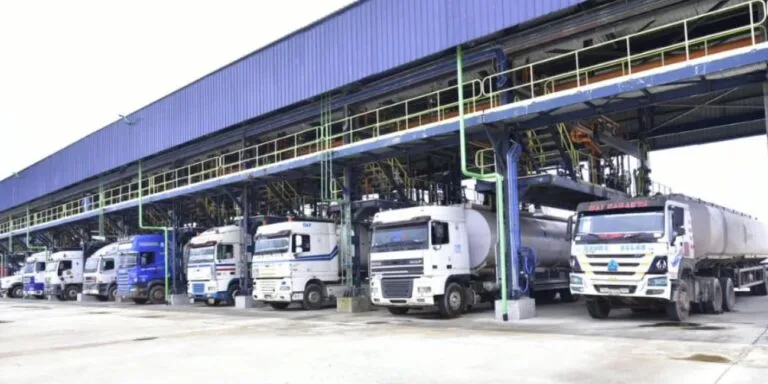
Fresh concerns have emerged over a possible petrol price increase and renewed pressure on the naira. Reports suggest Dangote Petroleum Refinery may begin selling refined petroleum products in U.S. dollars.
The development comes amid renewed tensions in the Middle East. Those tensions have pushed global crude oil prices higher and raised fears of supply disruptions in the international energy market.
Why Dangote Dollar Fuel Sales Could MatterIndustry analysts say dollar-denominated sales by Africa’s largest refinery could carry major implications. They could affect fuel pricing, foreign exchange demand and inflation across Nigeria, if the reports are confirmed.
The reports also emerge as the Federal Government works to ensure domestic fuel prices track movements in international crude prices. Recent escalation in geopolitical tensions has reversed an earlier decline in crude prices. Benchmark oil prices are rising again on concerns over global supply.
Sources familiar with the matter linked the refinery’s reported plan to uncertainties surrounding the naira-for-crude arrangement between the Nigerian National Petroleum Company Limited (NNPC Ltd.) and Dangote Refinery. That initiative was designed to let the refinery buy locally produced crude oil in naira. It aimed to reduce dependence on foreign exchange and help stabilise domestic fuel prices.
However, industry sources say crude supplies under the arrangement have fallen short of the refinery’s operational needs. This has forced the refinery to rely more heavily on internationally sourced crude, purchased in U.S. dollars.
One source, who declined to be named because he was not authorised to speak publicly, warned that selling refined products in naira while buying crude in dollars exposes the refinery to exchange-rate risk. He said exchange-rate losses become inevitable whenever the naira weakens, if marketers keep buying in naira while the refinery buys crude in dollars.
What a Shift to Dollar Sales Would Mean for ConsumersAnalysts say a shift to dollar sales would force independent marketers to source foreign exchange before buying products from the refinery. That would raise their operating costs and expose them to exchange-rate volatility. Those extra costs could eventually reach consumers through higher pump prices, particularly if the naira weakens further against the dollar.
Economists also warn that increased dollar demand from fuel marketers could pressure Nigeria’s foreign exchange market. The naira could weaken further if foreign currency supply fails to keep pace. Dr. Muda Yusuf, Chief Executive Officer of the Centre for the Promotion of Private Enterprise (CPPE), urged caution. “It’s still too early to conclude because we are yet to hear an official position from Dangote Refinery,” he said. “We need to wait for an official pronouncement before treating it as company policy.
“Yusuf said the reported move should be seen mainly as a business response to volatility in the global oil market, not an arbitrary pricing decision. He pointed to renewed Middle East tensions, particularly involving Iran, as a key driver of instability that makes it hard for refiners to hold prices steady. “What is most disturbing now is the volatility in the global oil market,” he said. “With that volatility, you have to adjust your price almost every month.
“He added that if Dangote Refinery does move to dollar sales, it could simply reflect the company’s strategy for managing exchange rate and commodity price risk. Still, he warned the policy could strain Nigeria’s foreign exchange market. “If people now have to pay in dollars, that means they have to source the dollars to buy the products,” he said. “That could create additional pressure on the foreign exchange market and the exchange rate.
“Naira-for-Crude “Was Never a Discount Scheme”Oil and gas analyst Dr. Ayodele Oni pushed back on a common misconception about the arrangement. He said the naira-for-crude deal was never a discount scheme. The refinery pays international benchmark prices for Nigerian crude, he explained. What the arrangement actually provides is currency matching: crude purchased in naira, products sold in naira.
Oni said that matching collapses the moment NNPC cannot deliver enough naira-denominated crude. The refinery is then left buying feedstock in dollars while selling in naira, an imbalance he said no commercially rational operator could sustain indefinitely. He noted the refinery has imported substantial crude volumes in recent months, paid for in dollars, because domestic allocations have consistently fallen short of contracted expectations.
Oni added that the refinery’s position is stronger than many assume, since it operates within a free zone regime that has historically allowed it to transact in foreign currency, particularly for exports and coastal sales. He said the counterweight is the legal tender provisions of the CBN Act and the domestic crude supply obligation under Section 109 of the Petroleum Industry Act. He described the underlying tension as unresolved, since the naira-for-crude framework rests on policy directives rather than an enforceable statutory scheme, making every suspension effectively a renegotiation lever.
He warned that a shift to dollar sales would push marketers into the foreign exchange market in large numbers, pressuring the naira, raising pump prices, and feeding inflation through transport and production costs. Still, he expects a political rather than legal resolution, consistent with past episodes where government intervention restored naira sales within days.
Oni said the durable fix would be guaranteed crude allocations backed by enforceable delivery obligations on NNPC, or a credible hedging mechanism to cover the currency gap between crude purchase and product sale.


