


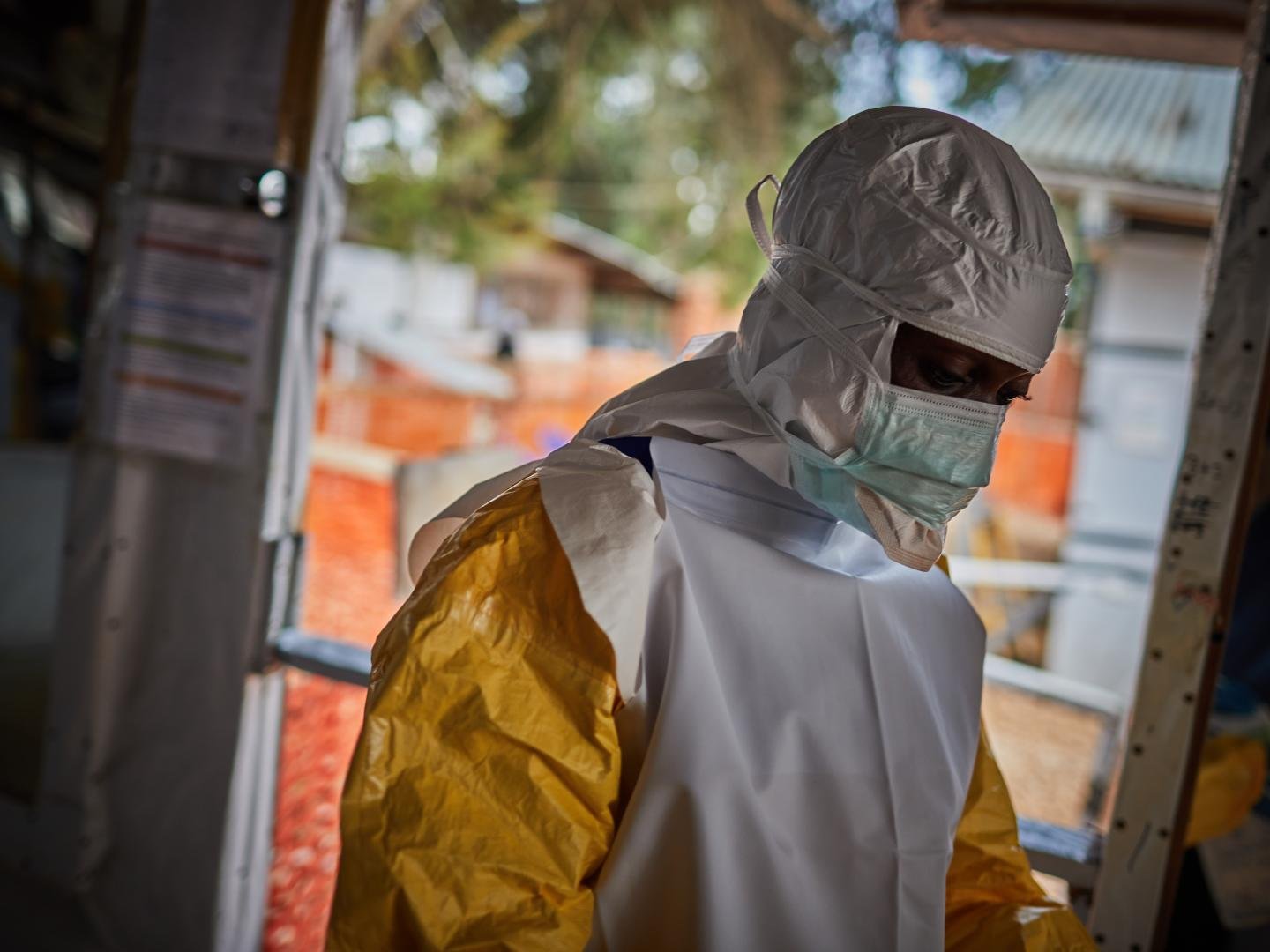
Health officials in the Democratic Republic of the Congo (DRC) have declared a fresh outbreak of Ebola virus disease in Kasai Province, where 28 suspected cases and 15 deaths – including four health workers – have been recorded as of 4 September.
The outbreak has so far hit Bulape and Mweka health zones, where patients presented with fever, vomiting, diarrhoea and haemorrhage. Samples tested on 3 September at the National Institute of Biomedical Research in Kinshasa confirmed the Zaire strain of Ebola, the deadliest form of the virus.
A national Rapid Response Team, supported by World Health Organization (WHO) specialists in epidemiology, infection control, laboratory services and case management, has been dispatched to Kasai. Their mission is to ramp up surveillance, treatment and infection control in health facilities. Risk communication experts are also working with communities to ensure they know how to protect themselves.
WHO has already flown in two tonnes of supplies, including protective gear, medical kits and mobile lab equipment. The task is complicated by Kasai’s remoteness – it takes at least a day to drive from the provincial capital Tshikapa, with only limited air links available.
“We’re acting with determination to halt the spread of the virus and protect communities,” said Dr Mohamed Janabi, WHO’s Regional Director for Africa. “The DRC has long-standing expertise in tackling outbreaks, and we’re working closely with national health authorities to scale up the response rapidly.”
Officials warn that case numbers are likely to rise as transmission continues. Teams are working to identify and isolate those infected, trace their contacts, and provide urgent care. The country has a stockpile of treatments and 2,000 doses of the Ervebo Ebola vaccine, which is effective against the Zaire strain. These doses, already in Kinshasa, will be shipped to Kasai to vaccinate contacts and frontline health workers.
The health ministry said the first confirmed case was a 34-year-old pregnant woman admitted in August with high fever and severe vomiting. Her infection triggered the alarm that led to the outbreak declaration.
This marks the DRC’s 16th Ebola outbreak since the virus was first identified in 1976. The most recent, in Equateur Province in 2022, was contained within three months. Kasai itself has faced Ebola before, with outbreaks recorded in 2007 and 2008.
Ebola virus disease is rare but often fatal, with mortality rates ranging from 25% to 90%. It is spread to humans through contact with infected animals, particularly fruit bats, and passes between people via blood and bodily fluids. Contaminated objects and unsafe burials also play a key role in transmission.
Health workers are racing to get ahead of the virus before it spirals. For communities in Kasai, already grappling with poor infrastructure and limited access to healthcare, the coming weeks will be critical in containing the outbreak and preventing it from spreading further across central Africa.


