


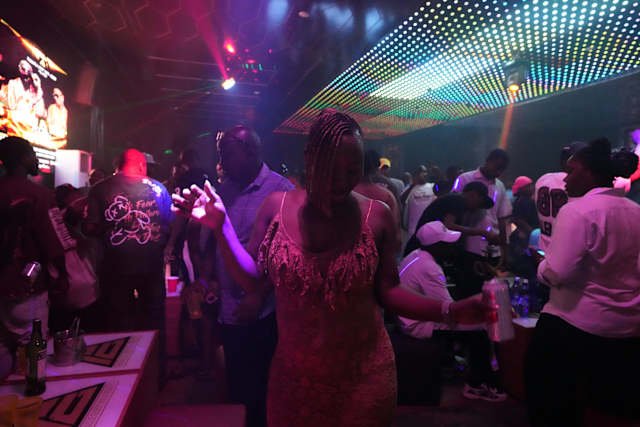
Multicoloured lights flash across a nightclub in Sokoto as revellers dance, drink and sing along to Afrobeats, revealing a vibrant nightlife scene in one of Nigeria’s most conservative and deeply religious states.
The scene may appear surprising in Sokoto, the historic “Seat of the Caliphate” and an important spiritual centre of Islam in Nigeria, where Islamic traditions and religious regulations strongly influence daily life.
Yet, a small number of underground clubs operate in the city, attracting residents looking to unwind at the end of the week.
“Every Friday, every Sunday, I go to club. We even have Ladies’ Night in this town. We have Old School on Saturday, and we also have karaoke night in Sokoto here,” reveller Benjamin Danjuma said.
“The way lifestyle normally goes outside there, that’s how we run it in this town. We are not left behind. Everything that is happening, we are doing it here in this town,” he added.
The nightlife exists despite regular patrols by the Hisbah Force, the state’s Islamic morality police, whose officers enforce public morality and monitor compliance with Sharia and other local regulations.
Hisbah personnel conduct raids and patrol entertainment spots as part of efforts to enforce restrictions including alcohol bans and dress codes.
Sokoto Hisbah commander, Usman Abdullahi Jatau, said the organisation’s mandate extends to everyone regardless of religion.
“We attend to every citizen, be him or her a Muslim or non-Muslim, and we do justice to everyone. Ours is to see how we can uphold, how we can promote good morals and virtues within and outside the state,” Jatau said.
Despite the restrictions, partygoers say they continue to find ways to enjoy the city’s limited nightlife.
The emergence of such entertainment spaces comes against the backdrop of serious insecurity across parts of northern Nigeria, including Sokoto, which has been affected by attacks from jihadists and other armed groups.
Oluwamayowa Idowu, founder of Lagos-based culture publication Culture Custodian, said nightlife had gradually lost some of the taboo associated with it in previous years.
“A large part of nightlife is escapism, and you want to have an experience that takes you away from your day-to-day life,” he said.
Idowu said insecurity had significantly affected social life across northern Nigeria but had not eliminated people’s desire to relax and socialise.
“If we take out insecurity from northern Nigeria, I think the nightlife culture would be bigger than what it is. But I do think it will still be limited by the religious undertone that is common in the region,” he said.
For some residents, the transformation of Sokoto’s social scene has been gradual.
Ibrahim Nuhu, a banker who moved to Sokoto from Jos, nearly 650 kilometres away, about 25 years ago, recalls arriving in a city with what he considered a relatively quiet social scene.
Over the years, however, he has watched nightlife and weekend entertainment expand.
Nuhu initially worried that moving to Sokoto would mean leaving behind the more cosmopolitan lifestyle he had enjoyed in Jos. Instead, he gradually embraced the city’s evolving social scene.
“When I entered Sokoto, I saw that life is easy. I always go out, even on Friday, Saturday, and Sunday, just to go and have some fun with my friends,” he said.
Sokoto’s emerging nightlife illustrates the complex balance between tradition, religious expectations and changing social habits in northern Nigeria, where residents continue to seek entertainment and social connections despite cultural restrictions and security challenges.


