


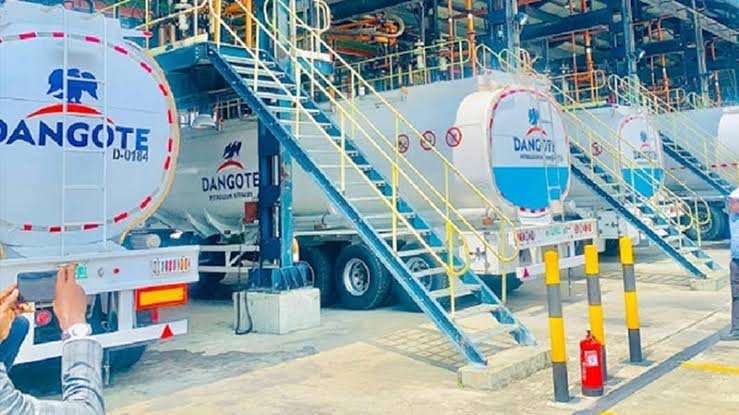
Dangote Petroleum Refinery and Petrochemicals is considering restricting petrol sales to major marketers that continue to import the product into Nigeria, citing concerns over product quality, market transparency and the reputation of its brand.
The proposed restriction could take effect as early as this week, subject to further consultations and any last-minute intervention, according to a statement issued by the Dangote Group on Sunday.
The development comes amid growing concerns within the refinery over the continued importation of petrol despite increased domestic refining capacity.
Sources familiar with the refinery’s position said the immediate concern was the alleged practice by some marketers of blending imported petrol with products purchased from the Dangote refinery before distributing the mixture to consumers.
According to the sources, such practices could make it difficult to distinguish between products supplied directly by the refinery and those subsequently blended or handled by third parties.
“It is difficult to understand why we would invest heavily in producing high-quality petroleum products for Nigerians, only for those products to be mixed with imported products of uncertain quality and the resulting product to be associated with the refinery,” a source familiar with the refinery’s position was quoted as saying.
The refinery has also reportedly raised concerns about the absence of adequate laboratory and quality-control infrastructure to independently verify and certify the specifications of imported petroleum products entering the Nigerian market.
The concerns come as Nigeria’s downstream petroleum sector undergoes a major transition from years of dependence on imported refined products towards increased domestic production.
With a capacity of 700,000 barrels per day, the Dangote refinery has become a major supplier of refined petroleum products to Nigeria and international markets.
The Dangote Group said the United States Energy Information Administration had identified the refinery as a major contributor to the significant increase in Nigeria’s seaborne petroleum product exports.
Nigeria’s seaborne petroleum product shipments averaged 561,000 barrels per day in the second quarter of 2026, compared with an annual average of 79,000 barrels per day in 2023, according to the statement.
The group also highlighted the growing international demand for Dangote’s aviation fuel, saying its jet fuel has become a preferred product in markets including the United States and Europe.
It said the refinery had, for consecutive months, emerged as Europe’s largest external supplier of jet fuel, surpassing traditional exporters from the United States and the Middle East.
The proposed restriction on petrol sales to importing marketers could further reshape competition in Nigeria’s downstream petroleum market, particularly as domestic refineries expand their role in meeting local fuel demand.


