


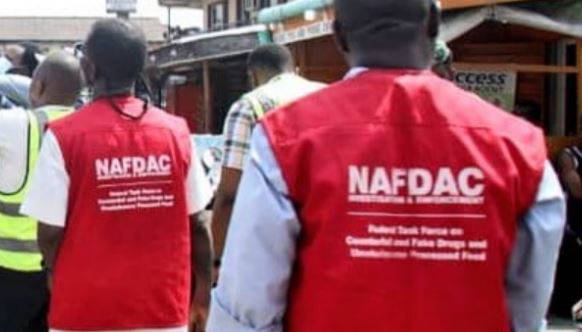
The National Agency for Food and Drug Administration and Control (NAFDAC) has raised the alarm over the growing presence of Chinese counterfeiters in Nigeria, linking them to the increasing production, distribution and sale of fake, adulterated and harmful products across the country.
NAFDAC Director of Investigation and Enforcement, Martins Iluyomade, disclosed this in Lagos on Monday while responding to concerns over the rising circulation of counterfeit goods.
Iluyomade said investigations by the agency had uncovered a new trend in which Chinese counterfeiters who previously operated from outside Nigeria had established production facilities and logistics networks within the country.
He explained that counterfeiters no longer needed to travel to China to source fake products, as some operators were now based in Nigeria and coordinating the production and distribution of counterfeit goods locally.
“Before, to fake a product, you needed to go to China to bring it. Now, you don’t need to go. They are here in Nigeria with us,” he said.
According to him, the operators identify products with high demand in the Nigerian market, arrange for their counterfeiting and subsequently distribute them through established channels.
Iluyomade described the development as a “new trend” that had contributed significantly to the worsening counterfeit goods situation in the country.
He also alleged that some Chinese nationals involved in counterfeiting own logistics companies used to facilitate the movement of fake products, adding that NAFDAC had been shutting down such companies as part of its enforcement operations.
The agency’s disclosure comes amid growing concerns from manufacturers, medical experts and economists over the proliferation of counterfeit and substandard products, which they say is damaging legitimate businesses, putting consumers’ lives at risk and undermining economic growth.
The scale of the problem has also been reflected in NAFDAC’s enforcement operations.
The agency’s Director-General, Prof. Mojisola Adeyeye, said NAFDAC destroyed regulated products worth more than N1.5tn in a coordinated operation across Lagos and the South-East between February and March 2025.
She added that the agency had destroyed or seized more than N1.54tn worth of counterfeit and substandard products nationwide since 2023 as part of its ongoing crackdown.
Public concern over counterfeit products intensified over the weekend, with Nigerians, including social media influencers such as Scott Iguma and Aproko Doctor, raising alarms over the proliferation of fake consumer goods.
Social media discussions have particularly focused on allegedly counterfeit toothpastes, creams, contaminated bottled water and adulterated yoghurt drinks.
NAFDAC confirmed that it had received complaints through its official channels concerning counterfeit toothpaste, particularly products bearing the Oral-B and Colgate brands.
Iluyomade said the agency had launched investigations into the matter and made several arrests and seizures in different parts of the country.
“We have an intelligence report on fake toothpastes and have been working on it. We’ve made a lot of arrests and seizures, both in Kano and Sokoto states, Delta State and Onitsha in Anambra State,” he said.
He disclosed that NAFDAC was prosecuting two individuals in court over the importation of counterfeit toothpaste brands.
Adeyeye said the agency had intensified efforts to tackle counterfeit, falsified, substandard and unregistered products, citing its recent enforcement operation at the Upper Iweka drug market in Onitsha as part of the crackdown.
Meanwhile, Iluyomade said NAFDAC had recorded significant progress in the prosecution of offenders, with the agency securing 64 convictions between June 2025 and June 2026—the highest number recorded in its history.
“We go through the process. In December, a judge handed five years of imprisonment to one lab that counterfeited drinks, convicting them on all eight grounds,” he said.
NAFDAC said it would continue to strengthen intelligence gathering, enforcement and prosecution efforts to disrupt the production and distribution networks responsible for counterfeit and unwholesome products in Nigeria.


 has raised the alarm over the growing presence)