


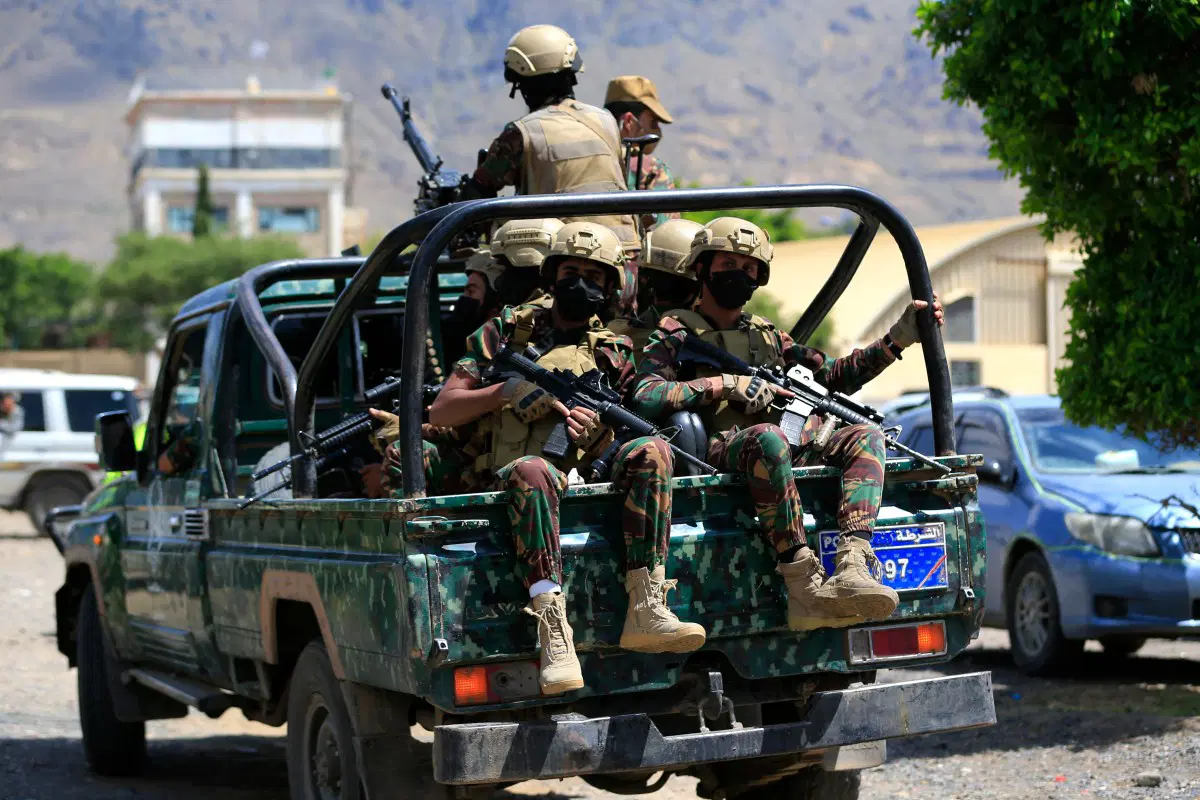
Yemen’s Houthi rebels launched a fresh wave of missile and drone attacks against Saudi military targets on Monday, as Iran denied allegations that it was directing or interfering in the renewed conflict in Yemen.
The Houthis said they fired dozens of drones and missiles at targets in Saudi Arabia, including military facilities at King Khalid Air Base in Khamis Mushait.
The attacks prompted Saudi Arabia’s Civil Defence authorities to issue brief alerts in the neighbouring cities of Khamis Mushait and Abha.
A resident of Khamis Mushait told AFP that he heard “intense blasts” and saw fires that continued burning for some time.
“Honestly, we couldn’t sleep at all,” the resident said.
Houthi military spokesman Yahya Saree said the group had targeted fighter jet hangars, radars, runways and ammunition depots at the Saudi air base in retaliation for Saudi airstrikes.
The renewed hostilities have also spilled into western Yemen, where Houthi missile attacks killed eight troops belonging to Yemen’s internationally recognised government forces, according to two military sources with the Aden-based administration.
The sources said several other troops were wounded in the strikes on positions between Marib and Al-Jawf governorates.
The Houthi-linked Al-Masirah television channel reported that the group had targeted reinforcements arriving in the same area.
The latest escalation comes as the broader regional conflict continues to put pressure on key shipping and energy routes, particularly the Bab al-Mandab Strait and the Strait of Hormuz.
The Houthis last week seized control of parts of Yemen’s Red Sea coast and the Bab al-Mandab Strait, according to reports, increasing concerns over the security of one of the world’s important maritime routes.
Iran has long supported the Houthis, including with weapons and military technology, but Tehran has rejected claims that it is directing the group’s latest military campaign.
Iranian Foreign Ministry spokesman Esmaeil Baqaei said Monday that Tehran did not interfere in Yemen’s internal affairs.
“Iran does not interfere in Yemeni affairs,” Baqaei told reporters, describing the Houthis as “entirely independent actors who make their decisions based on their own interests.”
The comments came amid a dispute over a proposed meeting between Gulf states and Iran concerning the future of the Strait of Hormuz. The meeting was postponed on Monday, with Tehran accusing Riyadh of using the situation in Yemen as a reason to delay the talks.
The escalation in Yemen has also contributed to renewed pressure on oil prices, as disruptions around the Bab al-Mandab could force tankers carrying Saudi oil to Asian markets to take longer routes through the Suez Canal and around Africa.
Meanwhile, the wider regional conflict showed few signs of easing, although US President Donald Trump said Monday that Washington remained open to talks with Iran.
Trump said on his Truth Social platform that Iran wanted to reach an agreement and that he would decide whether the United States would engage in negotiations.
On the ground in Yemen, government forces said on Sunday that they had recaptured positions from Houthi fighters in the southwestern province of Taiz and conducted airstrikes that reportedly killed at least 10 militants.
The latest escalation marks the return of intense fighting after Yemen’s civil war had remained relatively subdued for about four years.
The Houthis, whose stronghold is in northern Yemen among the country’s Zaidi Muslim population, seized the capital, Sanaa, in 2014, forcing the internationally recognised government to relocate to Aden.
Saudi Arabia subsequently led a coalition that intervened on the government’s side in 2015, launching a prolonged air campaign against the Houthis.
The conflict has since developed into one of the world’s most severe humanitarian crises.
The United Nations warned in 2025 that about 17 million Yemenis were struggling to access sufficient food, while another one million faced extreme hunger.
The renewed fighting is already generating fresh displacement. The UN’s migration agency said Monday that 93,864 people had been forced to flee their homes as a result of the latest escalation.


