


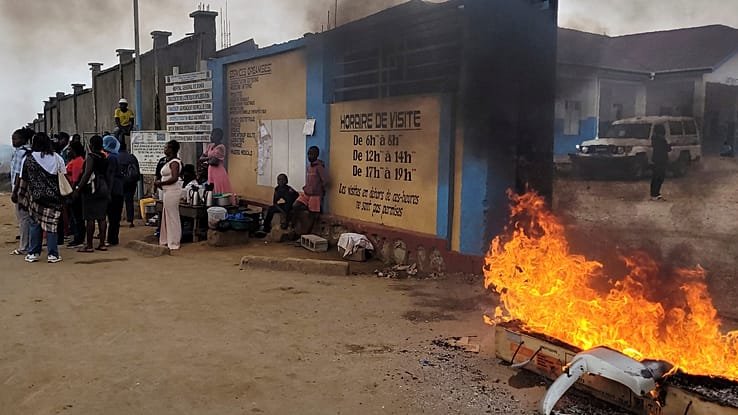
Hundreds of protesters took to the streets of Kinshasa on Monday to oppose a proposed constitutional amendment that could pave the way for Democratic Republic of Congo President Félix Tshisekedi to seek a third term in office.
The demonstration was organised by the C64 coalition, an opposition grouping that is urging Tshisekedi to abandon plans to alter the constitution.
Tshisekedi was first elected president in 2019 and secured a second term in 2023. Under the current constitutional framework, he would be barred from seeking another term.
Addressing protesters, members of the coalition called on the president to abandon the proposed constitutional changes, warning that the move could undermine the country’s democratic institutions.
Although the next presidential election is still two years away, political tensions have already increased between the government and opposition groups after the ruling-party-dominated parliament approved a proposal to amend the constitution.
A previous opposition demonstration against the proposed amendment in Kinshasa in July was dispersed by authorities. Several opposition supporters were injured during clashes, while the United Nations said at least one person was killed.
The government has also announced plans for a national dialogue, a long-standing demand of opposition groups. However, authorities have yet to provide details on the scope or terms of the proposed talks.
The constitutional debate is unfolding against the backdrop of continuing insecurity in parts of the country, particularly in eastern DRC, where the Rwanda-backed M23 armed group has seized significant territory.
The conflict in the east has added to political and economic pressures facing the government as it seeks to maintain control and address security concerns.
Opposition groups, however, have increasingly focused on the proposed constitutional amendment, arguing that any change that could enable Tshisekedi to pursue a third term threatens the country’s democratic transition.
With the 2028 elections approaching, the controversy is expected to remain a major issue in Congolese politics and could further intensify tensions between the government and opposition.


