


Nigeria’s headline inflation rate eased marginally to 15.39 per cent year-on-year in August 2026, down from 15.43 per cent recorded in July, according to the latest report released by the National Bureau of Statistics (NBS) on Tuesday.
The statistics agency also reported a significant moderation in month-on-month inflation, which declined to 0.71 per cent in August from 1.57 per cent in July, representing a 0.86 percentage-point decrease.
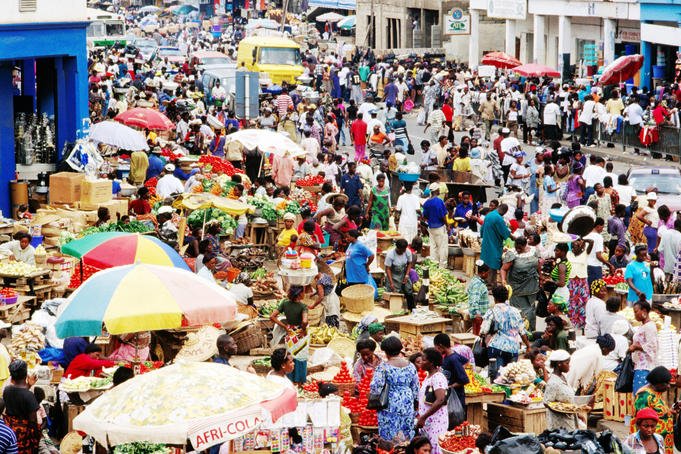
Food inflation also moderated during the month, with the year-on-year rate standing at 19.57 per cent. On a month-on-month basis, food inflation fell sharply to 1.02 per cent in August from 5.56 per cent in July.
The NBS said the figures indicated that food prices continued to increase during the month, but at a slower rate.
“The food inflation rate in August 2026 was 19.57 per cent on a year-on-year basis and stood at 25.30 per cent in the same month of the preceding year (August 2025),” the agency said.
It added that the month-on-month food inflation rate declined by 4.55 percentage points from 5.56 per cent in July to 1.02 per cent in August, indicating that “the average prices of food items are increasing at a decreasing rate.”
The moderation was attributed largely to changes in the average prices of several food items, including palm oil, carrots, pepper, onions, cassava flour, beef, yam flour, water yam, melon (egusi), fresh ginger, fresh fish, Irish potatoes, wheat grain, frozen chicken and turkey meat.
The NBS said the average annual food inflation rate for the 12 months ending August 2026 stood at 15.70 per cent, representing a 14.15 percentage-point decline from the 29.86 per cent recorded in August 2025.
Meanwhile, core inflation, which excludes volatile agricultural produce and energy prices, stood at 13.29 per cent year-on-year in August, down significantly from 22.93 per cent recorded in August 2025.
On a month-on-month basis, core inflation stood at -0.06 per cent in August, compared with 0.15 per cent in July.
The average 12-month annual core inflation rate for the period ending August 2026 was 17.30 per cent, a decline of 8.85 percentage points from the 26.15 per cent recorded in August 2025.
Inflationary pressures, however, remained uneven across the country.
On a year-on-year basis, Lagos recorded the highest headline inflation rate at 23.68 per cent, followed by Zamfara at 22.56 per cent and Enugu at 22.06 per cent. Sokoto recorded the lowest rate at 2.11 per cent, followed by Kebbi at 3.72 per cent and Jigawa at 3.81 per cent.
On a month-on-month basis, Rivers recorded the highest headline inflation rate at 6.92.


