



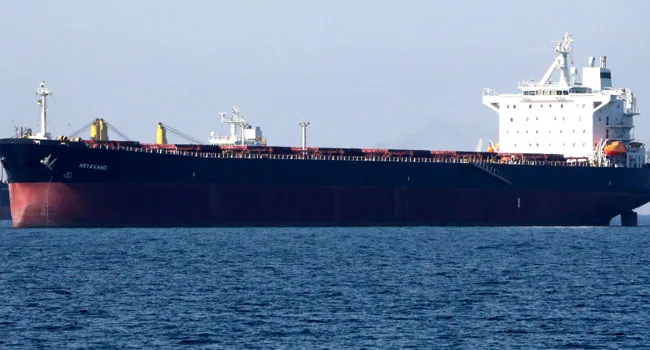
At least 10 vessels have been attacked in or near the Strait of Hormuz since Sunday, marking the highest level of attacks since the war between the United States, Israel and Iran began, according to maritime security data released on Wednesday.
Four vessels were struck on Tuesday and six on Sunday, making Sunday the day with the highest number of attacks recorded in a single day since the conflict began, data from security firm Vanguard, the International Maritime Organisation (IMO) and the British maritime agency UKMTO showed.
Two seafarers have been reported missing, while a container ship was said to have sunk following the latest attacks, according to maritime sources.
Iran began targeting commercial vessels transiting the strategic waterway in March in retaliation for US-Israeli strikes on its territory. Tehran has continued attacking ships passing through routes it has not approved.
The attacks have disrupted shipping through the Strait of Hormuz, one of the world’s most important maritime corridors for transporting oil and other commodities from Gulf countries.
Twenty-three attacks have been recorded since the beginning of October, almost twice the average monthly number of incidents since the war started.
The United States said on Saturday that it had struck a cargo vessel as part of its embargo on Iranian ports, although the incident was not included in the IMO’s records.
Barun Gupta, an analyst at Vanguard, said the recent increase in attacks could be linked to the recovery in energy exports through the strait, which had nearly returned to pre-war levels at the beginning of October before declining again.
“Gulf oil flows have been recovering, with traffic through Hormuz recently returning to around 80 per cent of pre-war levels despite the conflict,” Gupta told AFP on Wednesday.
He said the latest attacks could be Tehran’s attempt to demonstrate its ability to disrupt the recovery in shipping and increase pressure on commercial operators and global energy markets.
“Increasing the tempo of attacks therefore gives Tehran a way of demonstrating that it can still disrupt that recovery and impose costs on commercial shipping and global energy markets,” he said.
Gupta also suggested that US President Donald Trump’s recent pledge not to launch further attacks on Iran before the American midterm elections could have influenced Tehran’s calculations.
The commitment may have given Iran what Gupta described as “a perceived window to increase pressure with a lower immediate risk of US military escalation”.
The IMO said 24 seafarers had died in incidents in the area around the Strait of Hormuz since the conflict began.
The latest escalation has heightened concerns over the security of commercial shipping through the waterway and the potential consequences for global energy supplies.


