



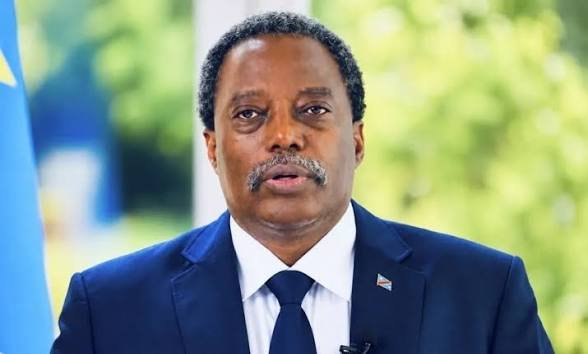
The Democratic Republic of Congo (DR Congo) has banned the activities of 13 political parties, including the People’s Party for Reconstruction and Democracy (PPRD), associated with former President Joseph Kabila, triggering accusations of political repression from opposition figures.
The decision, announced on Thursday, October 15, by Interior Minister Jacquemain Shabani, was presented by the government as a national security measure but has sparked debate over political freedoms, democratic pluralism and the legality of the restriction.
Other parties affected include Leadership and Governance for Development (LGD), led by Matata Ponyo; Seth Kikuni’s PISTE-E; and Claudel Lubaya’s Union for African Democracy (UDA).
Provincial governors have been tasked with enforcing the measure.
The ban comes amid heightened political tensions following the announcement of the National Refoundation Front (FRN), a politico-military movement established in Goma, eastern DR Congo, and led by Kabila.
The development has widened divisions between the government and sections of the opposition, with supporters of the measure citing national security concerns while critics say it threatens political participation and freedom of expression.
The ruling Union for Democracy and Social Progress (UDPS) welcomed the decision, arguing that the government had a responsibility to protect citizens and maintain national security.
Jean-Baptiste Katsongo, the party’s federal president in Butembo, North Kivu Province, said the Interior Ministry was acting within its mandate.
“We welcome this decision because it is a matter of responsibility. The Interior Ministry is responsible for the security of Congolese citizens. In that capacity, it must take the necessary decisions to protect them,” he said.
However, opposition figures have criticised the restriction, arguing that it could further limit their ability to challenge government policies and participate in national affairs.
Bruno Mwitohero, LGD’s federal president, said the measure came amid broader concerns about governance, constitutional changes and the functioning of state institutions.
“We are fighting against constitutional changes and the tyranny taking hold across the country. We cannot stand by and do nothing,” he said.
Mwitohero also alleged that some members of parliament had been bribed and were no longer able to express themselves freely. He warned that restricting political parties could further undermine dissent and democratic debate.
His comments reflect growing friction between the government and opposition groups as the country grapples with persistent insecurity in its eastern provinces and wider political disagreements.
Beyond the immediate political confrontation, the ban has raised questions about its legal basis and implications for the country’s democratic institutions.
Available information on the announcement does not provide detailed grounds for the restrictions or specify how long they will remain in force. The measure also does not formally dissolve the affected parties.
Independent political analyst Guel Mamlaka cautioned that the decision could affect ordinary party members and supporters who may have no involvement in any alleged wrongdoing attributed to their leaders.
“This decision risks creating frustration among Congolese members of these parties who are not necessarily involved in the actions attributed to their leaders,” he said.
Mamlaka also warned that the restrictions could produce unpredictable consequences and deepen political tensions in a country that identifies itself as a democracy.
The controversy has centred on whether the government’s security concerns justify limiting political activities and whether the action complies with the laws protecting political association and democratic participation.
The distinction between suspending a party’s activities and formally dissolving it has also become central to the debate, with the legality of the measure depending on the applicable legal framework and any available avenues for challenge.
The decision has also triggered developments among political figures associated with Kabila. Since the announcement of the FRN and the restrictions on PPRD activities, some political figures have reportedly distanced themselves from the former ruling party.
The departures point to disagreements within Kabila’s political circle over the strategy to pursue and how to sustain their political influence under the changing circumstances.
The future of the PPRD and its ability to maintain its political presence remain uncertain as the restrictions take effect.
With the government defending the measure on security grounds, opposition figures alleging repression and analysts questioning its legal implications, the ban has opened another front in DR Congo’s political crisis.
Whether the decision will address the authorities’ security concerns or deepen mistrust between the government and its opponents remains unclear, particularly as the country continues to confront insecurity in the east and persistent political divisions.


 has banned the activities of 13 political parties, including the People’s Party for Reconstruct)