



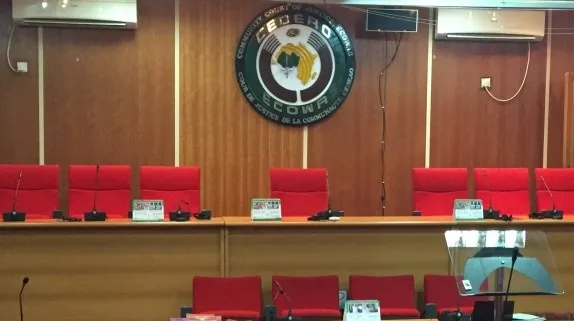
The newly appointed judges of the Community Court of Justice of the Economic Community of West African States (ECOWAS) have pledged to uphold judicial independence, integrity and impartiality while promoting the timely and effective administration of justice.
The commitment was reiterated by the President of the Court, Justice Charlyne Brumskine, in her opening address on October 19, 2026, at the commencement of a five-day orientation programme for the new judges.
The programme, held under the theme, “Becoming an ECOWAS Judge: Judicial Excellence, Institutional Integration and Effective Adjudication,” is designed to prepare the judges for their responsibilities at the regional court.
Congratulating her colleagues on their assumption of office on October 13, 2026, Brumskine stressed that serving on the court required a thorough understanding of the ECOWAS legal framework, the court’s jurisdiction and procedures, as well as its jurisprudence developed over more than two decades.
She outlined three key priorities for the new college of judges: judicial independence and integrity, collegiality, and effectiveness.
According to her, public confidence in the court depends on the fairness, impartiality and integrity demonstrated in every case.
The court president also emphasised the importance of rigorous deliberations, mutual respect among judges and consistency in judicial decisions, noting that these principles were essential to strengthening the institution’s credibility.
She called for measures to address delays in the administration of justice and improve the timely resolution of cases, in line with the court’s Strategic Plan for 2026–2030.
Brumskine further highlighted the need for sustained engagement with ECOWAS member states to improve compliance with the court’s judgments.
Earlier, the Acting Chief Registrar, Dr Ousmane Diallo, welcomed the newly appointed judges and outlined the objectives and expected outcomes of the orientation programme.
He described the exercise as an opportunity to facilitate the smooth integration of the judges and their executive assistants into the court’s institutional and operational environment.
Diallo said the programme would familiarise participants with the court’s organisational structure, departmental responsibilities, administrative procedures and coordination mechanisms.
He added that it would clarify the respective roles of judicial, legal, administrative and other support services while strengthening communication and collaboration among judges, executive assistants, heads of departments and other staff members.


 have pledged)