



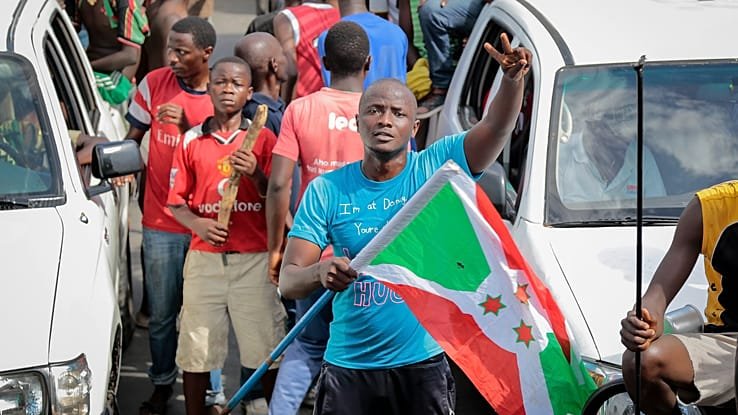
Burundi’s commemoration of the 33rd anniversary of former President Melchior Ndadaye’s assassination has reignited debate over political pluralism, democratic governance and the concentration of power in the East African nation.
The anniversary was marked at the Heroes of Democracy Square, where President Évariste Ndayishimiye and other participants laid wreaths in honour of Ndadaye and his close associates. A mass was also held to remember those killed during the coup attempt of October 20–21, 1993.
The commemorations provided an opportunity for political leaders to assess the country’s democratic development, with opposition figures warning that restrictions on political competition could undermine the principles for which Ndadaye stood.
Olivier Nkurunziza, president of the Union for National Progress (UPRONA), said that although Burundi had achieved peace, greater efforts were needed to establish a functioning democracy.
He warned that the country risked returning to a one-party system if political pluralism was not protected and democratic institutions were strengthened.
Similarly, Gabriel Banzawitonde, president of the APDER party, expressed concern over what he described as the ruling party’s growing consolidation of power, arguing that the trend raised questions about the state of democratic competition.
However, Jean De Dieu Mutabazi, president of RADEBU, offered a more positive assessment, saying Burundi had made progress in developing democracy and political pluralism.
He acknowledged, nevertheless, that democratic principles were not always fully respected, underscoring the challenges facing the country’s political system.
Ndadaye, Burundi’s first democratically elected president, was assassinated in October 1993, barely three months after taking office. His killing triggered a period of severe instability that contributed to years of civil war and interethnic violence.
The conflict left thousands dead and forced many others into exile, marking one of the darkest periods in the country’s modern history.
More than three decades after his death, Ndadaye remains a symbol of Burundi’s struggle for democratic governance, while the latest commemorations have highlighted continuing disagreements over how far the country has progressed in realising that ambition.


