



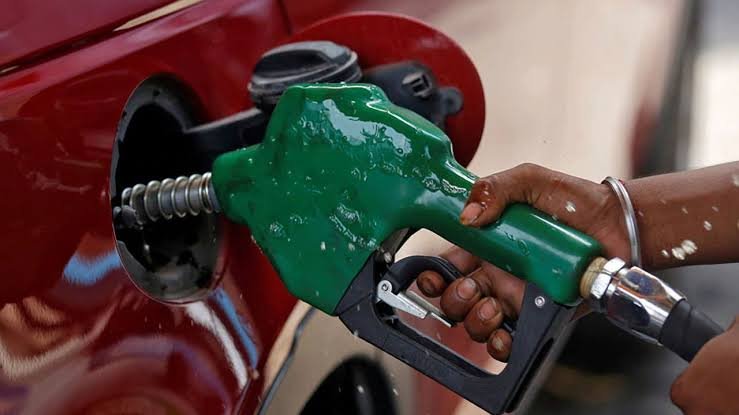
Petrol consumption in Nigeria fell to a daily average of 41.6 million litres in August, the lowest level recorded in the first eight months of 2026, as soaring pump prices continued to squeeze households, transport operators and businesses.
An analysis of factsheets released by the Nigerian Midstream and Downstream Petroleum Regulatory Authority (NMDPRA) showed that the August figure represented a 31 per cent decline from the 60.2 million litres consumed daily in January.
The decline comes amid rising petrol prices, which have forced some Nigerians to reduce their use of private vehicles and petrol-powered generators, while commercial transport operators and businesses grapple with higher operating costs.
Although consumption fluctuated during the period, the figures indicate a substantial reduction between January and August, despite occasional increases in monthly demand.
Daily consumption fell from 60.2 million litres in January to 56.9 million litres in February before dropping further to 47.3 million litres in March. It recovered to 51.1 million litres in April but declined to 46.3 million litres in May.
Consumption subsequently rose to 47.4 million litres in June and 48.3 million litres in July before falling to 41.6 million litres in August.
The August decline was particularly striking because it occurred despite relatively high petrol supplies to the domestic market, raising questions about the relationship between pump prices, consumer demand and fuel distribution.
According to the factsheets, average daily petrol supply stood at 50.5 million litres in August, compared with 45.5 million litres in July.
Supply had reached 64.9 million litres daily in January before falling sharply to 32.5 million litres in February. It subsequently increased to 40.1 million litres in March, 44.4 million litres in April and 47.4 million litres in May.
The figure rose to 50.6 million litres in June before declining to 45.5 million litres in July and recovering to 50.5 million litres in August.
The contrasting trends in consumption and supply suggest that increased availability did not translate into higher demand, with the cost of petrol remaining a major concern for consumers.
The supply figures also showed changing contributions from the Dangote Petroleum Refinery and imported products supplied by the Nigerian National Petroleum Company Limited (NNPCL) and other independent marketers.
Dangote supplied an average of 40.1 million litres daily in January, while NNPC and other importers accounted for 24.8 million litres.
In February, Dangote’s supply fell to 29.4 million litres daily, while imports dropped to three million litres. The refinery increased its supply to 34.2 million litres in March, as imports rose to 5.9 million litres.
In April, Dangote supplied 40.7 million litres daily, compared with 3.7 million litres from importers. Its contribution rose to 41.5 million litres in May, while imports increased to 5.9 million litres.
The pattern changed in June when Dangote’s supply fell to 32.5 million litres daily, while imports increased to 18.1 million litres. In July, the refinery’s supply declined further to 25.8 million litres, while imports rose to 19.7 million litres.
In August, Dangote’s daily supply recovered to 35 million litres, while imports declined to 14.6 million litres.
The reduction in petrol consumption has coincided with growing public concern over the affordability of fuel and its impact on transportation, food prices and other essential goods and services.
The rising cost of petrol has also fuelled criticism of the Federal Government’s decision to end the fuel subsidy in May 2023, with some Nigerians arguing that the government should introduce stronger measures to cushion the impact of higher energy costs.
The government has maintained that its latest intervention is a temporary discount rather than a return to the subsidy regime.
On October 8, 2026, it announced a 31-day petrol discount at NNPCL retail outlets, with priority given to public transport operators across the country.
The Minister of Finance and Coordinating Minister of the Economy, Taiwo Oyedele, said the initiative was designed to provide some relief to consumers while maintaining the government’s position against fuel subsidies.
“We are offering a discount on petrol dispensed by NNPC Limited for the next 30 days in the first instance, with priority for public transporters nationwide. It’s not a subsidy; the government is saying we sell to you at a cost,” Oyedele said while announcing the initiative.
However, commercial transport operators who spoke to Daily Trust nearly two weeks after the announcement expressed disappointment, saying the intervention had yet to significantly reduce their operating expenses.
They argued that the discount was too small to make a meaningful difference and complained that the procedures for accessing it were cumbersome.
Some operators also said spending time queuing for discounted petrol could reduce their working hours and the number of trips they complete daily, limiting the benefits of the intervention.
The concerns have raised questions about the reach and effectiveness of the government’s efforts to ease the burden of rising fuel costs.
With petrol prices affecting transportation, power generation and the cost of doing business, the decline in consumption highlights the growing pressure on Nigerian households and enterprises to adjust their spending as fuel becomes increasingly expensive.


