



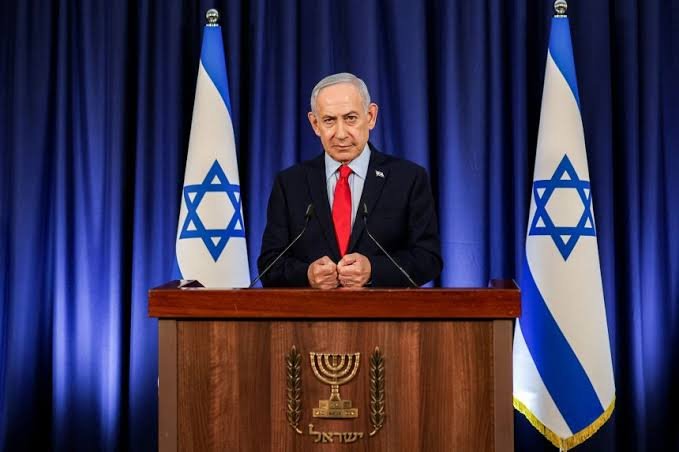
Israeli Prime Minister Benjamin Netanyahu has made his close relationship with US President Donald Trump a central feature of his election campaign, arguing that their partnership offers Israel its strongest chance of confronting Iran as voters prepare to decide his political future.
Netanyahu highlighted Trump’s endorsement on Sunday, a day before Israel’s election, after the US president urged Israelis to re-elect him and called for the two countries to “finish the job” against Iran.
Speaking in a televised appearance, Netanyahu described Trump as an unprecedentedly friendly American president and said the US leader was urging Israelis to vote for him.
Trump, who launched the war against Iran alongside Netanyahu in February, had earlier posted on social media: “Vote for Bibi Netanyahu for Prime Minister, we have to finish the job that we started!”
Netanyahu said Trump remained prepared to take action to eliminate what he described as the Iranian threat, adding that he had instructed Israel’s intelligence agency, Mossad, and military to work towards bringing down the Iranian regime.
However, the White House sought to temper expectations of an immediate resumption of hostilities. Deputy Press Secretary Anna Kelly said the United States would not attack Iran before the November 3 midterm elections, while maintaining that the blockade against Iran would remain in force.
The exchange has placed Iran and national security at the centre of Israel’s election, with Netanyahu presenting himself as the leader best equipped to confront the country’s adversaries after years of conflict on multiple fronts.
His principal challenger, centrist former military chief Gadi Eisenkot, also praised Trump’s relationship with Israel but argued that the US president would cooperate with whichever leader Israelis elected.
“I value his efforts and his commitment to Israel’s security, and I am confident that he will work in full cooperation with any leader chosen by the people,” Eisenkot said in a social media post.
The election is Israel’s first since the October 7, 2023, Hamas attacks, which exposed major security failures and triggered a series of wars that have reshaped the country’s political landscape.
Although Israeli politics have shifted further to the right, Netanyahu faces growing criticism from voters who believe his polarising leadership has weakened national unity and security.
Opinion polls suggest his Likud Party could lose seats, potentially depriving his coalition of right-wing, far-right and ultra-Orthodox parties of its narrow parliamentary majority. However, Eisenkot and other opposition parties also face difficulties assembling a viable alternative coalition.
Netanyahu, who has dominated Israeli politics for much of the period since 2009, has repeatedly demonstrated his ability to survive political setbacks. His opponents briefly removed him from office after four inconclusive elections within two years, but he returned to power 18 months later.
The campaign has also featured increasingly confrontational messaging. Netanyahu shared an AI-generated video depicting Iran’s Supreme Leader Mojtaba Khamenei in a hospital bed, while separately posting a computer-generated image of a mushroom cloud over Tel Aviv to underscore what he described as the existential danger posed by Iran.
Eisenkot accused the prime minister of relying on fear, misinformation and threats to win votes, arguing that such tactics would not succeed this time.
Trump’s intervention also carries potential political implications in the United States, where Republicans are preparing for the November midterm elections amid public dissatisfaction with the Iran war and its impact on fuel prices.
Major fighting has been suspended for months following ceasefire negotiations conducted without Israeli participation, leaving uncertainty over whether Washington and Jerusalem will resume military action.
For Netanyahu, the election therefore represents both a test of public confidence in his leadership after the October 7 security failures and a referendum on his strategy of confronting Iran through a close partnership with Trump.


