



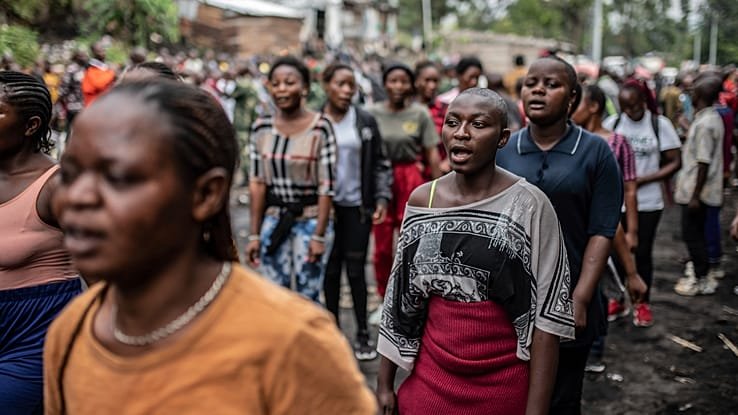
Residents of Goma in eastern Democratic Republic of Congo have called for concrete steps to end the conflict, expressing doubts that fresh US sanctions against Rwanda will translate into improved security in the troubled region.
The reactions followed Washington’s announcement on Wednesday, October 28, of sanctions against Rwanda’s Ministry of Defence and Zigama Credit and Savings Society, a financial institution accused of facilitating support for the armed movement led by former Congolese president Joseph Kabila.
While some residents believe the measures could increase pressure on Kigali and help advance peace efforts, others remain sceptical, citing previous diplomatic agreements and sanctions that have yet to produce lasting improvements on the ground.
Jimmy Buhenwa, a Goma resident, said repeated international interventions had failed to change the security situation.
“If these sanctions had really been significant, we would have seen a change by now. But since the agreements and sanctions were announced, we have seen no change,” he said.
Another resident, David Kalamembo, said the population was more concerned about an end to the fighting than diplomatic announcements whose impact remained uncertain.
“They talk about sanctions, but they change nothing. That is why we are asking God to help us by ending the war, so that we can return to the way things were,” he said.
However, not all residents dismissed the latest measures. Michel Kamango expressed optimism that the sanctions could increase pressure on the parties involved and encourage compliance with agreements aimed at restoring peace.
“I believe there will be pressure, since there were agreements. And I believe that everything will be fine and that, soon, peace will return,” he said.
Aluta Ramazani also stressed that the overriding concern of residents was the restoration of peace.
“All we want is for peace to return to our Congo. We do not need anything else; we simply need things to change,” he said.
The sanctions form part of wider diplomatic efforts to end the conflict in eastern DRC. Washington accused Kigali of providing military support to the Front for the Refoundation of the Nation (FRN), led by Kabila, and said the measures were intended to increase pressure on institutions allegedly linked to the armed movement.
But independent analyst Fidel Banso questioned whether targeting Rwandan government and financial institutions would directly influence the military dynamics in eastern Congo.
“Have all these sanctions contributed to ensuring that the Washington process is respected? These US sanctions against the Rwandan government and Rwanda’s defence sector may have implications for the Rwandan government. But I do not see how these sanctions can have an impact on the politico-military movement in Goma,” he said.
His assessment points to a major challenge facing Washington: translating financial and diplomatic pressure on institutions accused of supporting armed groups into measurable changes in a conflict involving several political and military actors.
The sanctions may increase the financial and diplomatic costs of alleged support for the armed movement, but their effect on military operations and the security situation remains uncertain. Their implementation and the response of the parties involved will be critical to determining their impact.
The measures have also exposed the continuing diplomatic divide between Kinshasa and Kigali.
In Kinshasa, the Congolese authorities welcomed the US decision, with Deputy Foreign Minister responsible for Francophonie and the Congolese diaspora, Crispin Mbadu, expressing support in a post on X.
Rwanda, however, rejected the accusations. Foreign Minister Olivier Nduhungirehe told Agence France-Presse that Kigali was not responsible for the crisis in the DRC.
The contrasting reactions reflect the unresolved tensions between the neighbouring countries, despite ongoing diplomatic initiatives to end the fighting.
For Goma residents, however, the success of the latest intervention will not be measured by official statements or sanctions announcements, but by whether it helps stop the violence, restore security and allow displaced and affected communities to return to normal life.
Until such changes become visible, many remain caught between cautious hope and deep scepticism.


