



Russia is planning to expand its university campuses in Africa and increase scholarship opportunities for students from the continent, targeting a rise in enrolment from about 3,000 to at least 15,000.
The initiative is part of efforts to deepen educational cooperation between Russia and African countries through expanded access to higher education, professional training and joint academic programmes.
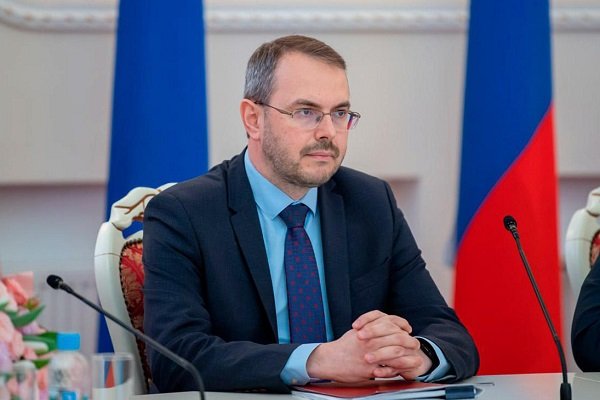
Deputy Minister of Science and Higher Education of the Russian Federation, Konstantin Mogilevsky, disclosed this during a session on “Vectors of Development of the Russia-Africa Educational Partnership” at the Russia-Africa Media Forum in Moscow.
He said Russian universities were committed to training professionals who would return to their home countries and contribute to national development rather than remain in Russia after graduation.
“We train personnel for African states. We do not vacuum up the best minds from the African continent in order to keep them here — we teach them here and offer them the opportunity to return to their homeland,” he said.
Mogilevsky identified the establishment of Russian university campuses in Africa as a major component of the partnership, citing existing branches of St Petersburg State University and Kazan Federal University in Cairo, Egypt.
He disclosed that two additional campuses had been constructed with support from a private investor, creating room for increased student enrolment and expanded academic programmes.
According to him, the campuses have an average area of about 100,000 square metres each, while medical education is currently among the programmes offered.
He said new courses would be introduced to broaden opportunities for African students seeking professional qualifications in different fields.
Beyond physical expansion, Mogilevsky announced that more than 400 young Africans had benefited from Russia’s grant scheme for international students.
He explained that the grants covered not only tuition fees but also return travel, accommodation, medical insurance and monthly stipends.
“Under our legislation, we can now provide grants for study in Russia. And a grant is not only free tuition: it is compensation for travel to Russia and back, accommodation here, medical insurance and the payment of a stipend,” he said.
He encouraged African youths to participate in Russia’s Open Doors Olympiad, noting that winners and prize-winners could qualify for the scholarship support.
Meanwhile, the Central African Republic’s Minister of Higher Education, Scientific Research and Technological Innovation, Jean-Laurent Sissa-Magale, called for increased admission opportunities for students from his country in Russian universities.
He said the Central African Republic faced a shortage of skilled professionals, particularly in mining, manufacturing and technical fields, making international educational partnerships necessary.
“We do not have the necessary experts. Therefore, we would like, if possible, for education to take place not only in our state, but for our students to come to Russia,” he said.
Sissa-Magale said his government was interested in training engineers and technical professionals who could return home and contribute to the country’s development.
He also advocated stronger Russian-language education in the Central African Republic, citing the longstanding educational relations between both countries.
In another intervention, Rector of the Russian State University for the Humanities, Andrey Loginov, called for academic partnerships that would respect the cultural identities, historical experiences and values of African countries.
He identified teacher training, joint academic programmes and digital humanities as areas offering opportunities for stronger collaboration between Russian and African institutions.
Loginov said his university was willing to support African institutions in teaching Russian history and culture, while developing joint dual-degree programmes in digital archives and museums.
He also proposed specialised training for professionals working in archives, museums and libraries, alongside an interdisciplinary educational module under the Russian-African Network University.
The proposed module would introduce students to Russia’s geography, history and culture, as well as the historical connections between Russia and Africa, with its content adapted to the needs of different African countries, regions and language groups.
The discussions formed part of the third Russia-Africa Summit and Economic and Humanitarian Forum, holding in Moscow from October 28 to 29.
The summit is focusing on expanding cooperation in trade, science, technology and humanitarian development, alongside issues relating to technological sovereignty, food and energy security and alternative payment systems.
A joint declaration and a new medium-term action plan for Russia-Africa cooperation are expected at the conclusion of the summit.
The Roscongress Foundation is coordinating the summit and forum.


