


Sixty-six years after apartheid-era police opened fire on peaceful protesters at Sharpeville, survivors and families of victims have begun a fresh legal battle seeking justice and reparations for the massacre.
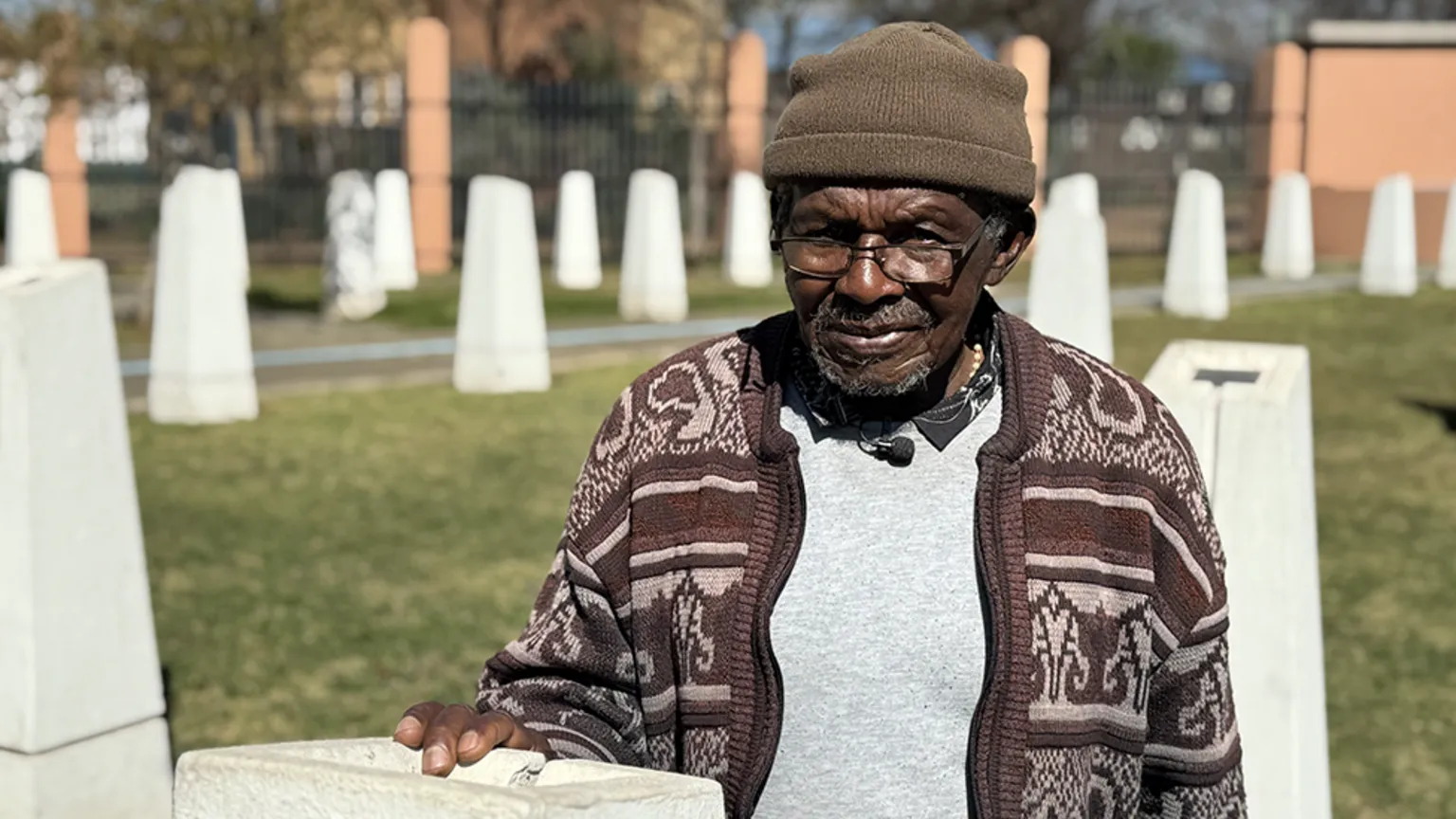
Among those pursuing the case is 86-year-old Abraham Mofokeng, who still carries a bullet lodged in his spine and walks with a limp after being shot in the leg during the March 21, 1960 protest.
Mofokeng was 20 when he joined thousands of black South Africans demonstrating against the apartheid government’s pass laws, which severely restricted their freedom of movement.
“We weren’t seen as people,” Mofokeng recalled, explaining why he took part in the protest.
“All you were good for was working. You couldn’t question them; you were supposed to just do as you’re told.”
The Sharpeville massacre became one of the defining moments of the anti-apartheid struggle and exposed the brutality of the apartheid system to the international community.
At least 69 protesters were killed and more than 200 injured in the police shooting, although later research by South African scholars has put the death toll as high as 91.
The protesters had gathered to oppose the pass laws, under which black South Africans were required to carry documents, commonly known as “dompas”, regulating where they could live and work and restricting their movement.
Mofokeng said the protesters had expected a peaceful demonstration.
“We explained to the police that we didn’t want the passes anymore and we were prepared to go to prison. There was a commotion, then all hell broke loose when the police started shooting,” he said.
Another survivor, 90-year-old Larazus Magotsi, recalled witnessing police officers shooting at protesters who were attempting to flee or get back on their feet.
“We heard gunshots and ran and hid inside a store, peeping to see what was happening outside,” he said.
“People were lying on the ground. When we looked out again, we saw that some were trying to get up, but the police were just shooting at them.”
It is estimated that more than 1,300 bullets were fired into the crowd.
Despite the scale of the killings, the legal consequences for those responsible were limited. The only criminal case that followed was an unsuccessful attempt to prosecute protesters for affray.
A year after the massacre, the apartheid government enacted the 1961 Indemnity Act, shielding police officers and the government from criminal prosecution and civil claims arising from events at Sharpeville.
The legislation remains on South Africa’s statute books more than three decades after the end of apartheid.
Now, Sharpeville survivors and relatives of those killed are asking the High Court to declare the law unconstitutional under the country’s post-apartheid Constitution, which came into force in 1994.
The case has been filed by South African non-governmental organisation Lawyers for Human Rights in partnership with UK-based law firm Leigh Day.
The legal team is also seeking certification for a class action, which could allow dozens of survivors and relatives of victims to pursue claims collectively against the state.
If granted, the action could involve about 70 people and potentially pave the way for further legal action against alleged perpetrators who may still be alive.
Charne Tracey, one of the lawyers involved in the case, said the community was seeking more than financial compensation.
“Apart from the individual damages, what the community’s looking for is basically reparations to enable their healing. They feel as though Sharpeville is a forgotten community,” she said.
Tracey added that many survivors had received little assistance to deal with the long-term consequences of the massacre.
Constitutional law expert Professor Frans Viljoen said repealing or invalidating the Indemnity Act would help South Africa confront the legacy of apartheid.
He explained that although apartheid laws remained in force when the new Constitution came into effect, Parliament retained the power to repeal or amend them.
Viljoen backed the legal challenge, describing it as an opportunity to “cleanse” the country’s laws of remnants of its apartheid past.
The Truth and Reconciliation Commission (TRC), established after the end of apartheid under former President Nelson Mandela, investigated gross human rights violations committed during the period.
Although the commission was widely credited with helping South Africa confront its violent past, it also faced criticism because perpetrators who received amnesty were not imprisoned.
No police officers involved in the Sharpeville shootings applied for amnesty before the commission.
The South African government told the BBC that it had supported victims of apartheid-era abuses and would continue to do so, adding that it did not oppose survivors and families seeking legal remedies.
The Department of Justice said 560 victims recognised by the TRC had received individual reparations totalling about $31 million.
It acknowledged that not all Sharpeville survivors and relatives had been identified and encouraged eligible victims to come forward.
For survivors, however, the campaign is about more than compensation.
Mofokeng believes a successful legal challenge could help heal wounds that have remained open for generations.
“Apartheid is dead and buried. A win would bring complete healing, not just for us, but for future generations as well,” he said.
“Considering how people died, many have not completely healed.” (BBC Africa)


