


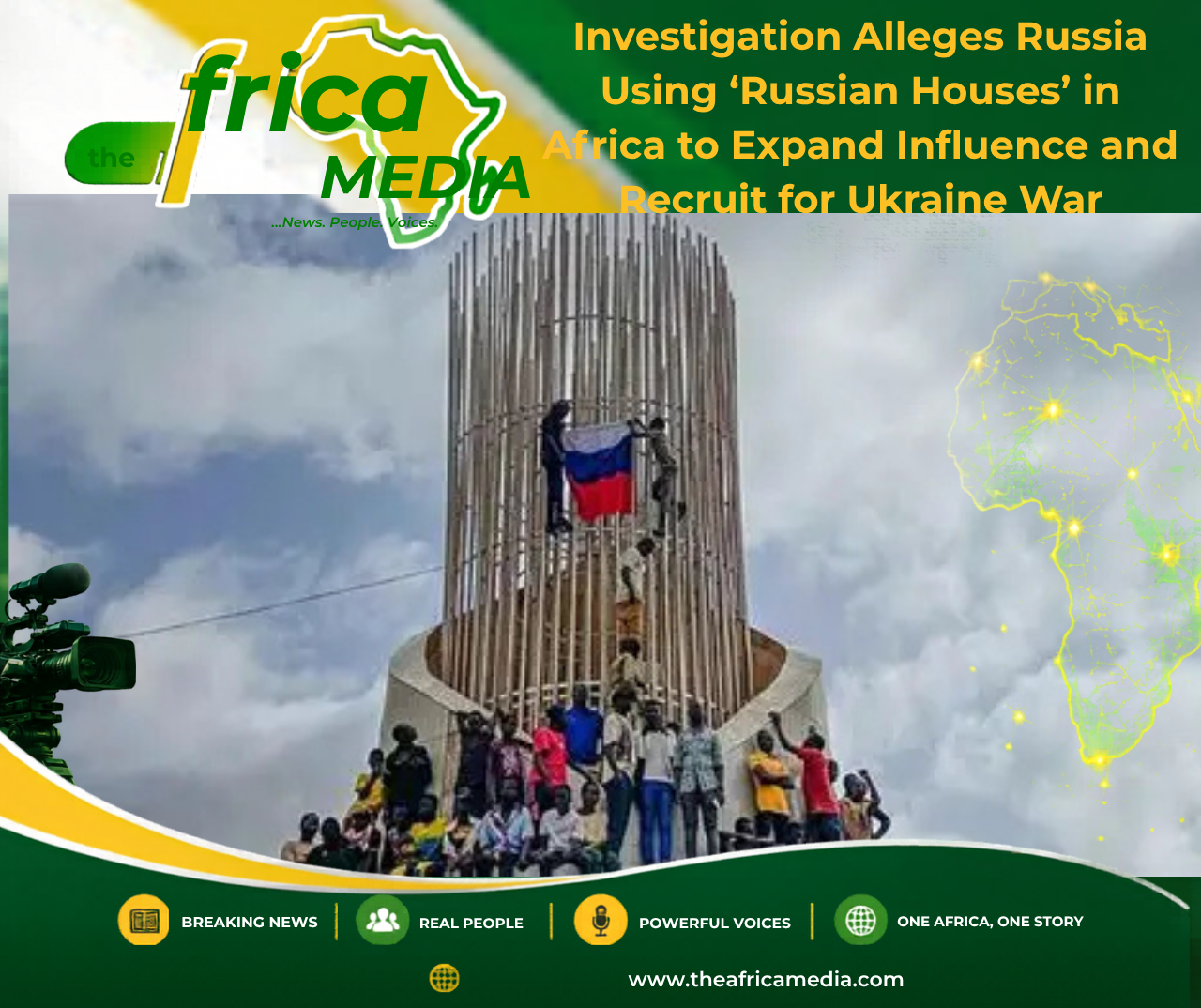
A new investigation by Ukraine’s military intelligence agency (HUR) has alleged that Russia is expanding a network of so-called “Russian Houses” across Africa as part of a broader strategy to strengthen its influence, spread pro-Kremlin narratives and recruit Africans for activities linked to its war in Ukraine.
According to the report, Russia is planning to establish new centres in eight African countries, including Nigeria, Senegal, Liberia, Sierra Leone, Togo, Mali, Mozambique and São Tomé and Príncipe.
The centres are operated through Rossotrudnichestvo, Russia’s federal agency for international cooperation, working alongside the Centre for Public Diplomacy (CPD), an organisation established in 2024 to support Moscow’s outreach efforts on the continent.
Expanding Influence Across Africa
Russian Houses have already been opened or announced in more than 20 African countries, targeting young people through cultural programmes, language classes, educational opportunities and community outreach initiatives.
According to HUR, the centres present themselves as cultural and educational institutions aimed at promoting Russian language, history and values. Activities reportedly include film screenings, literature distribution, academic programmes and guidance for Africans seeking study or employment opportunities in Russia.
The investigation claims that some participants are later recruited into military-related activities or employment connected to Russia’s war effort.
Recruitment Concerns
Ukrainian intelligence alleges that some African nationals who travel to Russia through educational or employment programmes ultimately find themselves working in military-related industries or enlisted in the Russian armed forces.
The report cites concerns raised by several international organisations and research institutions that Russia has expanded recruitment efforts targeting foreign nationals since the start of the war in Ukraine.
According to figures released by Ukraine’s Foreign Ministry, nearly 3,000 citizens from 36 African countries have reportedly participated in combat operations on Russia’s side since the conflict intensified.
The investigation also highlights reports that some recruits were promised employment, training opportunities or scholarships before being redirected into military service or defence-related work.
Links to Wagner and Africa Corps
The report further alleges connections between some Russian Houses and the Wagner Group’s successor organisation, Africa Corps, which operates under the Russian Ministry of Defence.
According to the investigation, Russian Houses established in countries such as Mali, Burkina Faso, Niger and the Central African Republic expanded alongside growing Russian military influence following political upheavals and military coups in those nations.
HUR claims some centres have been used to support broader Russian political, security and economic objectives across the continent.
Russia Denies Allegations
Russian officials have repeatedly denied accusations that educational and cultural programmes are being used to recruit Africans for military purposes.
Kremlin spokesperson Dmitry Peskov recently stated that Moscow was unaware of any cases involving deceptive recruitment of African citizens.
Russian Ambassador to Nigeria Andrey Podyelyshev has also dismissed reports that Nigerians were being recruited through Russian-affiliated channels, describing such claims as misleading.
Growing Geopolitical Competition
The allegations come amid increasing competition for influence in Africa among global powers, including Russia, China, the United States and European nations.
Analysts say Russia has sought to expand its presence across Africa through military cooperation agreements, security assistance, economic partnerships and cultural diplomacy initiatives.
While supporters view the programmes as opportunities for education and international cooperation, critics argue they form part of a broader effort to advance Moscow’s strategic interests on the continent.
The claims contained in the Ukrainian intelligence report have not been independently verified, and Russia has rejected allegations that it is using cultural institutions as recruitment hubs for military operations.
NEWS FROM AFRICAN MEDIA


