


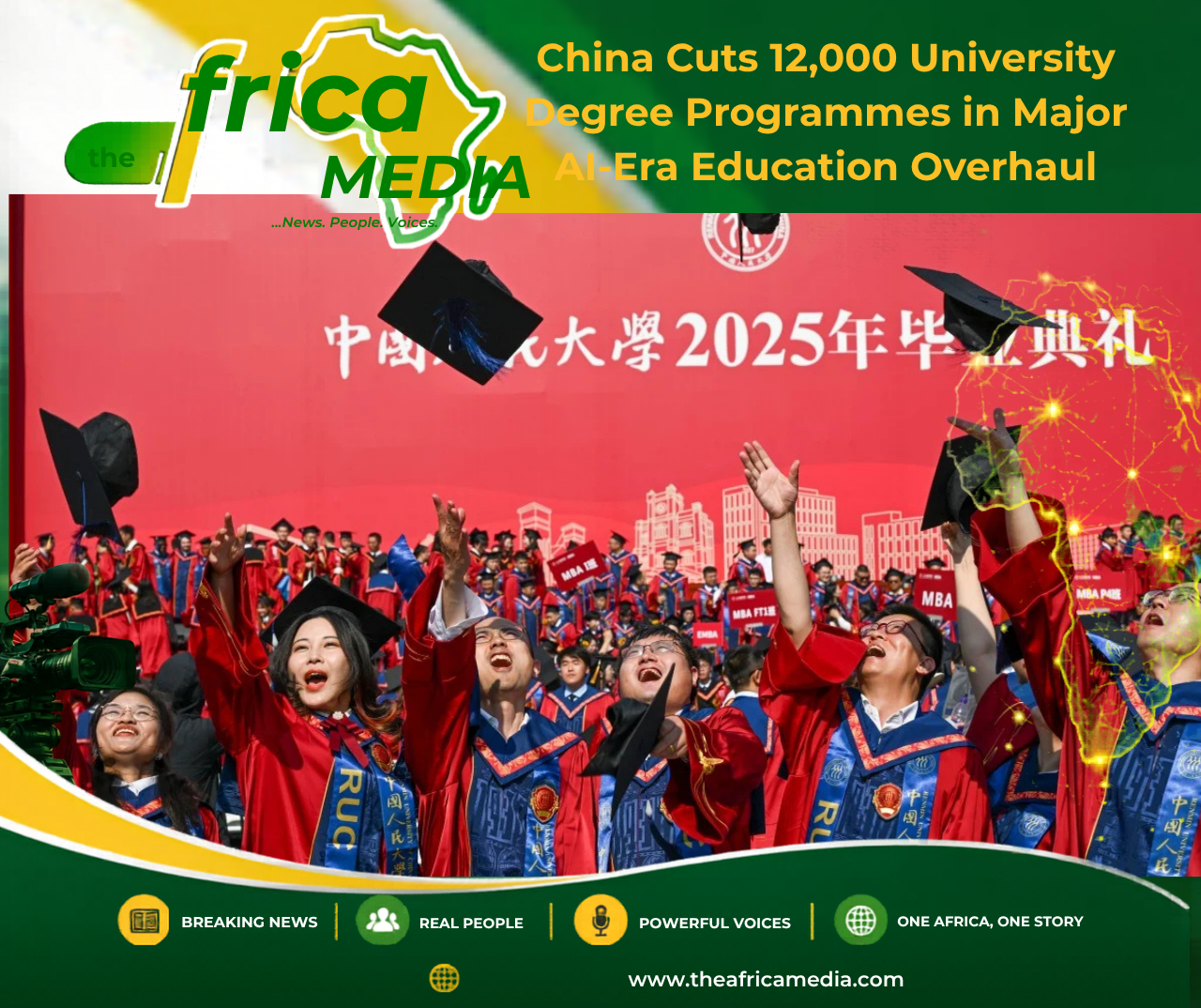
China has scrapped or suspended more than 12,000 university degree programmes as part of a sweeping higher education reform aimed at preparing students for an economy increasingly driven by artificial intelligence and emerging technologies.
The large-scale restructuring, which has affected more than 30 per cent of undergraduate programmes nationwide, is designed to align university education more closely with China’s long-term economic and technological ambitions.
According to data from China’s Ministry of Education cited by Xinhua, universities across the country eliminated or suspended approximately 12,200 undergraduate degree programmes between 2021 and 2025, while introducing about 10,200 new programmes during the same period.
The reforms represent one of the most significant overhauls of China’s higher education system in recent years.
Arts and Languages Among Hardest Hit
Many of the programmes removed were concentrated in arts, humanities, foreign languages and management-related disciplines, areas increasingly viewed by policymakers as oversupplied or less relevant to future labour market demands.
The move comes amid growing concerns over youth unemployment in China, where millions of graduates have struggled to secure jobs despite record numbers of university graduates entering the workforce each year.
Officials argue that the rapid rise of artificial intelligence and automation is transforming employment patterns, creating greater demand for technical and innovation-driven skills.
Focus Shifts to Emerging Technologies
At the same time, Chinese universities have expanded offerings in fields linked to the country’s strategic development priorities.
Several institutions have launched new programmes focused on embodied intelligence, a rapidly growing area that combines artificial intelligence with robotics and physical systems.
The new courses are part of Beijing’s broader effort to accelerate the integration of next-generation technologies into manufacturing, healthcare, transportation and other sectors of the economy.
Other newly introduced programmes reportedly focus on areas such as advanced computing, intelligent engineering, digital technologies, semiconductor development and emerging industrial applications.
Addressing Graduate Employment Challenges
China’s higher education sector has faced mounting pressure to reform as graduate numbers continue to rise.
While university enrolment has expanded significantly over the past decade, many graduates have found that their qualifications do not match the needs of employers in a rapidly evolving economy.
The government hopes that redirecting resources toward technology-focused disciplines will help improve graduate employability while supporting China’s ambitions to become a global leader in artificial intelligence, advanced manufacturing and other future industries.
Education experts say the reforms reflect a broader trend in which universities are increasingly being encouraged to adapt their curricula to labour market demands and national economic priorities.
The restructuring is expected to continue as authorities assess the effectiveness of existing programmes and identify new areas of strategic importance for the country’s future development.


