


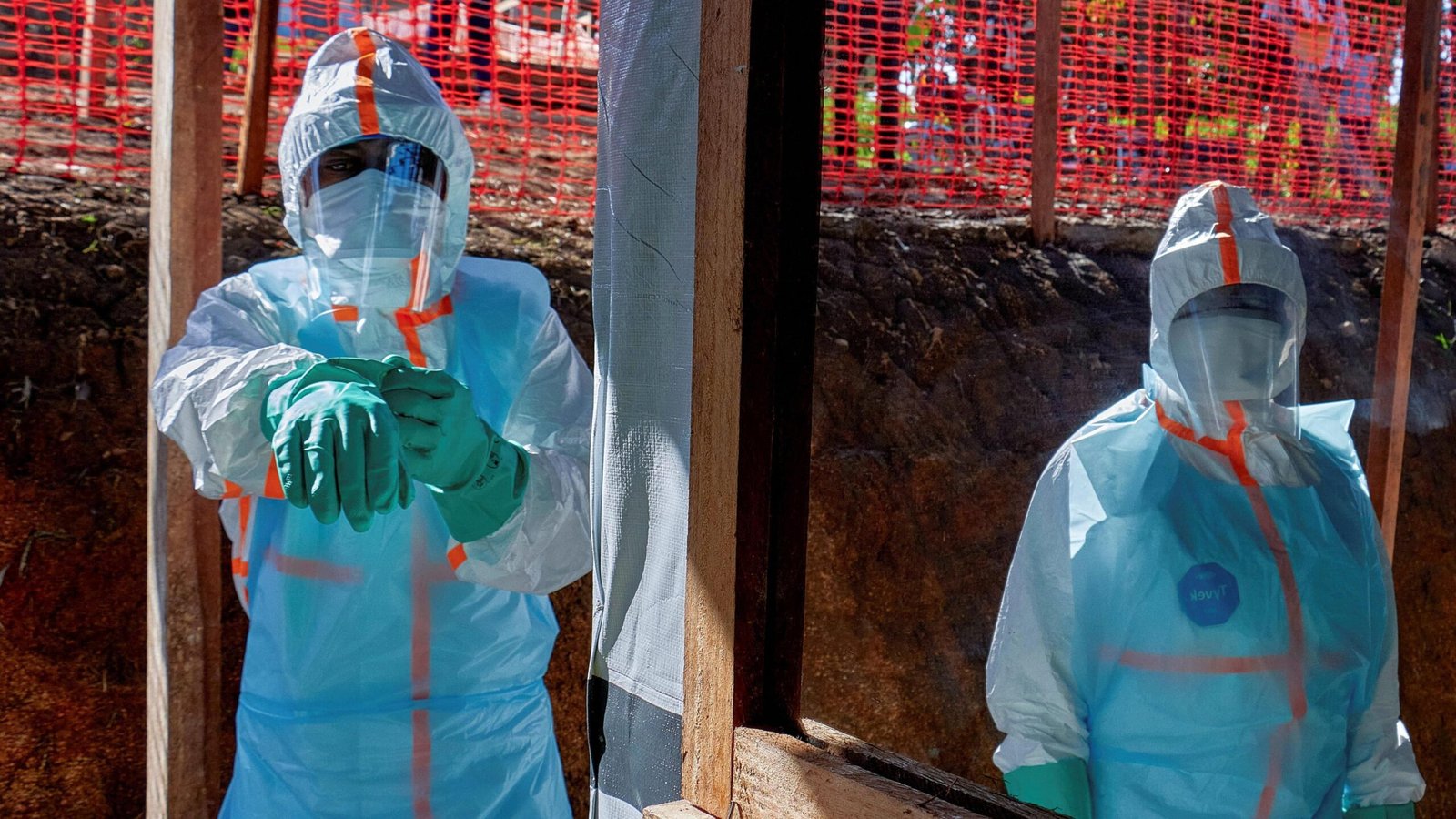
A hospital unit in Glasgow, Scotland, was placed into lockdown on Tuesday morning after a patient with suspected Ebola virus symptoms was admitted, according to reports.
The patient presented at the Acute Receiving Unit of Glasgow’s Queen Elizabeth University Hospital at around 6am after recently returning from overseas travel to a country affected by an Ebola outbreak, according to The National. The unit was reportedly sealed off as a precaution while the individual underwent assessment and testing.
The patient is understood to have developed symptoms after returning to Scotland and was immediately isolated for further examination. Officials have stressed that there are currently no confirmed cases of Ebola in Scotland.
A hospital source told The National that emergency infection control measures were implemented without delay.
“Obviously Ebola is a deadly and contagious illness, and emergency measures had to be put in place immediately to protect both staff and any members of the public.
“The person came to the Acute Receiving Unit, where people are sent by their GP or the health board’s NHS 24 service to avoid attending accident and emergency. This was quickly shut down and sealed off from the rest of the hospital.
The person was assessed there and then taken elsewhere in the hospital. I believe they were put into isolation while tests are carried out to determine whether they have Ebola or another illness.”
According to The National, the UK Health Security Agency’s Returning Workers Scheme (RWS), which monitors people returning from Ebola-affected regions for work-related travel, has been activated as a precaution.
In a statement, Public Health Scotland sought to reassure the public, saying: “There are currently no confirmed cases of Ebola in Scotland and the risk to the general public remains low.”
The agency added that it is working closely with the UK Health Security Agency (UKHSA) to monitor travellers arriving from affected countries and said the NHS has established procedures for identifying, assessing and managing suspected cases safely.
“Public Health Scotland and NHS boards across Scotland have well-established protocols for assessing and testing travellers arriving in the UK from areas affected by Ebola where necessary,” the statement said.
The incident comes as health authorities continue to maintain enhanced surveillance for viral haemorrhagic fevers following outbreaks in parts of Africa. Both the UKHSA and the World Health Organization have previously said the risk to the wider UK public remains low, with robust infection prevention measures in place across the NHS.


