


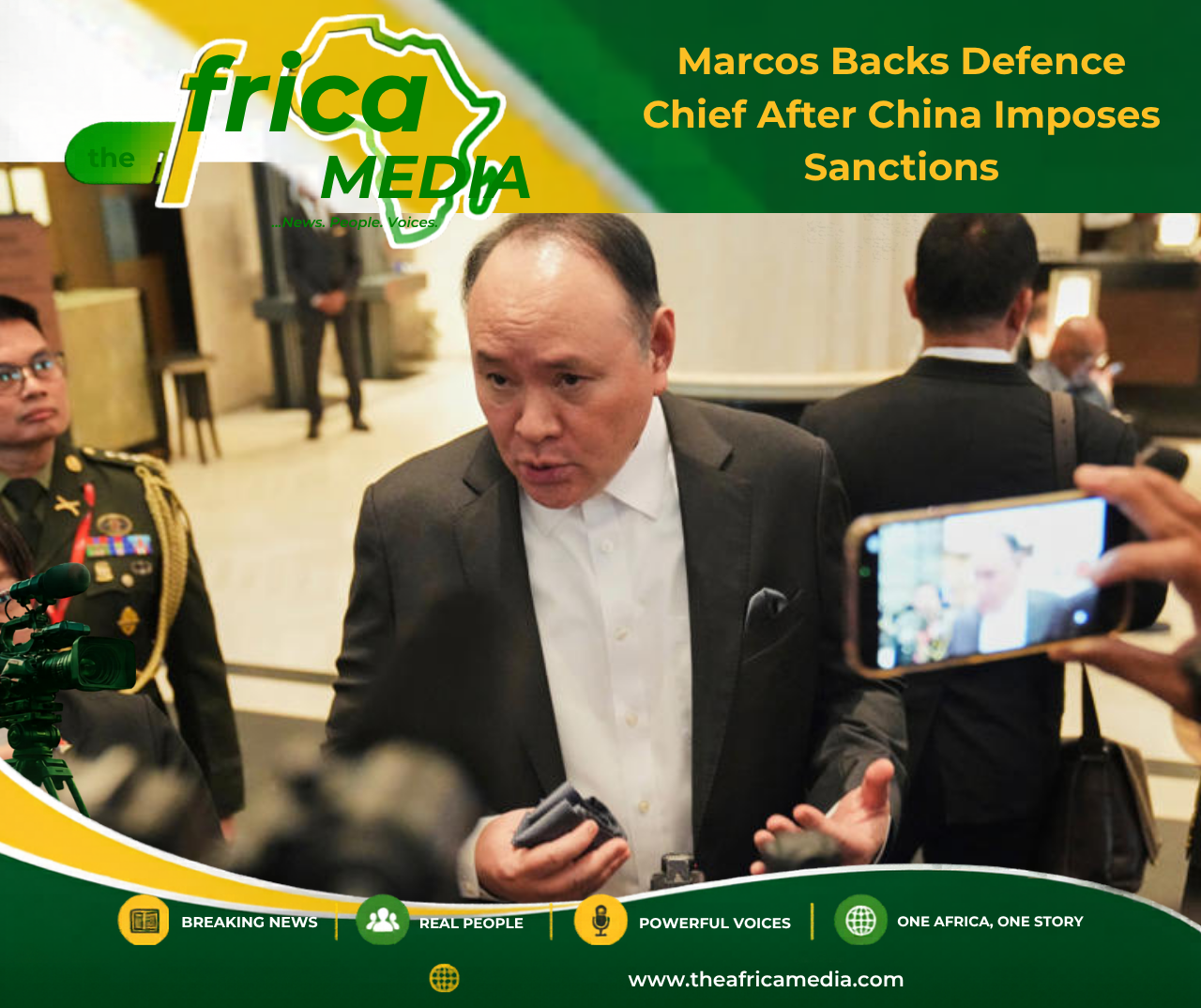
Philippine President Ferdinand Marcos Jr. has publicly defended Defence Secretary Gilberto Teodoro following China’s decision to impose sanctions on him, saying the move does little to ease tensions between the two countries over the South China Sea.
Speaking to reporters during a visit to Vancouver, Marcos described Beijing’s sanctions as “very unhelpful,” marking his first public comments on the issue.
“The sanctions achieve very little,” Marcos said. “They do not move the discussion between the Philippines and China regarding the territorial conflicts that we have. They do not make the process easier or lessen the risk of a mistake or a skirmish that could escalate.”
China announced sanctions against Teodoro last month, barring him and his family from entering mainland China, Hong Kong and Macau over what Beijing described as his “irresponsible” remarks concerning the South China Sea dispute.
During the Shangri-La Dialogue defence forum in Singapore in May, Teodoro accused China of threatening Philippine territory and sovereignty.
“For countries like the Philippines, which is under severe threat territorially and politically by China, we have no choice but to be resilient and stand up against Chinese aggression,” he said.
Teodoro dismissed the sanctions after they were announced, saying they would not affect his work. On Monday, he also rejected a Chinese proposal for a shared fishing arrangement at the disputed Scarborough Shoal, arguing that Filipino fishing rights had already been affirmed by the 2016 international arbitral ruling.
China, however, continues to reject the ruling and maintains its sweeping claims over much of the South China Sea.
Political analyst Danielito Jimenez said Marcos’ public support sends a clear message that the Philippine government is united on the issue while leaving the door open for diplomacy.
“He’s essentially saying that the Philippines is willing to engage in dialogue, but not under pressure or intimidation,” Jimenez said.
He added that the president’s backing reinforces confidence within the armed forces and demonstrates that Manila will not allow another country to dictate how Philippine officials carry out their duties.
Analysts also believe the move could strengthen defence cooperation between the Philippines and its allies, including the United States, Japan, Australia and France.
Arnaud Leveau, a geopolitics professor at Paris Dauphine University, said China’s decision to sanction a sitting defence minister is likely to deepen concerns among regional partners about Beijing’s growing use of diplomatic and political pressure.
“Measures intended to isolate Manila often end up accelerating defence cooperation among like-minded countries,” Leveau said.
However, he warned that the sanctions could make political dialogue between Manila and Beijing more difficult by reducing the space for quiet confidence-building efforts, even if both sides continue to maintain communication channels.
Observers have described the differing public tones of Marcos and Teodoro as a possible “good cop, bad cop” strategy, with the president maintaining a diplomatic approach while the defence secretary adopts a firmer stance on security issues.
Teodoro is not the first Filipino official to face Chinese sanctions. Former foreign secretary Albert del Rosario, retired Supreme Court justice Conchita Carpio-Morales and former senator Francis Tolentino have previously been sanctioned by Beijing over actions related to the South China Sea dispute and allegations involving Chinese influence operations.


