


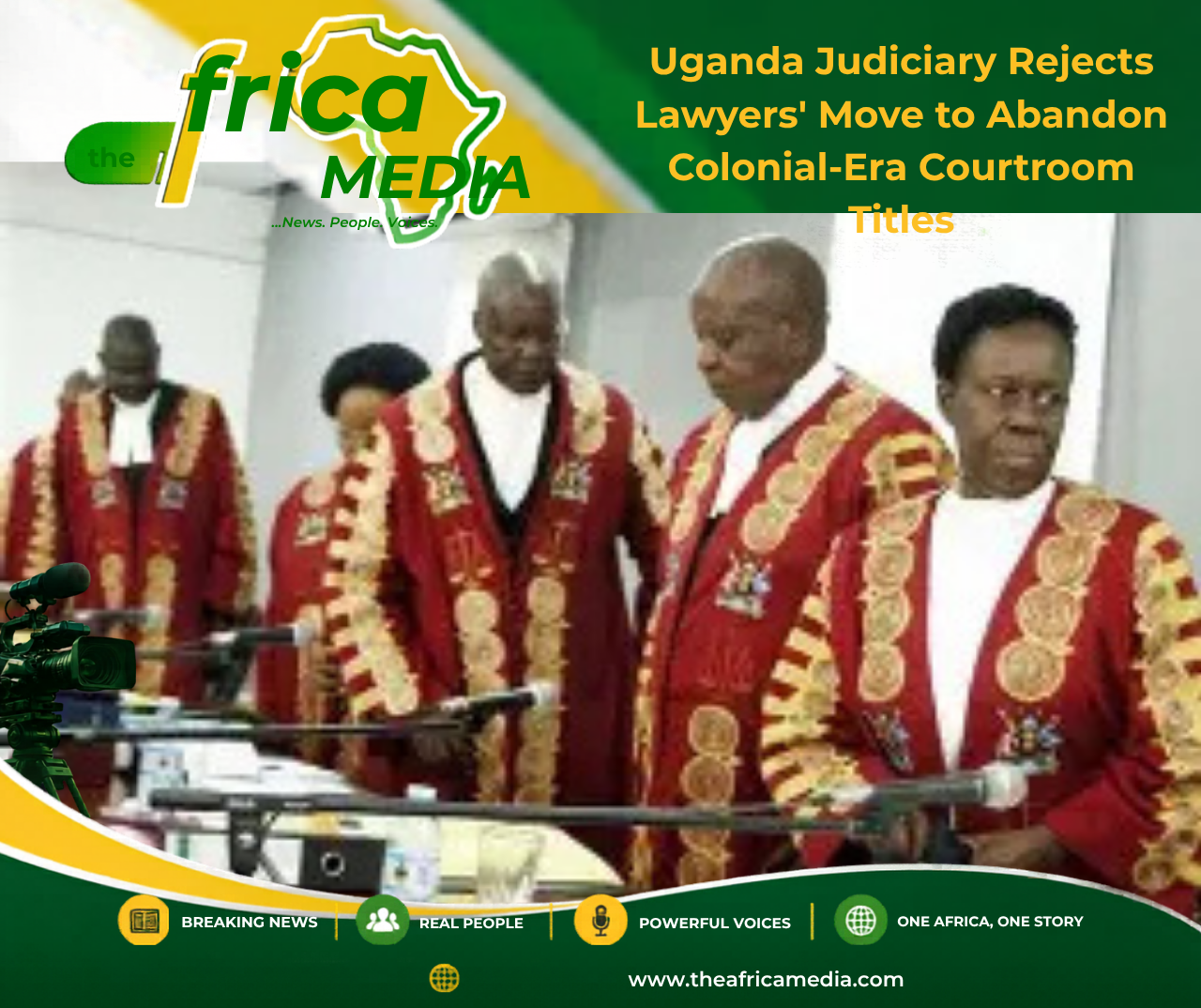
Uganda’s judiciary has rejected a directive by the country’s lawyers’ association instructing members to stop addressing judges with colonial-era titles such as “My Lord” and “My Lady” and to abandon the practice of bowing in court.
The Uganda Law Society (ULS) announced the directive as part of what it described as efforts to “decolonise justice” and restore dignity to citizens.
In a statement signed by ULS president Isaac Ssemakadde, the society argued that the continued use of “feudal and colonial honorifics” places judicial officers above the citizens they serve.
“The practice of bowing or any other form of physical subservience before judicial officers is henceforth prohibited for all members of the Uganda Law Society,” the statement said.
The ULS also instructed lawyers to stop using titles such as “My Lord”, “Your Lordship”, “My Lady” and “Your Worship”. Instead, it recommended forms of address including “Mr Justice”, “Madam Justice”, “Mr Judge”, “Madam Judge”, “Mr Magistrate”, or simply referring to judicial officers by their surnames where appropriate.
The society further said advocates and litigants should “stand upright and speak as free citizens” when appearing before courts and tribunals.
However, the judiciary has firmly rejected the directive.
Judiciary spokesperson James Ereemye said the ULS has no authority to dictate courtroom procedures or how judges should be addressed.
“We shall continue to demand the known decorum from advocates,” Ereemye said, adding that the judiciary is an independent arm of government and cannot be instructed by external bodies.
He also criticised the lawyers’ association for bypassing established channels for proposing institutional reforms.
“If you have a point, you use the appropriate forum for discussion, and when you make a good case, it forms part of the policy,” he said.
Uganda, like many former British colonies, inherited its legal system and courtroom traditions from the United Kingdom.
The debate reflects a broader discussion across Africa about whether colonial-era legal customs—including courtroom attire, wigs, robes and forms of address—should be retained or replaced with practices that better reflect modern national identities.
Similar conversations have taken place in Kenya, Zimbabwe, Malawi and Ghana. In 2011, former Kenyan Chief Justice Willy Mutunga notably rejected traditional judicial attire and took his oath of office wearing a business suit instead of ceremonial robes and a wig.


