


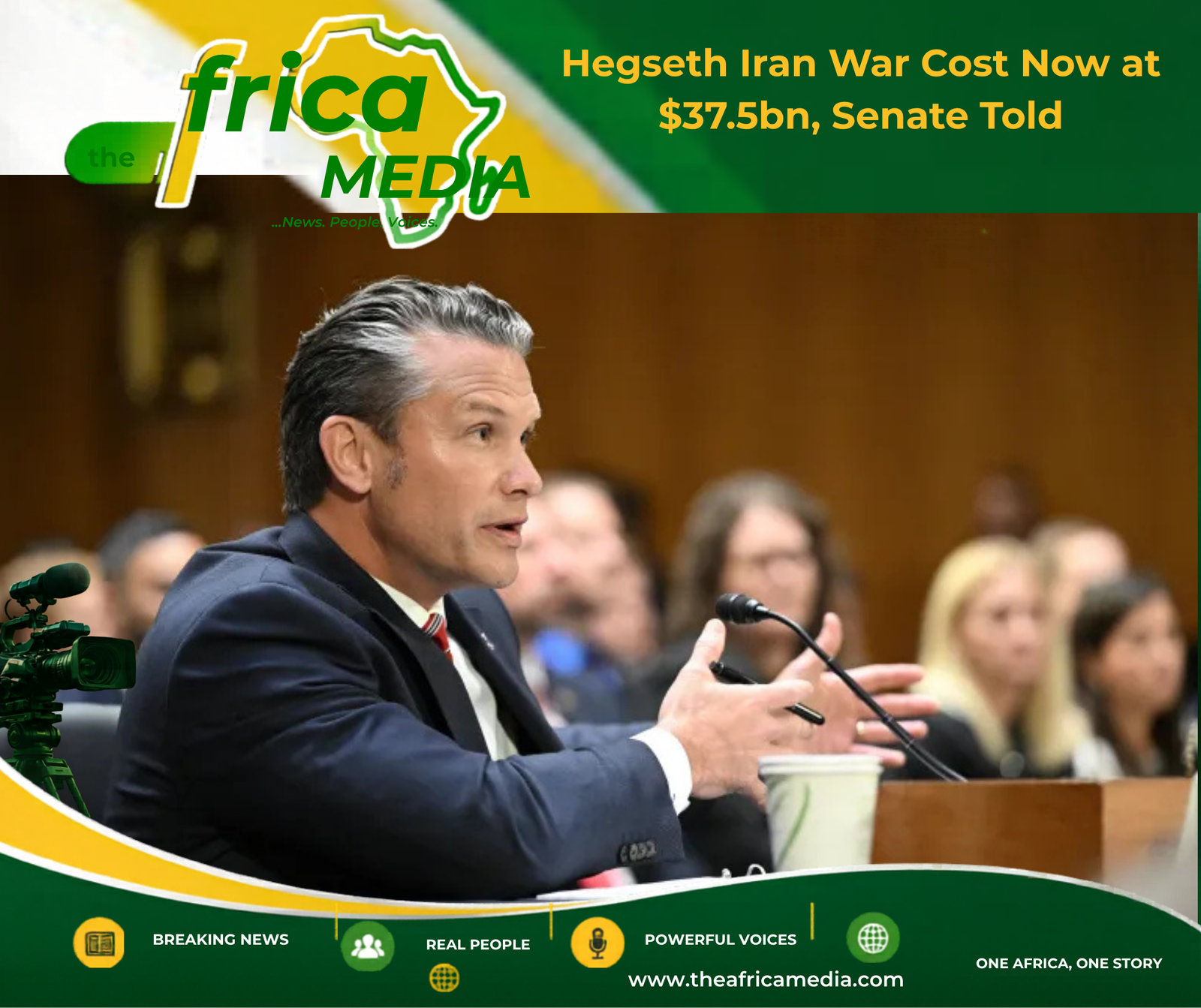
United States Secretary of Defense Pete Hegseth has put the latest official price tag on the US-Israel war on Iran at $37.5 billion. Hegseth confirmed the Hegseth Iran war cost figure during a hearing before the Senate Appropriations Committee on Tuesday.
Lawmakers questioned Hegseth and Chairman of the Joint Chiefs of Staff Dan Caine about their request for a $1.5 trillion US defence budget, which includes nearly $70 billion tied specifically to the war with Iran.
How the Figure Compares to Other Estimates
The $37.5 billion figure is significantly lower than other estimates, particularly those that account for knock-on expenses affecting US consumers. Moody’s Analytics, for instance, has estimated the domestic cost of the war could reach up to $150 billion, factoring in elements such as higher US energy prices.
“The estimate we have as of today is $37.5bn,” Hegseth said, responding to questioning from Democratic Senator Dick Durbin. He added that the figure includes some operations and maintenance costs extending through the end of September, though he did not provide further specifics. The latest figure sits about $8 billion higher than the previous estimate the Trump administration released in May, which stood at $29 billion.
Fighting Continues as MoU Collapses
Hegseth appeared before the committee as fighting between the US and Iran continued, following the collapse last week of a memorandum of understanding that had paused attacks since June 17.
On Monday, ahead of the tenth consecutive night of US strikes, President Trump said Iran would “pay” after two more US soldiers were killed over the weekend. Over the past week, Trump has threatened to target energy plants and bridges in Iran, send ground forces to seize Iran’s Kharg Island, and bomb a deep underground nuclear-linked site known as Pickaxe Mountain. Attacks have so far focused on sites Iran uses to assert influence over the Strait of Hormuz, its key point of leverage in the conflict.
Iran, meanwhile, has pledged to continue striking US assets in the region. The latest round of Iranian strikes set desalination and power plants ablaze in Kuwait, alongside other sites hit in Bahrain and Jordan. The Houthis in Yemen, close allies of Iran, have also declared a maritime blockade against Saudi Arabia.
Pentagon Warns of Strain on Weapons Stockpile
During his opening statements, Hegseth pointed to growing strain on the US weapons stockpile stemming from the war, which the US and Israel launched on February 28. He said funding was needed to expand production lines and accelerate delivery of high-demand munitions, citing solid rocket motors, JDAMs (Joint Direct Attack Munitions), hypersonics and counter-drone capabilities as priorities.
Hegseth also warned of a pending budget crunch tied to the war, saying that future training would need to be curtailed without urgent budget approval, and acknowledged that some of the pressure stems from the current budget cycle.
Senator Questions the Broader Budget Request
Democratic Senator Patty Murray questioned the sprawling scope of the budget request, which also includes funding for the National Guard deployment in Washington, DC, US operations against alleged drug smugglers in the Caribbean, and military patrols along the US border. “So I’ll be blunt,” she said. “The truth is, your request does not make a lot of sense.”


