



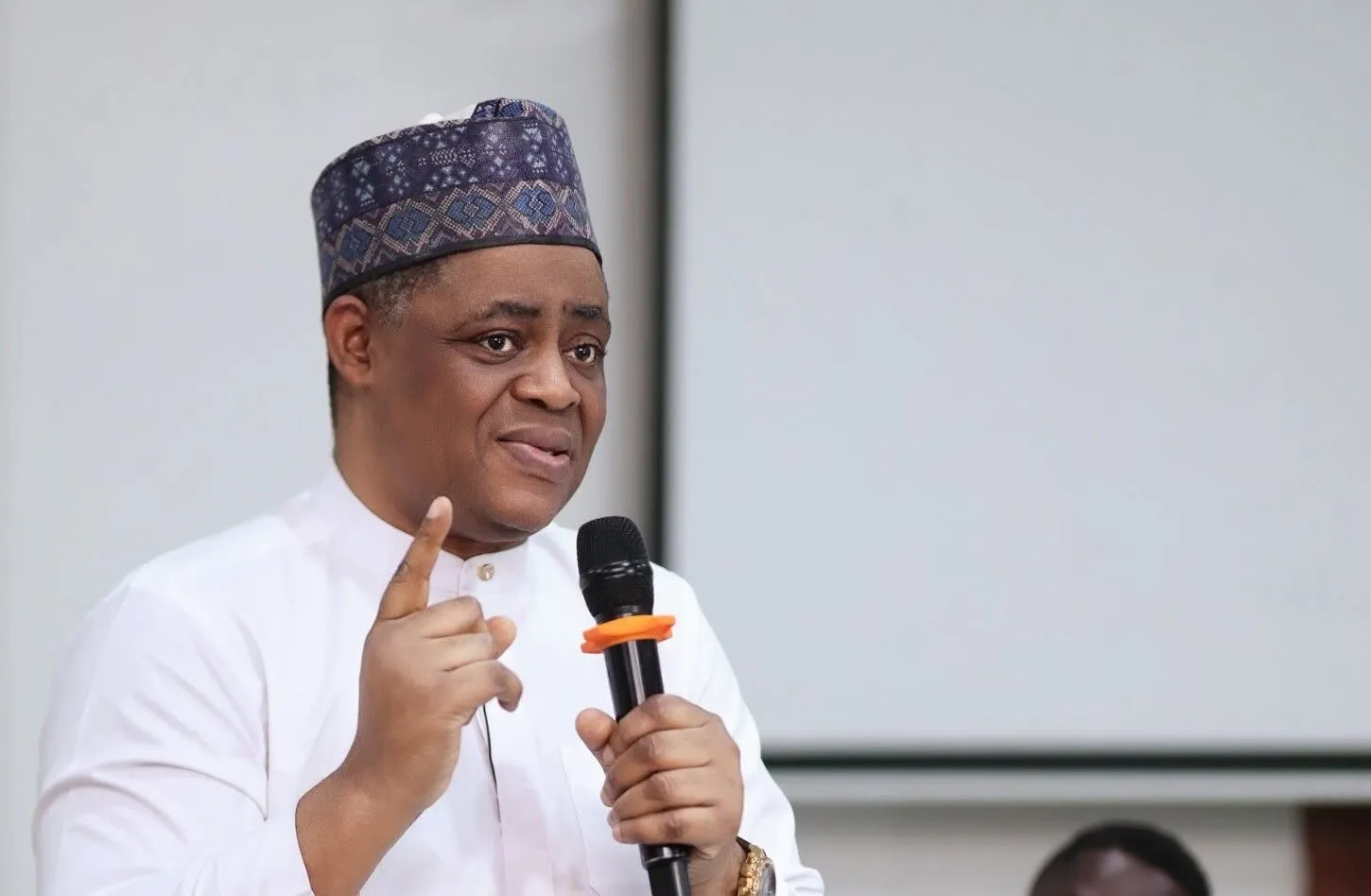
Nigeria’s High Commissioner to South Africa, Ambassador Femi Fani-Kayode, is facing an important test of his diplomatic judgement as his public defence of Nigerians living in the country coincides with growing controversy over his own conduct and the handling of sensitive issues between Abuja and Pretoria.
Fani-Kayode, who has called for stronger economic and diplomatic cooperation between the two African powers, has insisted that protecting Nigerians from discrimination, violence and unfair treatment must remain a priority of his assignment.
But his recent interventions, coming against the background of disagreements with South African authorities over his diplomatic conduct, have raised questions about whether he is striking the right balance between defending Nigeria’s interests and observing the restraint expected of a diplomat.
The former Minister of Aviation spoke on Monday after visiting the Ministry of Foreign Affairs in Abuja, where he said the Federal Government remained committed to strengthening relations with South Africa in line with President Bola Ahmed Tinubu’s vision of greater African cooperation.
He described Nigeria and South Africa as indispensable partners whose relationship would have far-reaching consequences for the continent, particularly in economic development, political stability and regional cooperation.
“The future of Africa is closely tied to the relationship between Nigeria and South Africa. If these two countries fail to work together, it could have significant implications for the continent’s progress,” he said.
The envoy maintained that since assuming his diplomatic responsibilities, he had consistently advocated dialogue, mutual respect and stronger bilateral relations. He, however, stressed that cordial relations between both governments should not prevent Nigeria from raising concerns over the safety and welfare of its citizens.
Among the issues he identified were unresolved cases involving the deaths of Nigerians in South Africa, allegations of misconduct by some security personnel and recurring anti-Nigerian statements by certain organisations and individuals.
“As ambassador, I would be failing in my responsibility if I did not raise concerns about the treatment of Nigerians in South Africa,” he said.
Fani-Kayode also faulted attempts to portray Nigerians living in the country as criminals, arguing that such generalisations unfairly undermine the contributions of thousands of citizens who are making legitimate contributions to South African society.
“Thousands of Nigerians in South Africa are law-abiding professionals, including doctors, lawyers, academics and entrepreneurs. A small minority engaged in wrongdoing should not be used to define an entire community,” he said.
He acknowledged that anti-Nigerian sentiments expressed by some organisations did not necessarily represent the position of the majority of South Africans, but warned that such rhetoric could deepen mistrust and undermine relations between the two countries.
The ambassador also commended Nigerian community organisations in South Africa for supporting efforts to protect the interests of citizens and encouraged Nigerian investors to sustain their businesses while extending assistance to fellow nationals facing difficulties.
The renewed appeal for cooperation comes at a particularly delicate period in Nigeria-South Africa relations, which have been strained by recurring xenophobic attacks, allegations of police brutality and the killing of Nigerian nationals.
The concerns have moved beyond diplomatic exchanges to political action in Nigeria. In September, the House of Representatives suspended official visits to South Africa and directed lawmakers to boycott legislative meetings and activities organised by South African institutions over attacks on Nigerians and other African migrants.
Reuters reported that Nigerian officials had put the number of Nigerians killed in mob and hate-related incidents in South Africa since 2022 at 98. It also reported that 1,695 Nigerians had voluntarily returned home in 2026 amid heightened xenophobic tensions.
The development followed a series of engagements between both governments, including a July visit to Abuja by South Africa’s Foreign Minister, Ronald Lamola, who led a delegation to discuss the attacks and ease tensions. The South African government condemned all forms of xenophobia during the engagement, while Nigeria demanded concrete measures to protect its citizens.
It is against this background that Fani-Kayode’s diplomatic style has come under scrutiny.
Barely weeks after formally assuming his duties in October, the envoy became embroiled in a disagreement with South African authorities over the presentation of his Letters of Credence to President Cyril Ramaphosa.
The controversy followed a ceremony in Pretoria involving representatives of 15 countries. Fani-Kayode alleged that while the addresses of other diplomats were shown during the televised proceedings, his introduction and speech were deliberately excluded from the livestream.
He described the development as an affront to Nigeria and questioned why the country’s delegation had been treated differently. He also disclosed that he declined an interview request from the South African Broadcasting Corporation because of his dissatisfaction with the handling of the ceremony.
The South African Presidency disputed aspects of his account, with Ramaphosa’s spokesman, Vincent Magwenya, explaining that the President had no authority to interfere with the editorial decisions of the public broadcaster. The Presidency subsequently released a separate video of Fani-Kayode’s speech.
The disagreement escalated after the Nigerian High Commission publicly defended the envoy and criticised the South African presidential spokesman’s response.
South Africa’s Department of International Relations and Cooperation (DIRCO) subsequently summoned Fani-Kayode to convey its concerns about the incident and his comments on social media.
During the meeting with the Nigerian envoy, DIRCO Director-General, Zane Dangor, reportedly drew his attention to Article 41 of the 1961 Vienna Convention on Diplomatic Relations, which requires diplomats to conduct official business with the receiving country through its foreign ministry.
The South African authorities stressed the importance of established diplomatic channels and mutual respect in managing relations between the two countries.
The incident has exposed the difficult balance Fani-Kayode must maintain in his new assignment. While an ambassador is expected to defend the interests and dignity of his country, the office also demands tact, restraint and the ability to manage disagreements without allowing them to develop into public confrontations.
His supporters could argue that an envoy who remains silent in the face of perceived disrespect towards his country risks undermining the very responsibility he was appointed to discharge. They could also point to the longstanding concerns over the treatment of Nigerians in South Africa as justification for a more assertive diplomatic approach.
However, critics may question whether taking disputes to social media, particularly when dealing with sensitive diplomatic disagreements, is the most effective way to achieve results.
The distinction is important because diplomatic engagements are not conducted solely through public declarations. Much of the work involves confidential negotiations, sustained engagement with government officials and the careful pursuit of agreements that protect citizens and advance national interests.
Fani-Kayode, a former Minister of Aviation and a prominent political figure, is not new to public controversy. His outspoken political interventions over the years have made him a familiar figure in Nigeria’s political space. But the expectations of his current office are different from those of a politician campaigning or responding to political opponents.
His appointment itself attracted attention after President Tinubu approved his redeployment from Germany to South Africa in May. Fani-Kayode had publicly explained that he requested the change because of his preference to serve in South Africa, which he described as strategically important to Nigeria and closer to his thinking on African affairs. He formally assumed his duties after presenting copies of his Letters of Credence to South African authorities on October 30.
There are also concerns about the consequences of allowing diplomatic disagreements to overshadow the more substantive issues confronting Nigerians in South Africa.
For families seeking answers over the deaths of their relatives, Nigerians whose businesses and properties have been affected by attacks, and citizens who face discrimination, what matters is not necessarily how forcefully their ambassador speaks in public but whether his interventions produce tangible results.
The ambassador’s call on Nigerian investors to expand their businesses and support fellow citizens is therefore significant. Economic cooperation between both countries remains important, given their positions as major African economies and their influence in continental affairs.
Nigeria and South Africa have considerable opportunities for cooperation in trade, investment, energy, telecommunications, education and security. Allowing disagreements to weaken these relationships would serve neither country’s interests.
Fani-Kayode’s latest comments suggest that he understands the need to maintain cordial relations even while raising difficult questions about the treatment of Nigerians. He has also praised community organisations for helping to protect citizens and ensure their concerns receive attention.
During his visit to Abuja on Monday, he dismissed reports that he had been recalled or reprimanded by the Federal Government over his activities in South Africa. He described the visit as part of routine consultations with the Ministry of Foreign Affairs, including the submission of reports and receipt of policy guidance.
He insisted that his engagements with South African officials had remained cordial and professional, adding that no reprimand had taken place.
Ultimately, the question is whether Fani-Kayode can translate his outspoken defence of Nigeria into effective diplomatic action without creating unnecessary friction with the country where he is expected to represent Nigerian interests.
His determination to speak for Nigerians facing discrimination and insecurity is understandable. But the success of his assignment will be measured not by the number of public exchanges he engages in, but by the progress he makes in securing the safety of Nigerians, resolving outstanding complaints and strengthening relations between Abuja and Pretoria.
For now, the envoy has made his position clear. Whether his approach will deliver the desired results, or complicate an already delicate diplomatic relationship, remains to be seen.


