



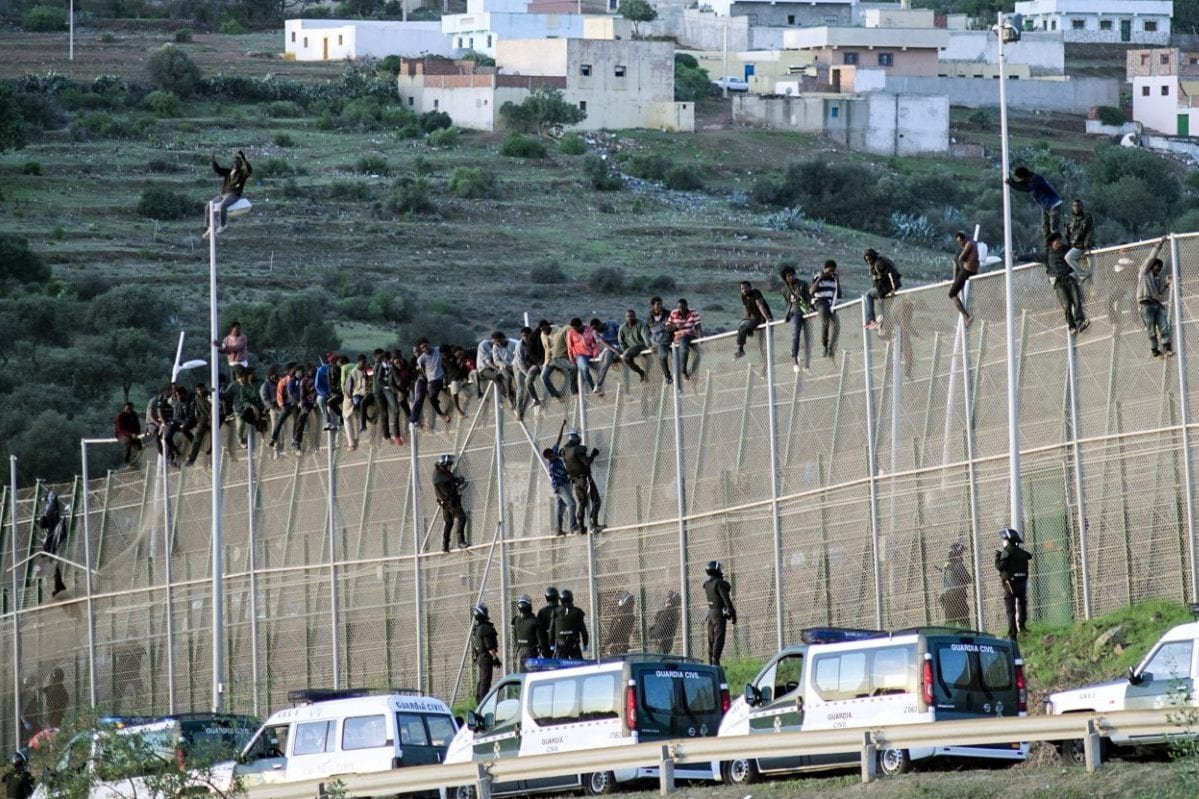
Morocco and Spain have stepped up security around the Ceuta border after authorities detected fresh online calls urging migrants to attempt a mass crossing into the Spanish territory on Friday.
Moroccan authorities said on Wednesday that they had taken measures to prevent a new influx following the circulation of social media posts claiming that the border crossing between the Moroccan town of Fnideq and Ceuta would be opened on August 15, a public holiday in Spain.
The development comes weeks after an unprecedented surge in migration, when about 72,000 people, mostly Moroccans, reportedly crossed into Ceuta irregularly over several days in late July. Most of those who entered have since been returned to Morocco.
Moroccan Interior Ministry spokesman, Rachid El Khalfi, said security agencies had been placed on alert to prevent further illegal crossings.
“All the necessary measures were taken to counter all attempts at illegal passage and intercept every person seeking to participate,” El Khalfi said, according to the state news agency MAP.
He said authorities had detected “the circulation of publications and anonymous messages on social media inciting the organisation of collective, illegal crossing attempts” towards Ceuta.
The ministry warned that legal action would be taken against individuals behind the messages, while several people suspected of involvement had been summoned for questioning.
Following last month’s influx, about 2,000 migrants, including roughly 1,000 unaccompanied minors, remain in Ceuta, according to local authorities.
Morocco has called on Spain to accelerate the return of the unaccompanied minors to their home country.
The July border crisis also resulted in a significant loss of lives. Moroccan authorities said they recovered 11 bodies following the incidents, while Spanish authorities put the number of deaths at at least 80.
However, the Moroccan Association for Human Rights, a non-governmental organisation, estimated that at least 141 people died during the crisis.
The latest security measures reflect growing concern in both countries over the use of social media to organise or encourage mass attempts to cross the heavily guarded Ceuta border.


