



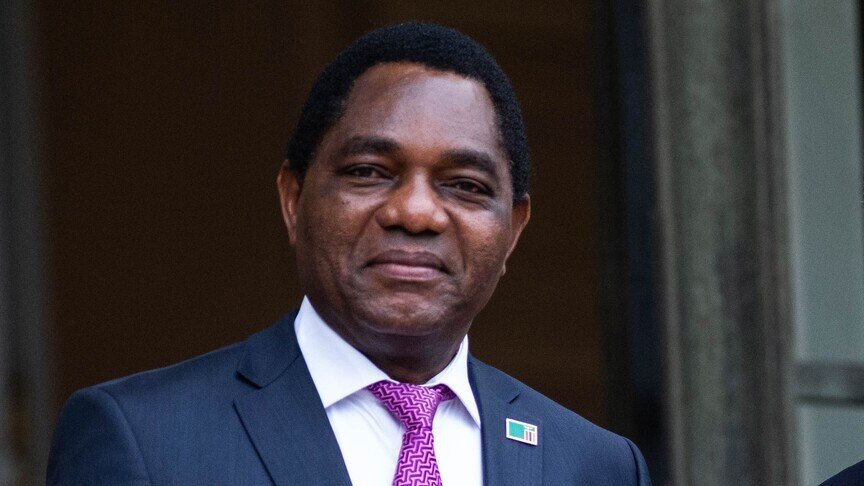
President Hakainde Hichilema has taken a commanding early lead in Zambia’s presidential election, with results from more than half of the country’s constituencies now counted.
According to the Electoral Commission of Zambia, Hichilema had secured 1,544,140 votes, representing 58.87 percent of ballots counted from 135 of the 226 constituencies.
His closest challenger, Brian Mundubile, had polled 1,030,662 votes, while 12 other candidates remained in the race.
Under Zambia’s electoral system, a presidential candidate must secure more than 50 percent of valid votes to win outright. If no candidate achieves the threshold, a runoff will be held between the top two contenders.
The election, held on Thursday, was largely peaceful, but the campaign and vote-counting process have been marred by allegations of intimidation, arrests and violence.
The Electoral Commission temporarily suspended the counting process for about six hours on Friday following reports of attacks on polling staff and the alleged theft of marked ballot papers.
Police also reported that a 57-year-old polling agent died on election day after being attacked outside the capital, Lusaka. Nine people have been arrested in connection with the incident.
Regional and European election observers have appealed to political parties and their supporters to refrain from inflammatory statements while the country awaits the final results.
Mundubile claimed victory shortly after voting and also said his party had won a majority in Parliament. However, the official presidential results released so far place him significantly behind Hichilema.
The European Union Election Observation Mission said restrictions on political activities had contributed to what it described as an “uneven playing field” during the election.
The Southern African Development Community (SADC) observer mission, meanwhile, said the temporary suspension of vote counting had generated uncertainty and anxiety.
The election represents a major test of Hichilema’s first term in office. Under his administration, Zambia returned to economic growth and reached a major agreement to restructure its debt.
However, critics argue that the economic recovery has yet to translate into substantial improvements in living standards. The World Bank estimates that more than 70 percent of Zambia’s population of about 22 million people live on less than $3 a day.
With Hichilema currently above the 50 percent threshold, the remaining results will determine whether he can maintain his lead and secure a second term without a runoff.
Final presidential results are expected on Monday.


