



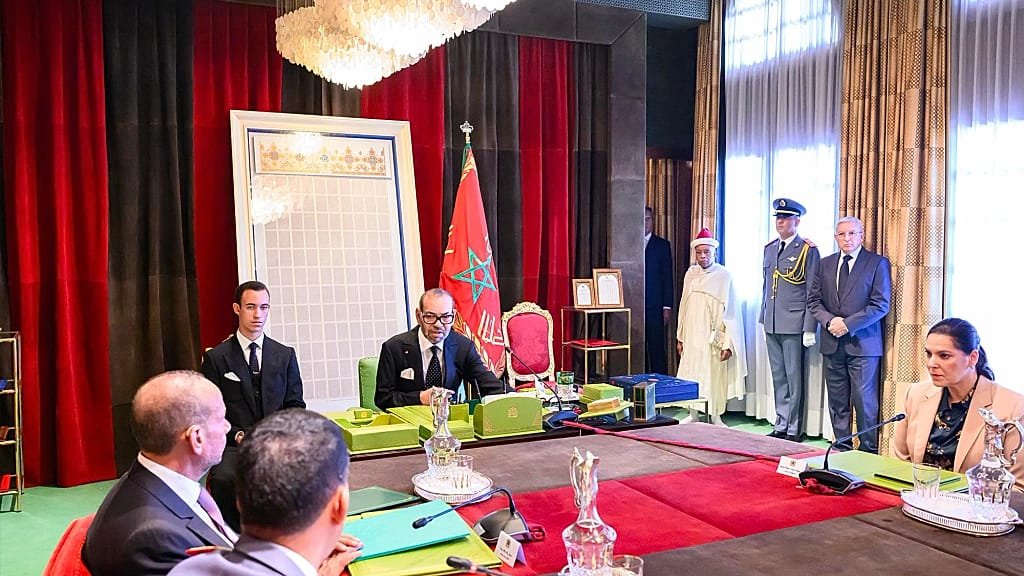
Morocco is stepping up efforts to establish itself as a major defence manufacturing hub in Africa, committing €366 million to develop a domestic military-industrial sector capable of meeting a significant share of its armed forces’ equipment needs while expanding exports to international markets.
The investment, announced by the Moroccan Royal Cabinet, is part of a national defence industry roadmap backed by King Mohammed VI, who allocated four billion dirhams from the Hassan II Fund for Economic and Social Development to kick-start the programme.
The initiative sets 2035 as its target year, with ambitions to create about 50,000 direct and indirect jobs, produce 40 per cent of the equipment required by the Royal Moroccan Armed Forces and security services locally, and generate more than 65 per cent of defence industry revenues from exports.
The scale of the investment reflects Morocco’s growing ambition to move beyond its traditional reliance on imported military equipment and develop the industrial capacity, technical expertise and partnerships required to manufacture weapons systems, military vehicles, electronics and other defence technologies at home.
The roadmap is also designed to strengthen the country’s industrial base, attract foreign investors and position Moroccan manufacturers within global defence supply chains, particularly as African countries increasingly seek to reduce dependence on overseas suppliers.
The institutional structure proposed for the sector is expected to play a central role in translating the financial commitment into industrial capacity. A dedicated strategic agency will oversee implementation of defence industry policy and support investors, while a holding company is expected to organise the industrial ecosystem, mobilise public and private financing and encourage the emergence of locally owned manufacturers.
The new industrial zones in Benguerir and Benslimane are expected to complement existing defence industrial acceleration zones in Nouaceur and Sidi Yahya. The facilities are intended to attract manufacturers, suppliers and technology companies, with a particular focus on projects capable of serving both domestic and international markets.
The government is also seeking to build on Morocco’s established manufacturing base in automotive production, aerospace and electronics, industries which have already developed technical expertise, supply chains and skilled workers that could be adapted to defence manufacturing.
Priority areas identified under the roadmap include drones and autonomous systems, land and naval equipment, defence electronics, cybersecurity and artificial intelligence. The plan also encompasses dual-use technologies, which can be applied in civilian industries as well as military operations.
The ambition is to develop a broader industrial chain covering design, production, maintenance, testing and storage, rather than simply assembling imported equipment.
Morocco’s defence industry ambitions are already taking shape through partnerships with foreign manufacturers, as the country seeks to attract technology, expertise and investment while gradually increasing local production.
India’s Tata Advanced Systems is working with Moroccan partners on the manufacture of WhAP 8×8 armoured vehicles in Berrechid. The project is expected to increase the proportion of components produced locally as manufacturing capacity develops.
Moroccan firm MMI is also involved in the production of military turrets and remotely controlled weapon systems, providing an existing foundation for the expansion of domestic defence manufacturing.
At the Marrakech Air Show in October, the Emirati defence group EDGE signed two agreements with Morocco’s National Defence Administration.
One agreement provides for discussions on establishing local partnerships to manufacture small arms and aircraft engines, while the other covers the supply of Desert Sting 16 and Thunder P-31 guided munitions for integration into the Royal Moroccan Air Force’s unmanned combat aircraft.
The partnerships reflect Morocco’s effort to move beyond procurement agreements towards local production, technology transfer and the development of domestic suppliers.
The extent to which foreign manufacturers transfer technology, train Moroccan workers and incorporate local companies into their supply chains will be critical to the success of the programme.
The investment comes as Morocco has emerged as one of Africa’s largest buyers of major weapons systems, amid longstanding tensions with neighbouring Algeria and wider security concerns across North Africa.
According to the Stockholm International Peace Research Institute (SIPRI), Morocco became Africa’s largest importer of major arms during the 2021–2025 period, ranking 28th globally. Its imports increased by 12 per cent compared with the preceding five-year period, while Algeria’s imports fell sharply.
The two countries have long-standing tensions, including over Western Sahara, and their rivalry has contributed to military procurement and defence spending in the region.
Morocco’s new strategy seeks to turn some of that demand into industrial opportunities, allowing local manufacturers to supply equipment to the armed forces while developing products for export markets.
The country’s location, industrial infrastructure and existing strategic partnerships could also help it attract manufacturers seeking access to African and international markets.
However, establishing a competitive defence industry will require sustained investment, specialised skills, reliable supply chains, research capacity and the ability to meet demanding international quality and certification standards.
Producing sophisticated military equipment locally will also depend on the depth of technology transfer and the extent to which Moroccan firms can move from assembling imported systems to designing and manufacturing critical components.
King Mohammed VI has also directed authorities to establish a specialised academy to provide advanced training for the emerging defence industry, in partnership with industrial operators.
The academy is expected to draw on civilian and military expertise within Morocco and among Moroccan professionals abroad, while developing a pipeline of skilled workers in engineering, electronics, digital technologies and other specialised fields.
The roadmap also places emphasis on early career guidance and vocational training, with young people encouraged to pursue disciplines aligned with the industry’s manpower requirements.
The focus on training reflects the recognition that financial investment and manufacturing facilities alone will not be sufficient to build a sustainable defence sector without engineers, technicians, researchers and skilled production workers.
Research and innovation are expected to play a central role, particularly in areas such as artificial intelligence, autonomous systems, cybersecurity and advanced electronics, where technological development is rapidly changing the nature of military capabilities.
The Royal Cabinet said the roadmap would rely on Morocco’s strategic partnerships to strengthen its integration into global industrial value chains and expand export capacity.
The immediate challenge, however, will be to translate the ambitious targets into concrete projects, attract investors, establish the proposed institutions and ensure that local manufacturers acquire the capacity to compete beyond the domestic market.
With the 2035 deadline approaching, Morocco is betting that its existing industrial experience, foreign partnerships and investment in skills can help transform it from a major arms importer into an increasingly influential defence manufacturer and exporter in Africa.
The four-billion-dirham commitment marks the beginning of that effort, but the success of the strategy will ultimately depend on how much production, technology and industrial value the country can genuinely develop at home.


