



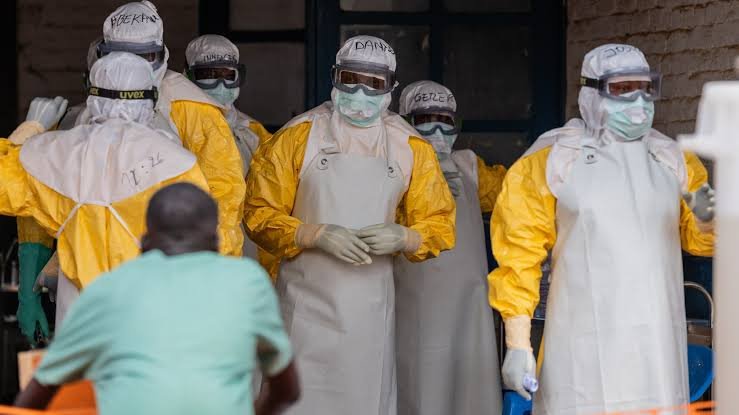
South Sudan has intensified Ebola surveillance along its border with the Democratic Republic of Congo (DRC), as heavy cross-border movement and unofficial routes raise concerns over the potential spread of the virus.
United Nations officials and local authorities in Western Equatoria State said stronger preparedness, surveillance and coordination were essential to preventing Ebola from entering the country.
A high-level UN delegation recently visited Western Equatoria to assess the state’s Ebola preparedness and strengthen cooperation with authorities on public health, humanitarian assistance and peacebuilding.
At the Nabiapai border crossing with the DRC, health workers said hundreds of travellers cross the border daily, with traffic increasing significantly during weekly market days.
Severio Peter, a frontline health worker, said between 800 and 1,000 people are screened at the border, while daily screenings from Monday to Thursday average between 200 and 500 people.
He identified the area’s “porous entries” as a major challenge, saying travellers could use unofficial routes to bypass established screening points.
Although no Ebola case has been confirmed in South Sudan, authorities have stepped up surveillance because of the risk of cross-border transmission.
Western Equatoria Governor Badagbu Rimbasa said Ebola preparedness was among the key issues discussed during the UN delegation’s visit.
“Ebola is not yet in South Sudan, but we must do everything in our preparedness to prevent Ebola from entering South Sudan,” he said.
State Health Minister Nama Bukulu called for increased surveillance at border checkpoints, including the introduction of night shifts to screen travellers arriving outside regular operating hours.
UN Deputy Special Representative Ramanathan Balakrishnan said the discussions also focused on strengthening cooperation between the government and the UN, securing humanitarian operations and improving access to communities in need.
“We also talked about the Ebola preparedness and the support that would be expected from the state authorities,” Balakrishnan said.
He noted that preparedness had improved but stressed that additional measures were still required.
Balakrishnan expressed confidence that continued collaboration among national and state authorities, UN agencies and other partners would further strengthen South Sudan’s capacity to respond effectively should Ebola be detected.
The visit underscored the need for sustained vigilance along one of South Sudan’s busiest border areas, where intense population movement and unofficial crossing routes continue to make disease surveillance particularly challenging.


