



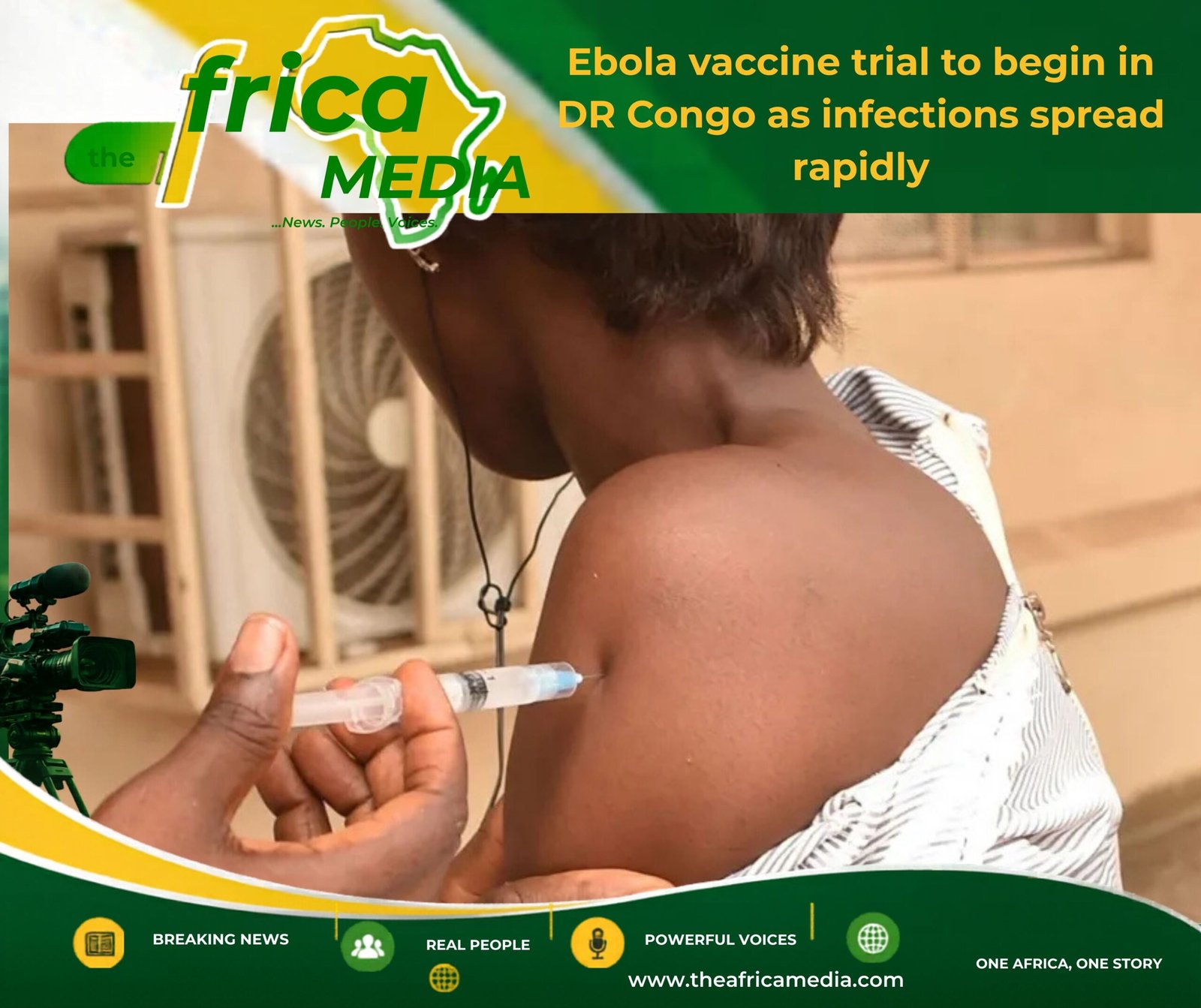
The Democratic Republic of the Congo is preparing to begin a clinical trial of an Ebola vaccine as health authorities struggle to contain an outbreak that the World Health Organization says is spreading at an alarming rate.
The trial will examine whether the Ervebo vaccine, which is already known to protect against the Zaire species of Ebola, can provide protection against the Bundibugyo species currently circulating in the country.
There is currently no proven vaccine or treatment specifically approved for Bundibugyo Ebola.
The WHO has warned that infections are growing rapidly across northern and eastern parts of the Democratic Republic of the Congo. The affected area is now reportedly larger than France.
Nearly 2,500 people have died since the outbreak was declared three months ago. Julien Harneis, the WHO’s Ebola coordinator, said half of those deaths occurred within the past 20 days.
The rapid increase in cases has raised concerns that the outbreak is expanding faster than health teams can respond.
The WHO has confirmed that 20,000 doses of Ervebo will be used in the clinical trial to determine how effective the vaccine is against Bundibugyo Ebola. Another 50,000 doses will be given to frontline health workers to help protect those working directly with infected patients.
The vaccine allocation has been welcomed by the WHO and the Africa Centres for Disease Control and Prevention as an important addition to the response.
The outbreak has been particularly difficult to control because of several challenges. Health workers have faced insecurity in conflict-affected parts of the country, while mistrust of health authorities and traditional burial practices have also made efforts to contain the virus more difficult.
Experts believe the outbreak may have been spreading for months before it was officially identified. Some early cases were reportedly mistaken for malaria or typhoid because the illnesses can produce similar symptoms.
The crisis has also had a severe impact on children. Save the Children estimates that at least 180 Congolese children have lost both parents or their main caregivers since the outbreak began.
The situation is further complicated by the conflict between the Congolese government and the M23 rebel group, which controls parts of eastern DR Congo.
M23 authorities have announced restrictions on movement between government-controlled and rebel-held areas of North Kivu after two travellers tested positive for Ebola in an area under rebel control. Shared taxis and passenger boats between the territories will be suspended for one month, while other forms of transportation will operate under health controls.
The restrictions demonstrate the difficulties of controlling an infectious disease in areas affected by armed conflict.
Bundibugyo Ebola is a rare form of the disease, with only two previously recorded outbreaks. Symptoms can initially resemble flu or malaria and may include fever, headaches and tiredness. As the disease progresses, patients can develop vomiting and diarrhoea, which can lead to severe dehydration and organ failure.
Ebola spreads through contact with infected bodily fluids, including blood and vomit.
Health authorities are now hoping that the vaccine trial can provide urgently needed evidence on whether Ervebo can help protect against the strain responsible for the current outbreak, while vaccination of healthcare workers provides additional protection on the front lines.


