


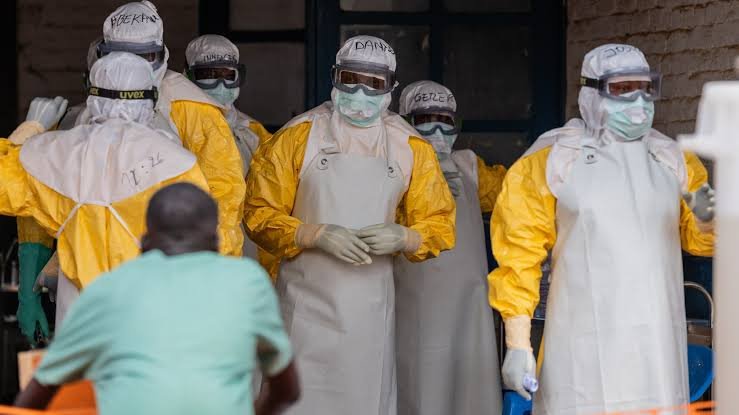
The World Health Organisation (WHO) has updated its temporary recommendations to member states as the Ebola outbreak in the Democratic Republic of Congo (DRC) continues to spread.
The new measures focus on strengthening disease surveillance, improving case detection and investigation, enhancing prevention efforts and deepening engagement with affected communities.
The WHO has classified the DRC as the only country currently facing a “very high” risk from the outbreak, while neighbouring countries, including Burundi and the Central African Republic, have been assessed as being at “high” risk.
The development comes days after WHO Director-General announced on August 18 that the Ebola outbreak remained a public health emergency of international concern.
He warned that the outbreak was spreading faster than any previous Ebola outbreak.
According to the latest figures released by Congolese authorities on Monday, the DRC has recorded 5,514 confirmed Ebola cases, including more than 2,690 deaths.
The figures put the case fatality rate at approximately 47.9 per cent, underscoring the severity of the outbreak and the need for intensified containment measures.
The WHO’s updated recommendations are aimed at helping member states strengthen preparedness and response efforts, particularly in countries bordering the DRC, to prevent further cross-border transmission.


