



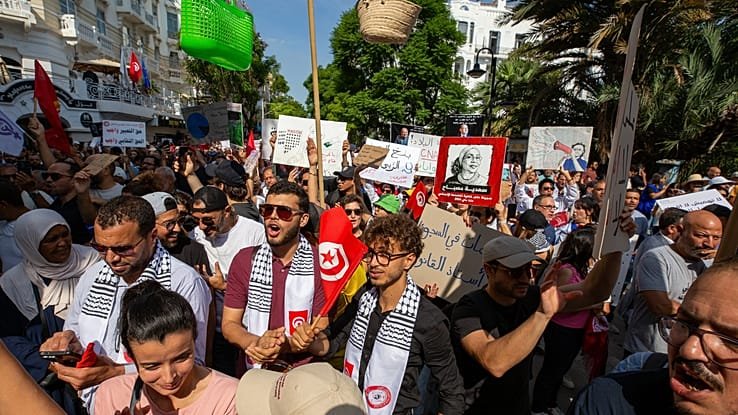
Tunisian journalist Zied el-Heni has been handed another four-year prison sentence on terrorism-related charges, intensifying concerns over press freedom and the prosecution of critics of President Kais Saied.
The independent journalist, who has been in detention, was convicted in a case linked to his efforts to authenticate leaked audio recordings attributed to Mondher Lounissi, a politician and former interim leader of the opposition Ennahdha movement.
El-Heni’s lawyer said the charges included forming a terrorist organisation and failing to report a terrorist offence. The lawyer added that the contents of the leaked recordings remained unclear.
The journalist reportedly refused to surrender his mobile phone to authorities without a warrant, saying he wanted to protect his sources.
Lounissi was also sentenced to nine years in prison in the same case.
The latest ruling comes months after El-Heni received a one-year prison sentence in May over remarks he made concerning press freedom, adding to concerns about the legal pressure facing journalists critical of the government.
International journalism organisations have condemned the latest sentence, describing it as a further escalation in the crackdown on independent media in Tunisia.
The case has drawn attention to the protection of confidential sources, a fundamental principle of journalism, particularly when reporters face demands from authorities to disclose information obtained in the course of their work.
El-Heni’s imprisonment also comes amid a broader wave of prosecutions involving critics of Saied, with dozens reportedly behind bars.
Saied has faced criticism since 2021, when he consolidated power in a series of moves that included suspending parliament and later restructuring the country’s political system.
Members of Ennahdha, one of Tunisia’s major opposition movements, have also faced imprisonment, while others have left the country.
The latest sentence is likely to intensify scrutiny of Tunisia’s treatment of journalists and political opponents, as press freedom advocates call attention to the implications of using terrorism-related charges in cases involving media professionals.


