


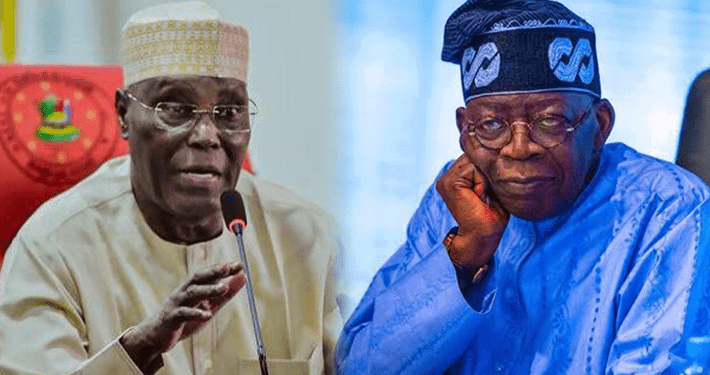
Former Vice President and African Democratic Congress (ADC) presidential candidate Atiku Abubakar has challenged the Federal Government and its supporters to produce evidence of any wrongdoing against him over the privatisation of Nigeria’s power sector.
Atiku, in a statement issued by his Senior Special Assistant on Public Communication, Phrank Shaibu, accused the Bola Tinubu administration of reviving old allegations in an attempt to divert attention from the economic hardship facing Nigerians.
He alleged a “coordinated attempt to change the subject” from the challenges confronting millions of families to accusations that had been repeatedly raised without resulting in prosecution.
The former vice president also accused the All Progressives Congress (APC)-led Federal Government of recycling decades-old allegations whenever questions are raised about the management of Nigeria’s public resources.
According to him, the renewed focus on the power sector privatisation and other public assets was aimed at shifting attention from questions surrounding the funds accruing to government following the removal of fuel subsidy.
Atiku said the National Assembly had investigated the power projects but that he was never invited to respond to any allegation of wrongdoing.
He explained that although he chaired the National Council on Privatisation while serving as vice president, he disagreed with the concept and did not supervise its implementation.
“The responsible minister did. The same applies to the Aluminium Smelter matter,” he said, adding that he had consistently made himself available for investigation.
Atiku said he left office in 2007 and had spent much of the period since then opposing successive governments.
“If there is evidence that I stole public money, why has no government produced it before a court?
“It is still not too late. Investigate me. Invite me. Produce the evidence. Prosecute me if you have a case. But propaganda cannot substitute for evidence,” he said.
The ADC candidate argued that the renewed allegations were gaining prominence because of his demand for accountability over the revenue generated following the removal of fuel subsidy.
He said Nigerians had accepted significant economic hardship on the promise that subsidy savings would be redirected towards development.
“They removed subsidy from the poor and promised that the sacrifice would free resources for development. Nigerians accepted extraordinary pain on that promise.
“Today, petrol is more expensive, transportation is more expensive, food is more expensive and the purchasing power of the Nigerian worker has been devastated,” he said.
Atiku vowed that what he described as sponsored social-media attacks would not deter him from demanding accountability or advocating economic policies aimed at restoring Nigerians’ purchasing power.
“The people who removed subsidy from the poor cannot frighten us into silence by resurrecting allegations that governments with all the investigative machinery of the Nigerian state have had nearly two decades to establish,” he added.


-led Federal Government of recycling decades-old)