




Information Security leader, Bennet Morka, has warned that Nigeria’s rapidly expanding digital economy could face aggravated cybersecurity risks if banks, telecommunications companies, fintech operators and government agencies delay preparations for quantum computing.
Morka gave the warning while speaking at the CISO Inspired Summit North in Cheshire, United Kingdom, where he stressed that the potential threat posed by powerful quantum computers should become a priority for corporate boards and national cybersecurity authorities rather than remain a distant technical concern.
He said Nigeria’s growing dependence on electronic banking, instant payments, mobile communications, digital identity systems and government databases made the country particularly vulnerable to future disruptions if adequate preparations were delayed.
According to him, the experience and preparations emerging from Britain and Europe offer important lessons for Nigeria as it expands its digital economy and deepens its reliance on technology driven financial and public services.
At the centre of Morka’s warning is the possibility that sufficiently powerful quantum computers could eventually defeat widely used encryption technologies, including RSA and elliptic curve cryptography, which currently protect sensitive information and secure digital transactions across the world.
Although existing computers cannot easily break these systems, advances in quantum computing could fundamentally change the cybersecurity landscape, potentially exposing confidential information, compromising digital signatures and undermining confidence in electronic records.
Morka described the anticipated turning point as “Q Day”, referring to the point at which a quantum computer becomes capable of breaking cryptographic systems that are considered secure today.
While the timing remains uncertain, he argued that organisations should not wait until the technology becomes an immediate threat before taking action.
For Nigeria, the implications could be significant because the country’s digital transformation has increased the volume of sensitive information transmitted and stored electronically.
One of the risks highlighted by Morka is the practice known as “Harvest Now, Decrypt Later”, in which attackers collect encrypted information today and retain it until technological advances enable them to decipher it.
Another concern is the possibility of attackers forging digital signatures protected by vulnerable cryptographic systems. Such a development could facilitate impersonation, compromise software updates and raise questions about the authenticity of financial transactions and official documents.
Morka refers to this danger as “Trust Now, Forge Later”, warning that the consequences could be particularly serious for financial institutions and national identity systems that depend on reliable digital authentication.
He said Nigeria must therefore recognise quantum cybersecurity as an emerging national economic and security issue, rather than treating it solely as a matter for information technology departments.
The ongoing preparations in Britain, Europe and other advanced economies demonstrate the importance of beginning the transition before quantum computers can threaten existing encryption at scale.
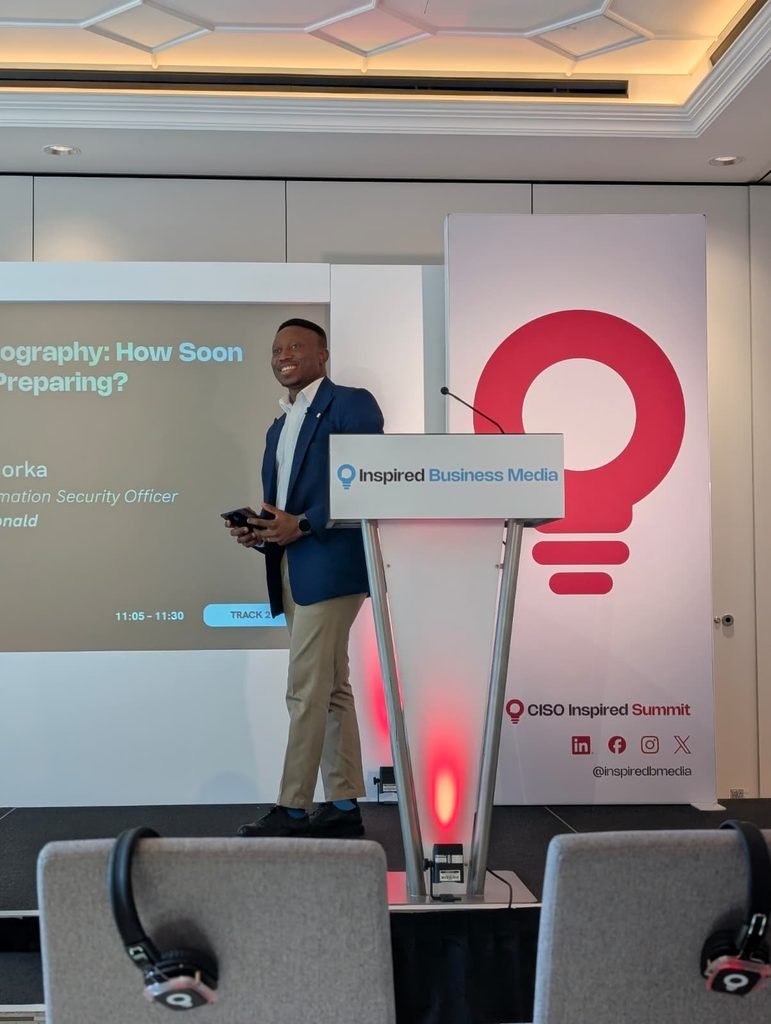
Morka stressed his message that financial institutions, technology companies and public authorities in Nigeria should develop coordinated strategies that reflect international developments and the country’s growing digital exposure.
To help businesses organise their response, Morka proposed a framework known as SHELF, which encourages organisations to assess how long sensitive information must remain confidential and how long digital signatures must remain trustworthy.
The framework also involves identifying cryptographic systems across an organisation, prioritising vulnerable connections, engaging technology suppliers and presenting a properly funded migration plan to corporate boards.
Morka’s recommendations also place emphasis on procurement decisions, urging businesses to seek clear post quantum migration commitments from technology suppliers and prioritise products that allow cryptographic methods to be changed without replacing entire systems.
Regulators, he indicated, also have an important role in ensuring that preparations are coordinated across critical sectors.
‘’Nigeria’s financial, telecommunications and data protection authorities could work with national cybersecurity institutions to establish common guidance, practical timelines and reporting expectations for organisations responsible for sensitive information.
‘’Such coordination would help businesses plan investments while improving the resilience of essential digital services.
‘’Nigeria does not need to develop its own quantum computer to respond to the challenge. The immediate priority is to identify existing vulnerabilities, understand the lifespan of sensitive data and adopt appropriate security standards as they become available.’’
Morka’s warning ultimately centres on the importance of preparation. Although quantum computers have not yet demonstrated the ability to break widely deployed encryption at the scale feared, migrating complex digital infrastructure could take years.
He further warned that delaying action until the threat becomes immediate could leave businesses and public institutions struggling to protect valuable information and maintain confidence in digital services.
He added that the lesson from Britain and Europe is that cybersecurity must anticipate technological change, stressing that as Nigeria’s digital economy continues to expand, preparations for the quantum era should begin now, before a future technological breakthrough turns a manageable risk into a national cybersecurity crisis.


