


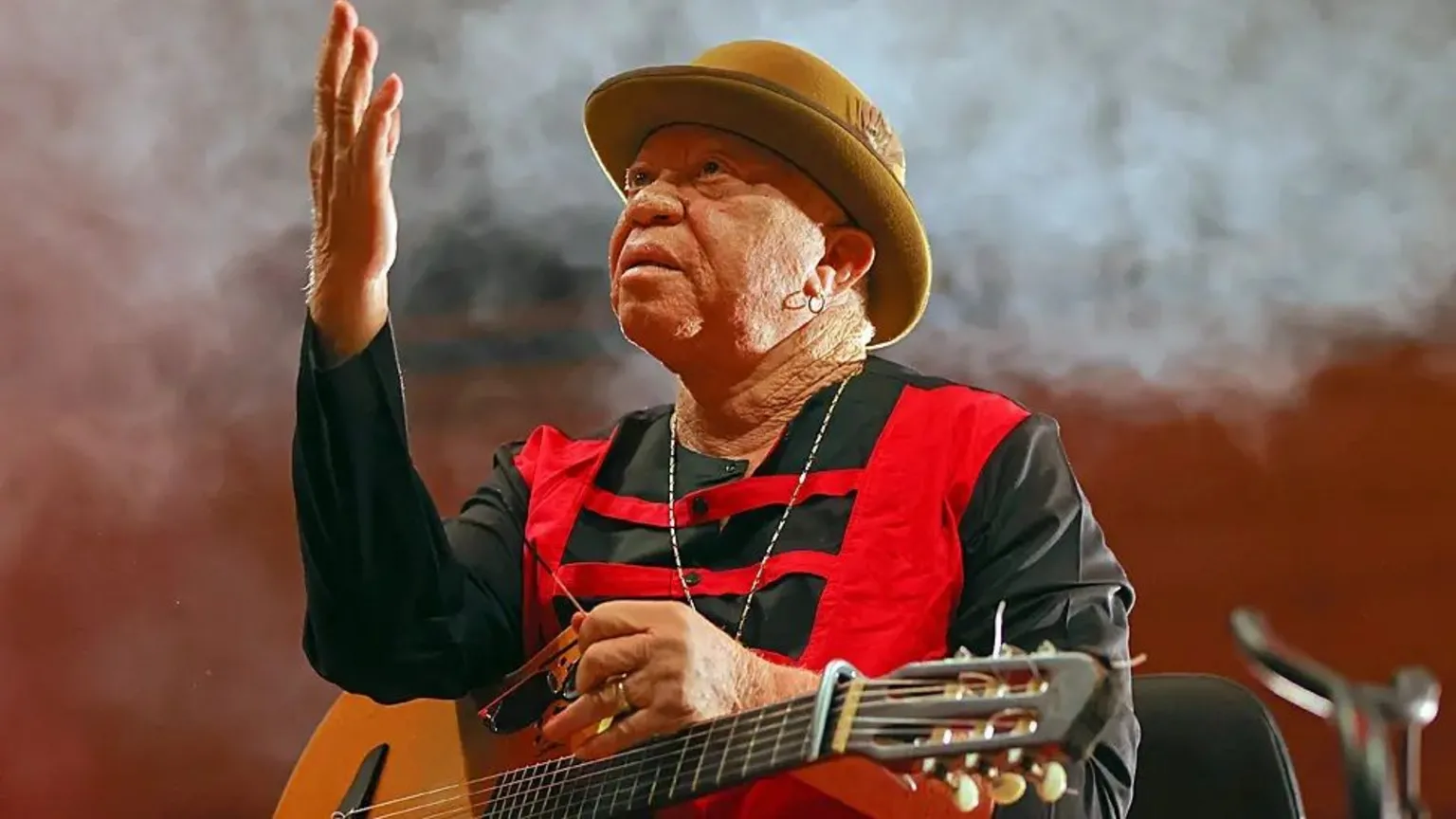
Malian music icon Salif Keïta has cancelled his scheduled performances in South Africa, citing concerns over what he described as “xenophobic violence” against African migrants.
The 77-year-old singer was due to perform at the Macufe Festival in the Free State province next month. His decision has drawn disappointment from provincial authorities, who described the festival as a platform for celebrating African unity.
South Africa has recently witnessed a resurgence of protests calling for undocumented migrants to leave the country, with an unofficial deadline of September 30 set by anti-migrant campaigners.
Tens of thousands of migrants have reportedly returned voluntarily to their home countries in recent months, with some saying they faced intimidation, threats and attacks.
While the South African government has intensified efforts to tackle illegal immigration, authorities have also said that people taking the law into their own hands would face arrest.
South Africa, the continent’s most industrialised economy, has long attracted migrants seeking jobs and better economic opportunities. However, undocumented migration has become a politically sensitive issue, with protesters accusing foreigners of putting additional pressure on public services and contributing to crime.
Explaining his decision to withdraw from the Macufe Festival, Keïta said he could not ignore reports of attacks against African migrants.
“When I see migrants attacked, I do not see ‘politics’. I see people looking for work, safety, and dignity,” he said.
The legendary musician, widely known as the “Golden Voice of Africa”, said the situation did not represent the South Africa he knew.
He described the cancellation as “a rejection of hate” rather than a rejection of South Africans, suggesting that he could return to the country in the future.
Responding to the announcement, the Free State Department of Sport, Arts, Culture and Recreation said it “regrets the decision taken by the renowned musician”.
The department stressed that the Macufe Festival was founded as a celebration of African unity and cultural diversity.
Keïta, who has spent about five decades in the music industry, is regarded as one of Africa’s most influential musicians. His work played a major role in bringing West African music to international audiences.
His cancellation came as 173 Tanzanians arrived in Dar es Salaam after voluntarily leaving South Africa amid growing concerns over the treatment of migrants.
For some of the returnees, the journey marked the end of decades spent in South Africa.
Abdul Idi, who moved to the country in 2006 in search of better economic opportunities, said he was relieved to return safely after experiencing what he described as difficult and dangerous conditions.
“Foreigners are not wanted there,” he told reporters after arriving at Dar es Salaam’s international airport on Wednesday night.
Another returnee, 53-year-old Rashid Ramadhan, said he had lived in South Africa for about 30 years.
He said he and other migrants were forced out of their accommodation in Durban and had spent the past two months living outside after losing their jobs and means of livelihood.
According to an AFP tally, more than 160,000 people have left South Africa through similar voluntary repatriation programmes since May. Among those returning are citizens of Malawi, Zimbabwe, Zambia, Ghana and Nigeria.
Meanwhile, anti-migrant group March and March has announced another round of nationwide protests for September 30.
The group has vowed that the planned demonstrations will be larger and better organised than protests held on June 30, some of which were accompanied by violence.
Earlier this month, March and March appealed to leaders attending the Southern African Development Community summit in Durban to “fetch your people”.
The growing repatriation of migrants has also created concerns about the welfare of returnees, many of whom have left behind jobs, homes and personal belongings.
In Ghana, however, the government has rejected a donation of about $1.7 million from MTN Ghana, the local subsidiary of South African telecommunications giant MTN Group, intended to support Ghanaians returning from South Africa.
Ghana’s Foreign Ministry said the government remained committed to financing the evacuation and reintegration of its citizens returning from South Africa. (Culled from BBC Africa)


