


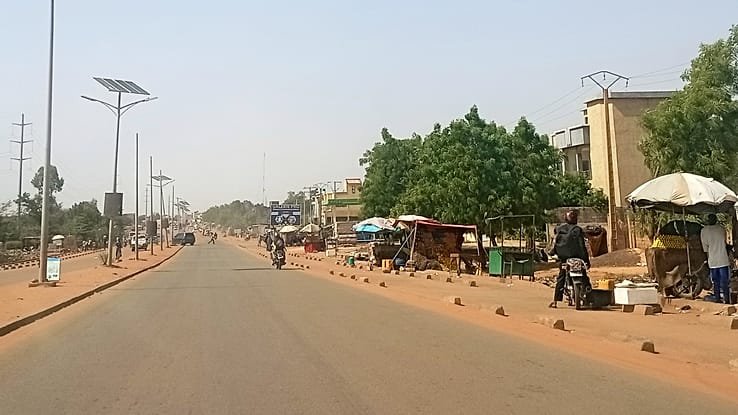
Normal activities have resumed in Niger’s capital, Niamey, a day after the military government quelled an attempted mutiny by soldiers that left several people dead and dozens detained.
Heavy fighting erupted in the early hours of Saturday as the mutineers reportedly attempted to storm the presidential palace. Security forces eventually brought the situation under control, with several soldiers killed and dozens arrested.
The soldiers were reportedly angered by the government’s inability to contain escalating attacks by militant groups operating in the country.
Saturday’s incident marked the third time Niamey has witnessed armed clashes this year. The two previous incidents, however, involved attacks by jihadists on a key military base located near the city’s international airport.
Residents returned to their normal routines on Sunday, although concerns remained over the implications of the failed mutiny for the country’s security situation.
“As soon as there’s a mutiny, it means that things aren’t going well,” a Niamey resident, Hassane Assoumane, said.
“It means that perhaps the soldiers have something to demand, and now it’s up to the current authorities to find a solution: whether they try to come to an agreement with the mutineers or whether they opt for another course of action, it’s for them to decide,” he added.
Niger’s military leader, General Abdourahmane Tiani, seized power in a coup three years ago after overthrowing the elected government, pledging to restore security and combat militant groups.
However, his administration has struggled to halt attacks by fighters affiliated with Islamic State and Al-Qaeda, particularly in regions bordering Mali and Burkina Faso.
Since taking power, Tiani has also severed Niger’s longstanding military ties with France and sought closer cooperation with countries including Iran, Turkey and Russia.
Russia’s paramilitary Africa Corps was reportedly involved in supporting Nigerien forces in efforts to repel Saturday’s mutiny.
The failed uprising has nevertheless raised fresh questions about the military government’s ability to maintain internal cohesion while confronting the worsening jihadist insurgency.


