


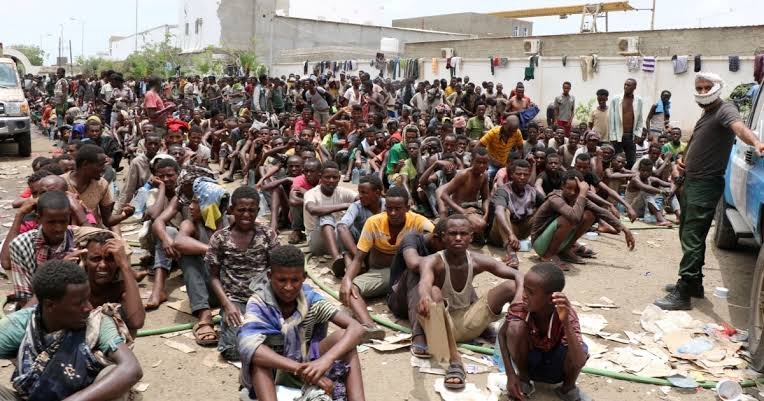
Thousands of African migrants stranded in Yemen are facing worsening humanitarian conditions, with the International Organization for Migration (IOM) warning of growing risks of hunger, exploitation, trafficking and violence.
Every year, an estimated 100,000 to 200,000 migrants undertake the perilous journey from the Horn of Africa across the Gulf of Aden to Yemen, hoping to eventually reach the Gulf States in search of work and better living conditions.
However, many find themselves trapped in Yemen after failing to cross into Saudi Arabia, where heightened border security has made the journey increasingly difficult.
One Ethiopian migrant, Abdulaziz Mohammed, said he had been forced to remain in Yemen after security forces tightened controls along the Saudi border.
“I was trying to cross into Saudi Arabia, but now the border is heavily guarded,” Mohammed said.
“The military has closed the border, and the police have tightened security there. We cannot cross, so I am here in Yemen. We have no place to stay. We look for food on the streets and sleep under the trees.”
Yemen, already devastated by more than a decade of civil war, is struggling to cope with its own severe humanitarian crisis. About half of the country’s population requires humanitarian assistance, placing additional pressure on already limited resources.
Before the 2011 uprising, Yemen hosted more than one million African refugees, most of them from Ethiopia and Somalia. The country’s prolonged conflict, however, has dramatically worsened conditions for both refugees and migrants.
According to the IOM, migrants in Yemen are exposed to trafficking, kidnapping, exploitation, arbitrary detention, violence and forced recruitment by armed groups and local militias.
Mohamad Hatoum, IOM programme manager for protection, said migrants face serious dangers throughout their journey.
“Migrants in Yemen face many risks, including human trafficking, exploitation, detention, violence and various forms of abuse,” Hatoum said.
“Many of them rely on smuggling networks to facilitate their movement, which exposes them to harm and risks that are not limited to crossing borders, but continue to affect them throughout the entire journey.”
The continued arrival of migrants is also placing additional pressure on communities in Yemen that are already struggling with poverty, displacement and insecurity.
Humanitarian aid activist Mansour Al-Jaradi said the country’s fragile economic and security situation had made the presence of migrants an additional challenge for host communities.
“There are major economic, political, geographical and security challenges resulting from this migration,” Al-Jaradi said.
“In Yemen specifically, because of the war and the difficult economic situation, there are certainly additional burdens on the host country.”
He added that the withdrawal or reduction of international humanitarian support had further complicated the situation.
“We all know the situation we have reached, with international organisations absent and no aid available for internally displaced people. So they undoubtedly represent an additional burden,” he said.
For many African migrants, the result is a devastating deadlock: unable to continue towards the Gulf States and with little means of returning home, they remain stranded in Yemen with limited access to shelter, food and protection.
As humanitarian resources continue to dwindle, aid agencies warn that vulnerable migrants could face even greater hardship unless urgent assistance and protection measures are provided.


