



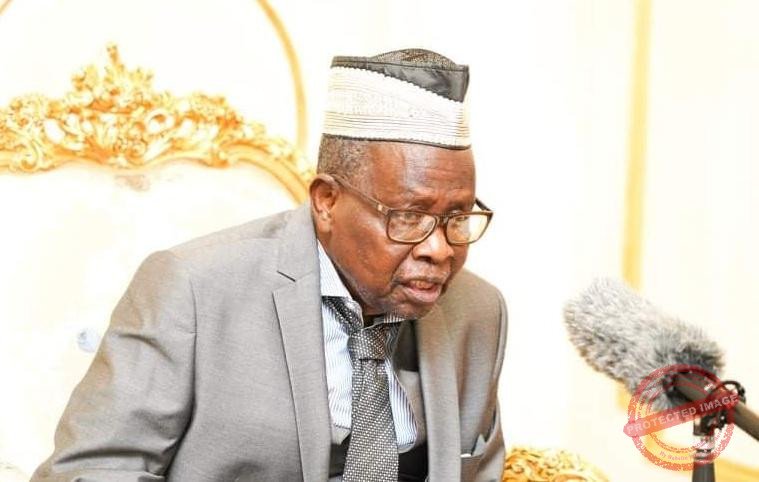
South Sudan has declared a period of national mourning following the death of Joseph Lagu, a veteran military leader and independence campaigner who played a pivotal role in the struggle that eventually led to the country’s separation from Sudan in 2011.
Lagu, who died aged 94, was a founding member of Anyanya, the first armed movement to fight the Sudanese government, established in 1963. Among those who served under his command was South Sudan’s current President, Salva Kiir.
Announcing his death, Kiir urged citizens to honour Lagu’s legacy, saying the veteran leader had lived to witness the emergence of the country for which he fought.
“While his family and the nation mourn his death, I also ask the public to celebrate his life, because he lived to see the birth of a country for which he fought,” the president said in a statement.
Kiir described Lagu as “a statesman, military officer, seasoned diplomat and prominent South Sudanese politician”, adding that his career placed him among the most significant figures in the country’s history.
The president declared national mourning until Lagu’s burial, although the date of the funeral had yet to be announced.
Lagu played a crucial role in ending Sudan’s first civil war in 1972, leading negotiations that secured regional autonomy for southern Sudan within the country. The conflict had claimed an estimated 500,000 lives.
He subsequently served as Sudan’s second vice-president and as the country’s permanent representative to the United Nations.
South Sudan eventually gained independence in July 2011 after decades of conflict and a referendum in which voters overwhelmingly supported secession.
Recalling the early days of the independence struggle in an interview with AFP in 2011, Lagu described how the movement began with almost no military resources.
“We started fighting for independence empty-handed,” he said, recalling that the group initially had only three rifles, while he personally carried a machete.
“We knew our cause was just, but we had no means,” he added.
Lagu said the movement later received its first shipment of weapons from neighbouring Congo before securing support from Israel.
According to his account, the relationship with Israel developed after Sudan backed Egypt during the 1967 Six-Day War. Lagu said he wrote to the Israeli prime minister, seeking military assistance by arguing that the southern Sudanese rebels and Israel shared an interest in weakening forces aligned against them.
His efforts helped sustain the armed campaign that became part of the long struggle for southern Sudan’s self-determination.
Lagu’s death marks the passing of one of the leading figures in the early armed resistance against Sudan’s central government and a prominent personality in the political history of South Sudan.
His legacy is closely associated with the struggle for autonomy, the negotiations that ended the first civil war and the broader movement that culminated in South Sudan’s independence in 2011.


