


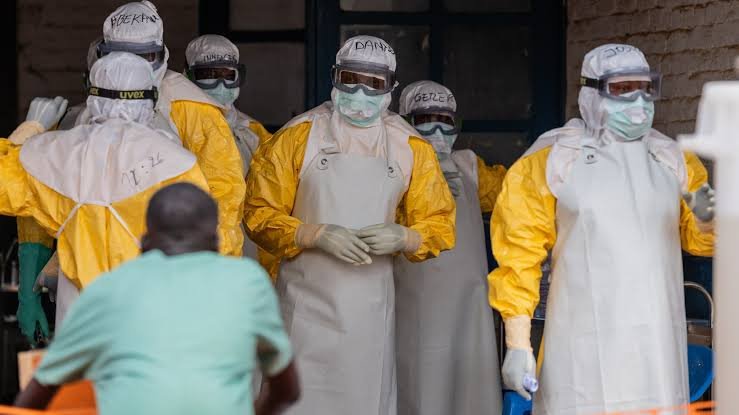
The World Health Organization (WHO) is coordinating and funding the expansion of an Ebola treatment centre in the Democratic Republic of the Congo (DRC), as the country battles its deadliest Ebola outbreak on record.
The outbreak has claimed 3,007 lives and infected 6,186 people, according to the latest figures released by the Congolese National Institute of Public Health.
The WHO-backed expansion of the Lita treatment centre in Ituri Province will add 42 beds, improve health and hygiene facilities and increase the centre’s capacity to treat Ebola patients.
The outbreak, which is concentrated in conflict-affected areas in eastern and northeastern DRC, has recorded a case fatality rate of 48.6 per cent. A total of 1,409 people have reportedly recovered from the disease.
Ebola is a viral disease transmitted through contact with infected bodily fluids and can cause severe haemorrhagic fever. More than 15,000 people have died from Ebola outbreaks across Africa over the past five decades.
The previous deadliest Ebola outbreak in the DRC occurred between 2018 and 2020, when almost 2,300 people died from about 3,500 reported cases.
The current outbreak began in the remote northeastern province of Ituri and is being caused by the Bundibugyo strain of the Ebola virus, for which there is currently no approved vaccine or treatment.
The virus has since spread to six provinces, placing additional pressure on a health system operating in areas where government presence is limited and insecurity remains widespread because of armed groups.
Health authorities and humanitarian organisations have also faced shortages of resources, while mistrust within some communities has complicated efforts to contain the outbreak and provide treatment.
Several vaccines and treatments are currently being tested against the Bundibugyo strain.
Existing approved Ebola vaccines are effective against the Zaire strain, which was responsible for the largest Ebola outbreak ever recorded.
In response to the current crisis, the WHO has recommended a Phase III clinical trial to assess whether Ervebo, the vaccine used against the Zaire strain, can provide protection against Bundibugyo Ebola.
WHO experts have not yet established whether Ervebo can protect humans against the Bundibugyo strain, although preliminary data indicate that it could provide some level of protection.
A shipment of 16,250 doses of the vaccine arrived in the DRC at the end of last month for frontline health workers, with vaccination beginning shortly afterwards in Kisangani, the capital of Tshopo Province in northeastern DRC.
The expansion of the Lita treatment centre is expected to strengthen the country’s capacity to isolate and treat patients while improving infection prevention and control measures as health authorities work to contain the outbreak.


 is coordinating and funding the expansion of an Ebola treatment centre in the Democratic)