


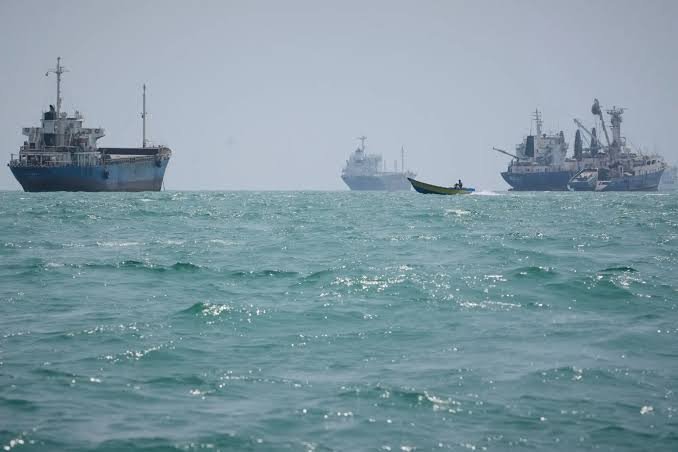
Iran is finalising an agreement with Oman to establish a temporary “safe route” through the strategically important Strait of Hormuz, amid continuing tensions that have disrupted shipping along the vital global energy corridor.
Iranian Foreign Ministry spokesperson Esmail Baghaei said the agreement could be formally registered with the International Maritime Organization (IMO) in the coming days.
Baghaei said Tehran and Muscat had been discussing the temporary route for some time, even as Iran continued to oppose an alternative United Nations-backed route in the southern part of the strait, off the coast of Oman.
Iran has asserted control over the Strait of Hormuz, a critical passage for global oil and natural gas shipments.
The proposed arrangement comes amid heightened tensions following the war that began in late February after the United States and Israel launched attacks against Iran.
Tehran has sought to restrict shipping through the strait in an effort to exert economic pressure on Washington, raising concerns over potential disruptions to global energy supplies.
In response, the United States has imposed a naval blockade on Iranian ports and has escorted tankers through the strait despite attempts by Iran to target the vessels.
Baghaei also criticised a draft resolution being prepared by the United States and its European allies, describing the move as evidence of “bad faith” and an attempt to escalate tensions.
The United States, Britain, France and Germany have drafted a resolution that could be considered by the Board of Governors of the International Atomic Energy Agency (IAEA).
The proposed resolution seeks to refer Iran to the UN Security Council over allegations that Tehran has failed to comply with its nuclear non-proliferation obligations.
Under the Nuclear Non-Proliferation Treaty, Iran is legally required to declare its nuclear materials and activities and allow IAEA inspectors to verify that they are not being diverted from peaceful purposes.
The diplomatic push for a Security Council referral has been under consideration since June 2025, when the IAEA Board of Governors formally found Iran in non-compliance with its non-proliferation obligations for the first time in two decades.
The decision came one day before the United States and Israel launched attacks against Iranian nuclear facilities.
A referral to the UN Security Council would shift the matter to the body with authority to impose additional legally binding measures, including sanctions and asset freezes.
Against this backdrop, the proposed temporary shipping arrangement between Iran and Oman could offer a limited mechanism for safer maritime passage through the Strait of Hormuz while broader diplomatic and military tensions remain unresolved.


