


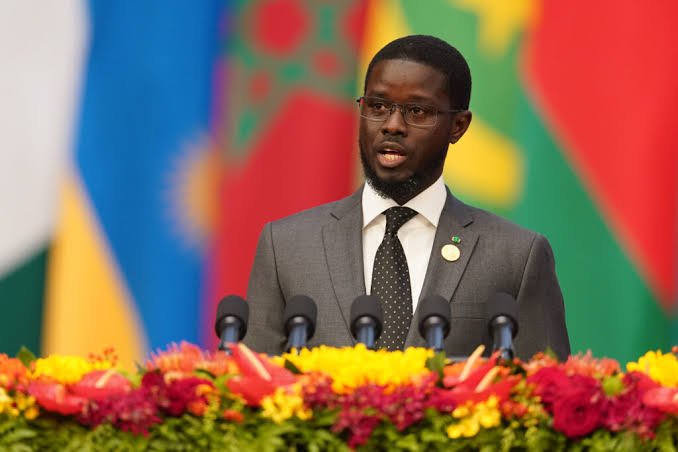
Senegalese lawmakers have challenged Prime Minister Ahmadou Al Aminou Mohamed Lo over the government’s decision to enter a new three-year, $2.2 billion support programme with the International Monetary Fund (IMF).
The IMF agreement dominated proceedings in the National Assembly on Tuesday as Lo presented the government’s general policy statement and defended the deal amid criticism from lawmakers opposed to President Bassirou Diomaye Faye’s administration.
Lo argued that the IMF remained an important institution for assessing a country’s economic trajectory and debt sustainability, saying Senegal should work with the Fund if it could not manage without its support.
“If you cannot do without the IMF, set up a programme with the IMF, because it is the only institution authorised to give an opinion on a country’s macroeconomic trajectory and the sustainability of its debt,” the prime minister told lawmakers.
His defence of the agreement drew strong criticism from opposition lawmaker Guy Marius Sagna of the PASTEF party.
Sagna accused the government of compromising Senegal’s sovereignty by accepting IMF oversight, arguing that the institution had failed to deliver sustainable development for countries that relied on its programmes.
“Diomaye and Kiiraay do not represent a sovereign Senegal, but a subjugated Senegal,” Sagna told the Assembly.
He further criticised Lo’s repeated praise of the IMF, saying he sometimes felt the prime minister was speaking on behalf of the Fund rather than the Senegalese government.
“I felt I was not addressing the Prime Minister of Senegal but the chairman of the board of directors representing the interests of the IMF,” Sagna said.
Senegal is currently facing about $3.5 billion in payment arrears, placing additional pressure on the government to restructure its finances.
Lo said the new IMF agreement would help ease the country’s debt burden through measures including extending debt maturities and renegotiating interest rates.
The government is also renegotiating about 30 mining contracts as part of broader efforts to strengthen state revenues and improve the country’s economic position.
The IMF programme has become another point of tension within Senegal’s ruling political camp, with President Faye engaged in an increasingly public dispute with his former prime minister and PASTEF leader, Ousmane Sonko, who now serves as speaker of the National Assembly.
The disagreements between Faye and Sonko have extended to several policy issues, including the government’s approach to the IMF and Senegal’s debt crisis.


