


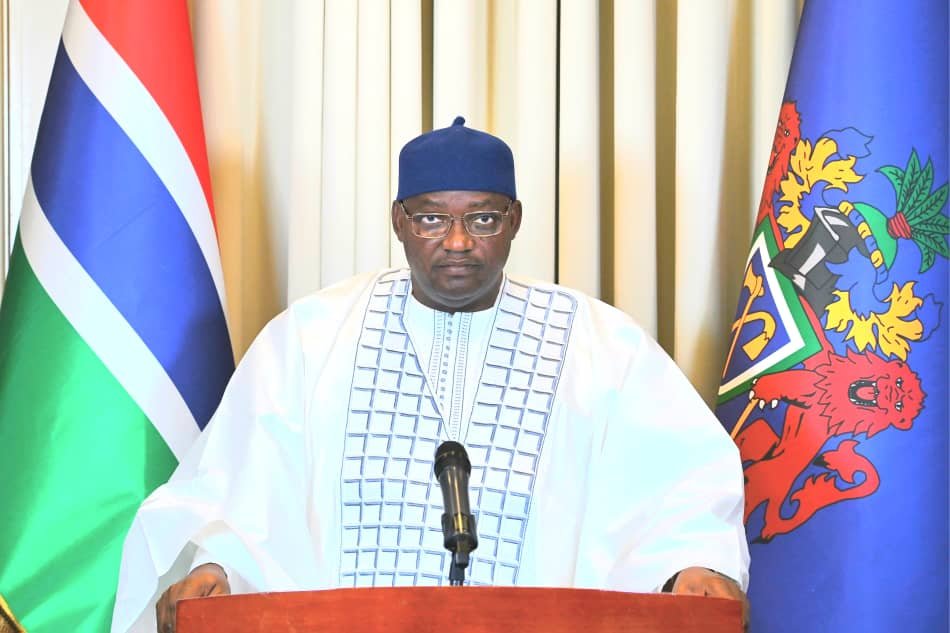
Gambian President Adama Barrow has pledged to significantly improve electricity supply by the end of October after violent protests erupted over prolonged power outages that have affected the West African country since June.
The rolling blackouts, which have occurred during the peak of the hot season, have lasted as long as 48 hours in some parts of the country, triggering growing public frustration.
Demonstrators in Banjul and neighbouring communities took to the streets overnight from Monday into Tuesday, setting fires, blocking roads and chanting “Barrow must go!” in a sharp escalation of protests over the electricity crisis.
In Westfield, on the outskirts of the capital, police deployed tear gas as protesters moved towards the headquarters of the National Water and Electricity Corporation (NAWEC), the country’s power provider.
Barrow, who visited a NAWEC power station in Brikama near the capital on Tuesday, described the electricity crisis as both a “national security issue” and an “emergency”.
Declaring that “it was time for action”, the president acknowledged the hardship caused by the outages, particularly amid soaring temperatures.
“I know that the fans have stopped turning, children work in the dark, mothers throw away stale food, and the heat is unbearable by day and by night,” Barrow said in a televised address on Tuesday evening.
He disclosed that the government was finalising the installation of an additional 24-megawatt generation machine, which he said would be commissioned by the end of October.
“For a system of our size, this is considerable power, enough to make a big difference in your homes,” he said.
Barrow also announced plans for a 50-megawatt solar power plant in Soma, saying the contract had been awarded and the contractor was mobilising resources to commence work.
“We commit that the electricity supply situation in the country will improve by the end of October,” he said.
The latest protests represent a significant escalation from earlier demonstrations over electricity shortages and come just months before the December elections, in which Barrow is seeking a third term.
NAWEC said in mid-August that the outages were caused by increased electricity demand, largely driven by high temperatures, alongside “constraints on electricity imports”.
The corporation’s Managing Director, Gallo Saidy, said on Tuesday that the situation was also partly linked to climate change and the war in the Middle East, while appealing to citizens to remain patient.
Saidy cancelled his scheduled attendance at a road inauguration to inspect NAWEC facilities in Brikama and Kotu, two areas that have been particularly affected by the power outages and subsequent protests.
Information Minister Ismaila Ceesay said the government was treating the crisis with “seriousness and utmost urgency”, assuring citizens that authorities were working to resolve the situation.
“The Gambia was treating the situation with the seriousness and utmost urgency it deserves, and we want to assure every Gambian that we are working relentlessly,” Ceesay said.


