


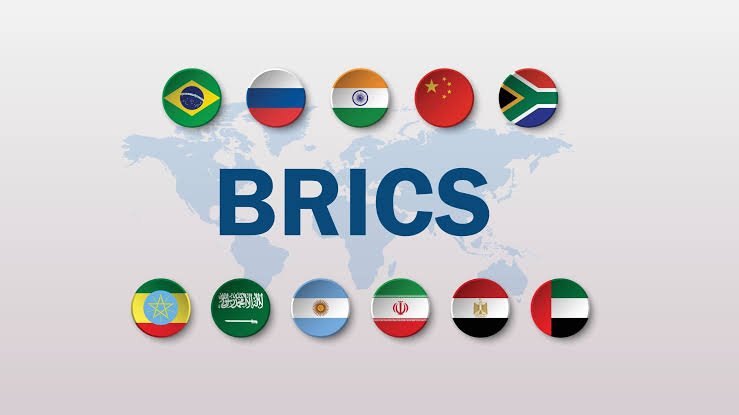
BRICS member states are looking to digital technology to deepen economic cooperation and strengthen trade ties among businesses across the bloc.
The BRICS Business Forum opened in New Delhi on Friday, a day ahead of the group’s annual summit, with discussions focused on building more connected and resilient trade networks.
Digital technology emerged as a key area of focus, with business leaders highlighting its potential to connect companies, identify opportunities and facilitate cross-border trade among member states.
Mtho Xulu, president of the South African Chamber of Commerce and Industry, said technology could provide an important platform for strengthening cooperation within BRICS.
“We are looking at technology as one of the solutions to strengthen BRICS, because once you have a digital platform, it’s easier for the different citizens and businesses and countries to be able to communicate with each other, to be able to expose business opportunities,” Xulu said.
He acknowledged the challenges posed by the digital divide but said they could also create opportunities for investment in digital infrastructure across member states.
BRICS leaders are expected to discuss economic cooperation, energy, food security, technology, supply chains and reforms to global institutions at Saturday’s summit.
Reducing dependence on the US dollar is also expected to feature prominently, with member states seeking to increase the use of their national currencies in trade and payments while exploring alternatives to Western-dominated financial institutions.
China and Russia have promoted BRICS as a platform for reducing Western influence in the global economic system and strengthening cooperation among emerging and developing economies.
The bloc, which was established about two decades ago, has expanded to 11 full members, including Egypt and South Africa, alongside 10 partner countries.
Together, BRICS members account for about half of the world’s population and a significant portion of global economic output.
The group has increasingly called for greater representation of developing countries in major global institutions and reforms to the international economic and financial system.


