



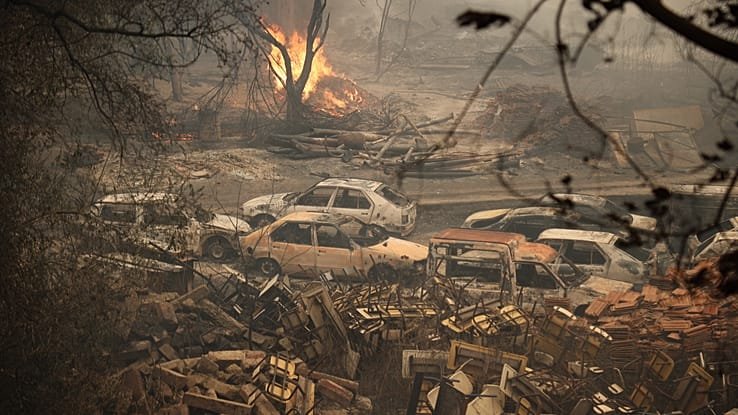
Algerian lawmakers on Thursday approved legislation introducing the death penalty for people convicted of deliberately setting forest fires, following a series of deadly wildfires across the country.
The legislation was passed after fires swept through northeastern Algeria in recent weeks, killing at least 12 people, according to the official death toll. Witnesses, however, have reported that the number of fatalities could be higher.
Algeria has maintained a moratorium on executions since 1993. However, President Abdelmadjid Tebboune in August directed the justice minister to amend the penal code to expand the list of crimes punishable by death.
The new law also extends capital punishment to child kidnapping cases involving torture, sexual assault or mutilation.
Justice Minister Lotfi Boudjemaa told parliament after Thursday’s vote that the death penalty was an appropriate legal response to what he described as serious crimes.
Under the legislation, anyone convicted of deliberately setting fire to forests, woods or cultivated or uncultivated fields could face execution.
The same punishment would apply to anyone convicted of kidnapping a child and subjecting the victim to torture, sexual assault or mutilation.
Although Algeria has maintained its moratorium on executions, courts have continued to issue death sentences, including in terrorism-related cases. No executions have been carried out since the moratorium took effect.
Tebboune has previously said death sentences would be implemented once convicted persons had exhausted their appeals.
Amnesty International last month urged Algeria to abandon the proposed legislation and maintain its suspension of executions, describing the move as a step backwards.
The rights organisation said the government should instead prioritise measures to protect lives, prevent fires and strengthen emergency response capabilities.
Boudjemaa said the judicial system provided safeguards for defendants facing capital punishment, including the right to appeal and the possibility of seeking a presidential pardon.
He defended the tougher penalties, saying deliberate arson had reached what he called “the level of organised crime”.
The minister also alleged that investigations had uncovered links between some fire incidents and “foreign parties”.
He described the deliberate targeting of Algeria’s environmental and economic resources through fires as an attack on the country’s territorial integrity.
The bill will now go before Algeria’s Senate for review before it can be formally ratified by President Tebboune.
Forest fires are a recurring problem in northern Algeria during the summer months, with prolonged droughts and extreme heat linked to climate change contributing to increasingly severe conditions.
Tebboune has nevertheless alleged that criminal activity may have played a role in some of the latest fires.


