



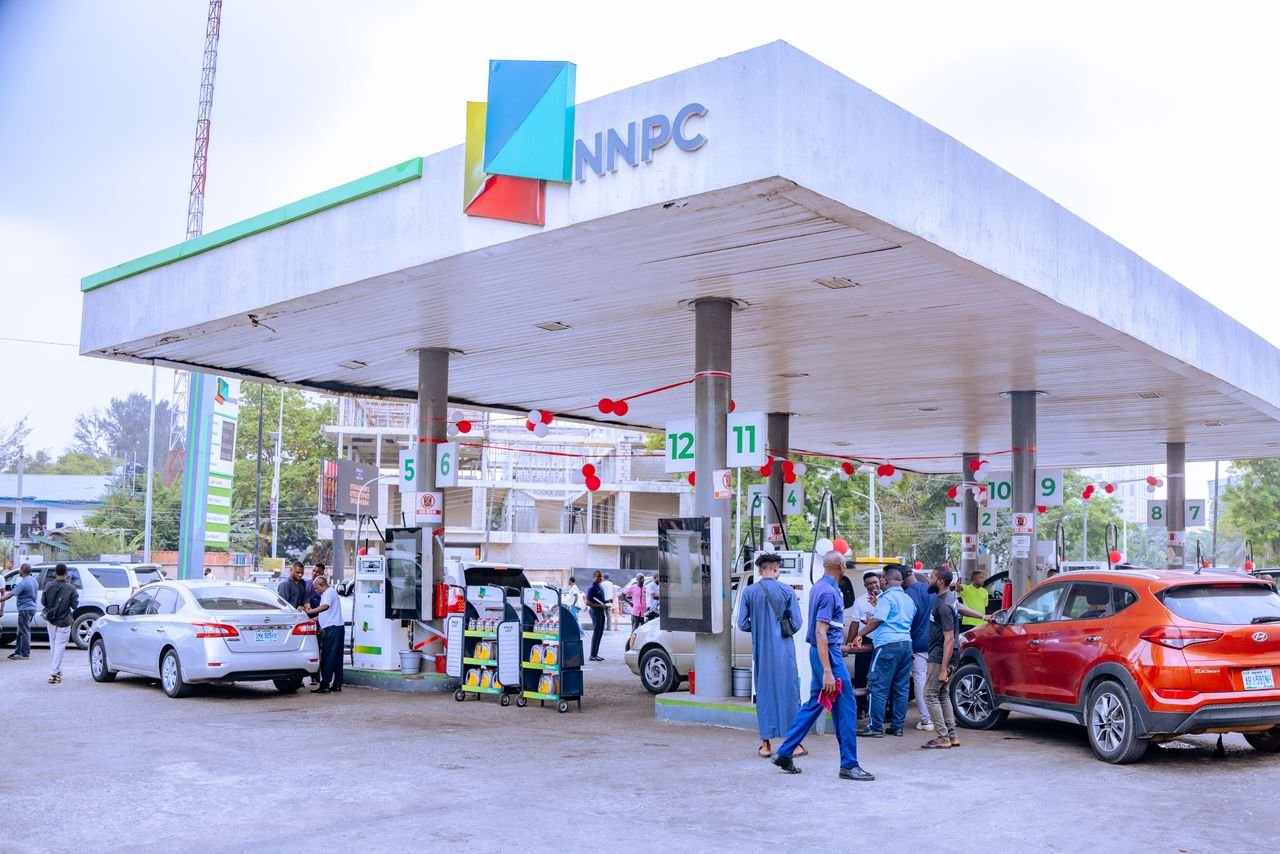
Many motorists have lamented their inability to access the petrol price discount announced for Nigerian National Petroleum Company Limited (NNPC) filling stations, saying the requirement to use a mobile application has excluded some consumers.
The motorists said they were informed at filling stations that the discounted price was available only to customers using the company’s mobile application.
The Minister of Finance and Coordinating Minister of the Economy, Taiwo Oyedele, had announced a one-month discount on petrol prices and subsidy-related products as part of efforts to provide relief to Nigerians.
Oyedele said petrol would be sold at N1,350 per litre, based on the landing cost, at NNPC filling stations nationwide.
However, findings on Sunday, October 11, 2026, showed that petrol was being sold at N1,405 per litre to customers paying directly at the pumps, while customers using the company’s mobile application paid N1,339 per litre.
A motorist in Abuja, Babatunde Atoye, said the discount was not automatically available to customers buying fuel at the stations.
According to him, motorists had to use the NNPC mobile application to benefit from the reduced price.
A petrol attendant, who spoke on condition of anonymity, also said customers could only access the discounted price through the application.
She added that the discount had not been extended to motorists making payments directly at the pump.
Another motorist, Abdulrahim Malik, said customers had to download the application to benefit from the N66-per-litre price difference.
He questioned the accessibility of the arrangement for people without Android phones or the digital skills required to operate the application.
“How do people who do not have access to Android phones benefit from the discount?” Malik asked.
“Some people cannot read or write, let alone access Android phones. How can they use the digital application?”
Meanwhile, an economist, Dr Aliyu Illias, said Nigeria had yet to fully harness the potential of its petroleum sector despite exploring oil and gas resources for about six decades.
Illias said the country had made only average progress in developing the industry, particularly in establishing sufficient refining capacity to maximise the value of its crude oil resources.
He argued that Nigeria had failed to build enough refineries in both the public and private sectors to meet domestic demand and reduce dependence on imported refined petroleum products.
The economist also said the country had not adequately developed other petroleum products and by-products beyond petrol, diesel and related fuels.
According to him, Nigeria should have established more refineries across the states to meet domestic consumption needs and generate additional revenue through the export of refined petroleum products.


