



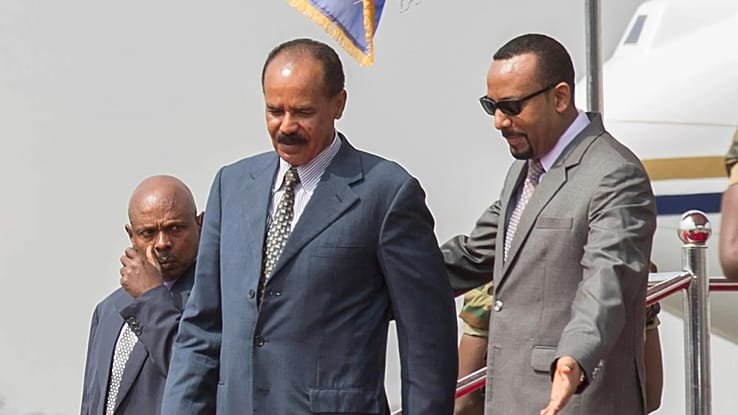
Ethiopian Prime Minister Abiy Ahmed has warned neighbouring Eritrea of “very severe consequences” if it continues to support rebel groups fighting his government.
Abiy issued the warning on Monday in a speech delivered in Tigrinya, amid renewed tensions following weeks of fighting in Ethiopia’s northern Tigray region.
The latest clashes began last month when fighters from the Tigray People’s Liberation Front (TPLF) launched an offensive against federal forces. The rebels were subsequently pushed back and lost control of the region.
The fighting heightened fears of a wider regional conflict, particularly amid reports that Eritrea had supported the rebels and deployed thousands of troops into Ethiopian territory. Eritrean forces were also reportedly forced to withdraw after coming under drone attacks.
Abiy, who had largely remained silent during the weeks of fighting, warned Eritrea against allowing its territory to be used by groups opposed to his government.
“Serving as a base for Ethiopia’s enemies instead of being a partner in development will not bring benefits. I believe that ignoring our calls will have very, very, very severe consequences,” he said.
The TPLF, which controlled Tigray for decades and previously dominated Ethiopia’s national government, has abandoned the region’s cities following the latest fighting.
A new administration appointed by the federal government was installed on Friday, marking another shift in the region’s political leadership.
The newly appointed mayor of Mekelle, Tigray’s capital, Shishay Amare, told AFP on Monday that elections would be organised within six months.
“Our role is to create the right conditions for elections by ensuring peace and stability across Tigray,” Amare said.
Abiy also questioned the future of the TPLF, which once exercised considerable influence over Ethiopia before he came to power in 2018.
“The TPLF did not exist 50 years ago, and now its existence is coming to an end,” the prime minister said.
He pledged to pursue development across Tigray and urged residents to preserve their unity and institutions until an elected administration takes over.
“We will carry out development across all parts of Tigray. Until a regular administration is established through elections, our people should preserve their unity and institutions,” he added.
Tigray did not participate in Ethiopia’s nationwide parliamentary elections in June, which returned Abiy and his Prosperity Party to power with an overwhelming majority against a weakened opposition.
Relations between Ethiopia and Eritrea have remained tense despite the two countries’ shared history. Eritrea gained independence from Ethiopia in 1993 and has since maintained a complicated relationship with its larger neighbour.
Tensions have also been fuelled by concerns in Eritrea that landlocked Ethiopia could seek to secure access to the Red Sea by force.
In his speech, Abiy contrasted Eritrea’s current urban conditions with its past, while advocating cooperation between the two countries.
“When Eritrea was part of Ethiopia, its cities were vibrant and beautiful. Today, Eritrean cities seem like ghost towns,” he said.
He added that improved relations and cooperation between the neighbours remained the preferred path forward.
“Good neighbourly relations and partnership are the only way forward,” Abiy said.


